A pastor asked me once, early in a planning call, “Isn’t this just a vacation with a church group?” I understood why he asked. On paper, a heritage trip has a lot of the same pieces as any trip abroad: flights, hotels, a bus, a guide, a schedule. But I told him what I will tell you here. The pieces look similar. The purpose is entirely different. And that difference changes almost every decision that follows, from the itinerary to the pacing to who should lead it.
So let me answer the question properly, because if you are new to this, understanding what a heritage journey actually is will save you from planning it like a vacation and wondering later why something felt off.
The Core Difference: Intent, Not Itinerary
A vacation is organized around rest, novelty, and personal enjoyment. You go where you want to relax, eat well, see something new, and come home refreshed. There is nothing wrong with that kind of travel. It is just not this kind of travel.
A heritage journey is organized around meaning. Every stop exists because it connects to a group’s faith, history, or identity: a biblical site, a place tied to Jewish history, a location central to Christian tradition, a site of communal memory. The traveler is not a tourist looking at something interesting. They are a pilgrim, a student, or a congregant standing in a place that is part of their own story. That is the intent that shapes everything else, and it is why Heritage Tours only builds trips around this kind of purpose. We do not do general vacation travel, and we never frame a trip as leisure tourism, even when the itinerary includes beautiful places. The purpose has to be heritage or faith, first and always.
What a Heritage Journey Actually Includes
A Narrative, Not Just a List of Stops
A good heritage itinerary tells a story across the days. It might trace the life of a specific apostle across several cities, or follow the arc of a community’s history from a medieval quarter to a modern synagogue, or walk a scriptural narrative geographically, in the order the events happened. The stops are chosen because they build on each other, not because they are the most famous landmarks in a region. This is the biggest planning difference between a heritage trip and a general tour, and it is worth reading more about in our guide on what a heritage-specialist travel agency does differently.
A Guide Who Teaches, Not Just Narrates
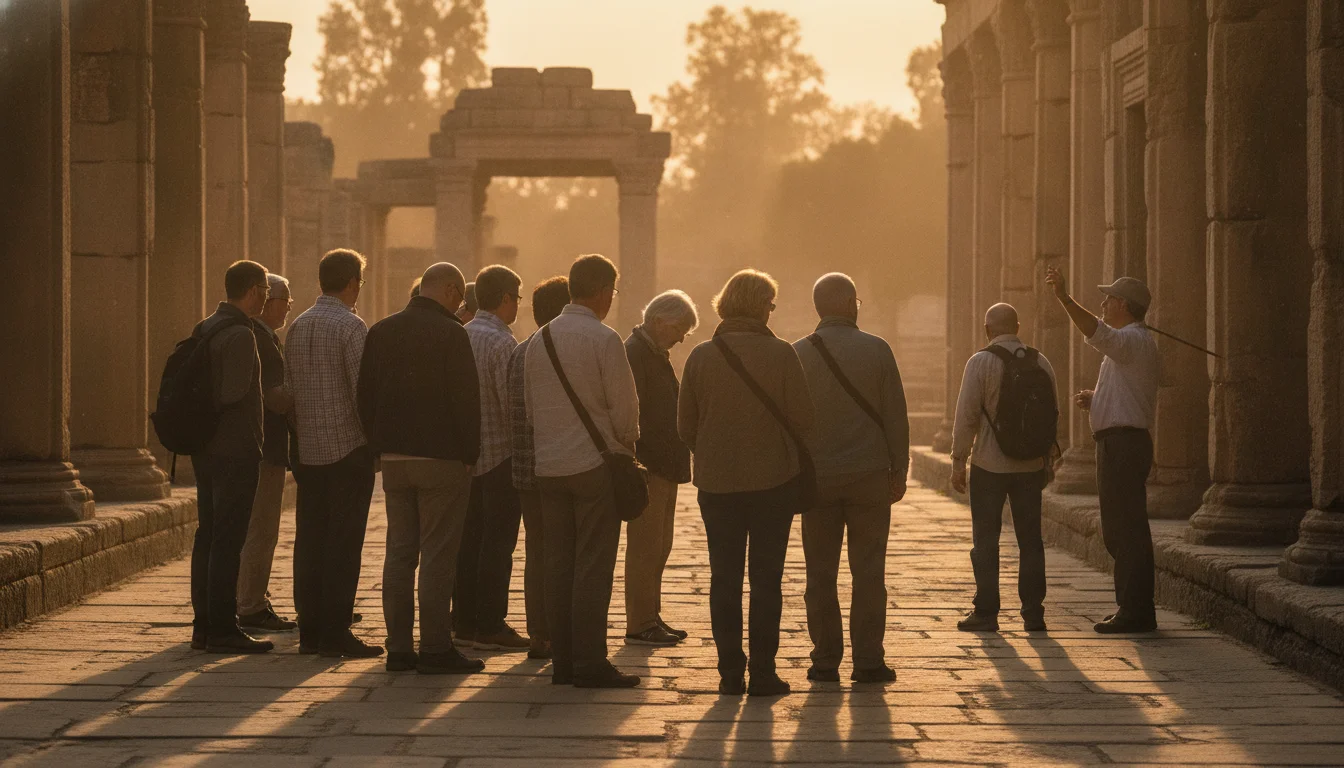
On a vacation tour, a guide tells you facts: the year a building was constructed, how tall a tower is. On a heritage journey, the guide’s job is to connect a physical place to a text, a tradition, or a history your group already carries with them. That requires a guide who understands the theology or history at stake, not just the architecture.
Time Built for Reflection
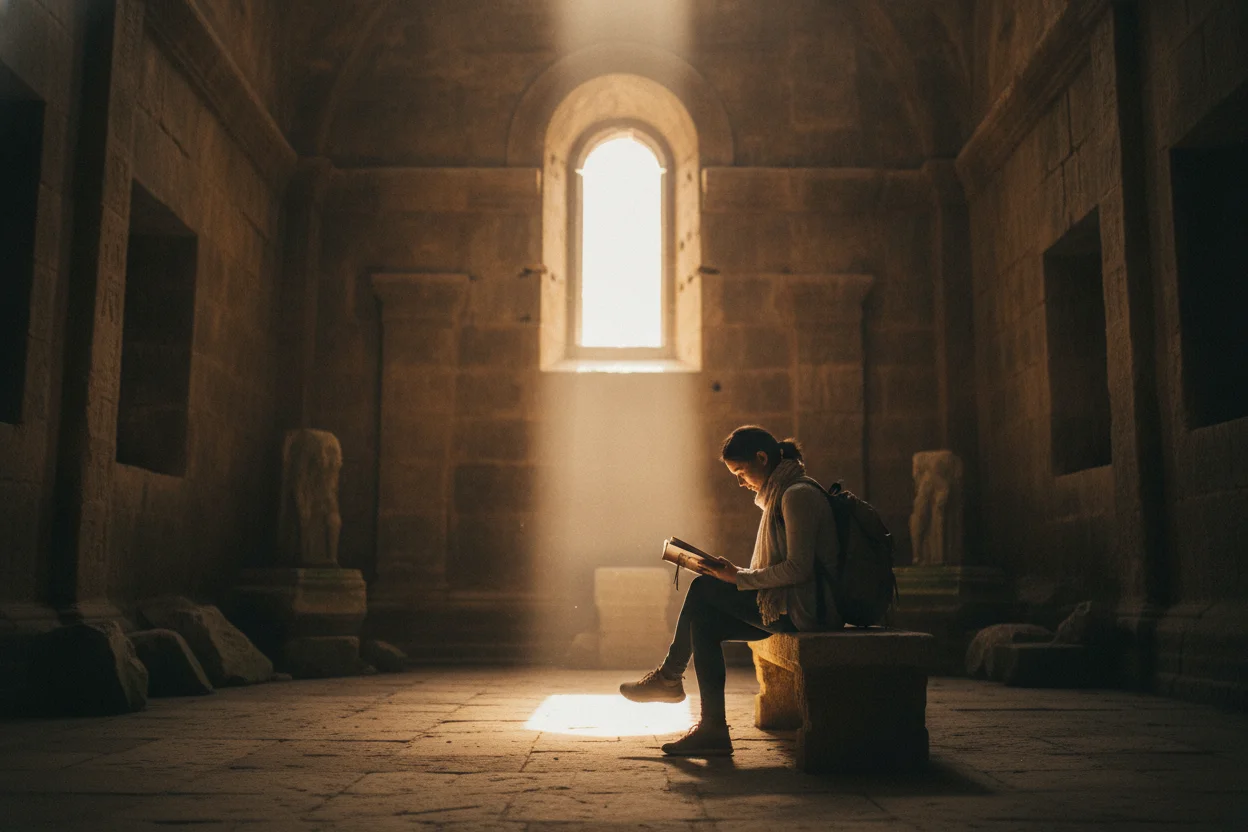
Heritage itineraries build in quiet time at the sites that matter most: time to pray, to read a passage aloud, to simply stand still. A vacation schedule optimizes for seeing the most things. A heritage schedule optimizes for letting the important things land.
A Group, Usually, Traveling Together on Purpose
Most heritage journeys travel as a congregation, a school, or a community group rather than as individual travelers assembled by a tour company. The shared identity of the group, the fact that they will pray together, learn together, and return home to the same community, shapes the pacing and the emotional weight of the trip in a way solo or mixed-stranger travel cannot. Our group heritage tours page covers how that structure works in practice, and for smaller parties or families, our private heritage tours page covers the alternative.
Who Actually Takes These Trips
The travelers who take heritage journeys are pastors and their congregations, rabbis and their communities, Sunday school and yeshiva educators bringing students to see history firsthand, and community leaders bringing a group back to a place tied to their family’s or people’s story. What they have in common is not their faith tradition specifically. It is that they are traveling toward something that already matters to them, not away from routine toward something new.
How a Heritage Journey Differs From Other Faith Travel Formats
Heritage journeys are usually land-based, small-group, multi-day trips built around a specific region’s sites. That is different from a cruise-style “heritage voyage,” which trades depth at each site for the convenience of unpacking once, a tradeoff we cover honestly in our piece on heritage tours versus heritage voyages. It is also different from a single-day heritage excursion tacked onto an unrelated trip, which we explain in our guide to heritage excursions versus full heritage tours. A full heritage journey is the version built for a group that wants the whole arc, not a sample of it.
Why the Distinction Matters When You Plan
If you plan a heritage trip using a general vacation template, you will almost certainly get the pacing wrong. You will schedule too many stops in a day because a vacation itinerary rewards seeing more. You will pick a guide for their charm rather than their grounding in the specific history your group cares about. You will skip the quiet time because it looks like empty schedule space rather than the most important part of the day. Group leaders who have led both kinds of trips tell us this is the single biggest mistake first-timers make, and it is entirely avoidable once you understand that a heritage journey is planned around meaning, not around maximizing the itinerary.
One practical detail worth knowing from the start: with Heritage Tours, the group leader travels free when you bring fifteen or more participants. It is a small fact, but it changes the math for a lot of pastors and rabbis deciding whether leading a trip is realistic for them personally.
FAQ: What Is a Heritage Journey
How is a heritage journey different from a regular vacation?
A vacation is built around rest and personal enjoyment. A heritage journey is built around meaning: every stop connects to a group’s faith, history, or identity. That different intent changes the pacing, the guide’s role, and how much quiet reflection time is built into each day.
Do heritage journeys have to be religious?
Most are faith-based, biblical, Jewish, or Christian heritage specifically, but a heritage journey can also be built around historical or communal identity rather than religious practice. What defines it is that the traveler is connecting to their own story, not sightseeing generally.
Who typically leads a heritage journey?
Usually a pastor, rabbi, educator, or community leader who is bringing their own congregation, school, or community group. The trip is built around that group’s shared identity and story, which shapes the itinerary differently than a trip assembled for unrelated individual travelers.
Is a heritage journey the same as a pilgrimage?
They overlap heavily. A pilgrimage is usually a heritage journey with an explicitly religious or devotional purpose. Not every heritage journey is framed as a pilgrimage, since some are built around historical or educational purpose, but the core structure, meaningful sites, reflection time, a group traveling with shared purpose, is the same.
How do I know if my group is ready for a heritage journey rather than a general trip?
If your group’s interest in a destination comes from its connection to your faith or history rather than general sightseeing appeal, you are describing a heritage journey. That is the signal to look for a heritage-specialist operator rather than a general tour operator assembling a similar-looking itinerary.
If you are trying to figure out whether your congregation or community is ready for this kind of trip, that conversation is exactly where I can help. Our tours page shows the destinations we build heritage journeys around today.
Contact us and let’s talk through what your group’s journey could look like.