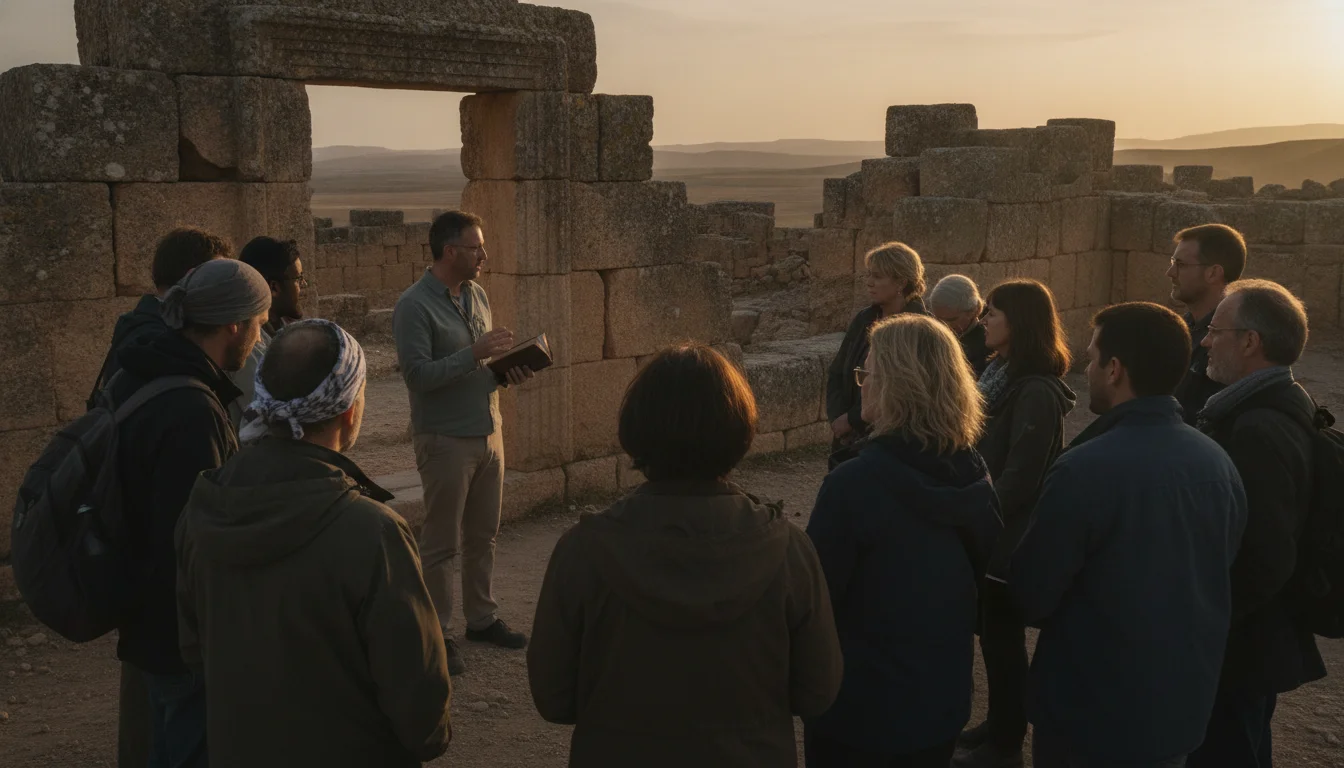
An educator asked me a version of this question a few months ago, and it’s stuck with me because it’s the right question. She’d taken students on a “heritage tour” before with another company and came away disappointed. She said, “We saw everything and understood nothing. What’s actually different about what you do?” I’ve been answering some version of that ever since, and I want to lay it out clearly here, because the word “heritage tour” gets used loosely, and a group leader deserves to know exactly what they’re paying for before they commit a congregation or a classroom to it.
The Standard Sightseeing Tour, Honestly Described
Let me describe the other kind of tour first, without exaggerating it, because it isn’t a bad product for what it’s built to do. A standard sightseeing tour moves a bus through a checklist of famous stops, gives each one twenty to forty minutes, and relies on a guide who delivers roughly the same script regardless of who’s in the group. The pace is built to maximize the number of things you see in a day. The framing is general: dates, dynasties, “this was built in such-and-such century.” It works fine for a traveler who wants a broad overview and a lot of photos.
That is a legitimate kind of trip. It’s just not what a faith group leader is usually looking for, and it’s not what we build.
What Actually Changes in an In-Depth Heritage Tour
The Guide Is Briefed on Your Group, Not Just the Site
Our guides know, before your group ever lands, whether they’re leading a Baptist congregation, a Reform synagogue, a Catholic parish, or a mixed educational group. That shapes how a site gets presented. The same ruin at Ephesus gets framed differently for a group focused on Paul’s letters than for a group focused on general ancient history. A standard sightseeing guide gives the same tour to everyone on the bus. An in-depth heritage guide adjusts the story to the group standing in front of them.
Time Is Allocated by Meaning, Not by Bus Schedule
A standard tour gives every stop roughly the same slice of time because the itinerary is built around logistics. An in-depth heritage tour gives more time to the sites that carry more weight for your group’s story and less time to the ones that don’t, even if that means skipping a famous stop that isn’t relevant to your group’s purpose. We would rather your congregation spend ninety unhurried minutes somewhere that matters than twenty rushed minutes at five places that don’t.
Scripture, Text, and Tradition Are Read on Site
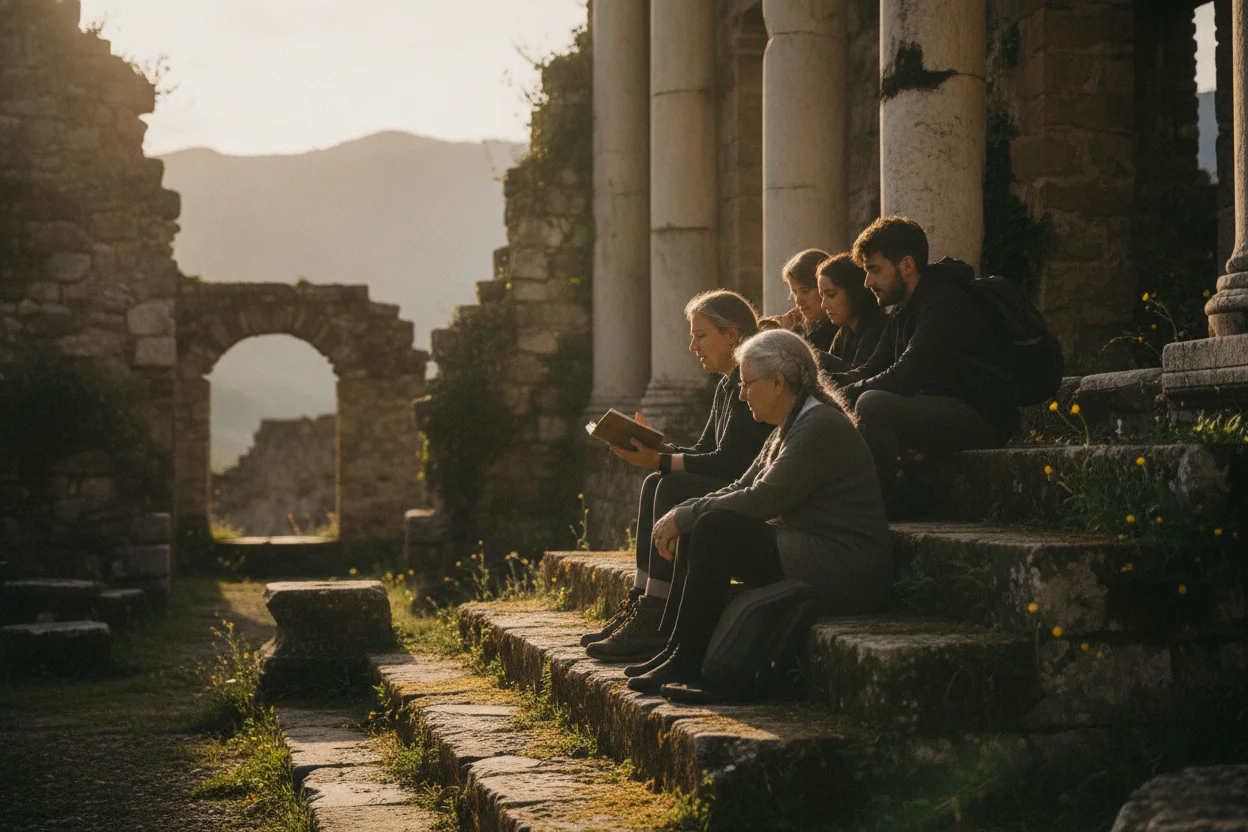
This is maybe the biggest single difference. On an in-depth heritage tour, your guide doesn’t just describe a site. Your group reads the relevant passage, prayer, or text while standing in the place it refers to. Reading Acts 27 while standing at St. Paul’s Bay, or reading from a community’s history while standing in a centuries-old synagogue, changes what the site means to the group. That practice has to be built into the itinerary in advance, planned stop by stop, not left to chance.
The Guide Answers the Hard Questions Honestly
A real heritage guide gets asked, “Is this actually the place?” more than any other question, and how they answer matters. We tell groups plainly when a site’s connection to a biblical figure rests on centuries of tradition rather than archaeological certainty. A guide trained only in general sightseeing often either dodges the question or oversells the answer. Honesty here is what makes everything else we tell your group credible.
The Trip Is Built Around Reflection, Not Just Movement
An in-depth heritage tour builds in moments to stop, gather, and process what your group just experienced, whether that’s a short reflection at a site, a group discussion over dinner, or quiet time built into the schedule on purpose. A standard sightseeing tour moves straight from one stop to the next because the schedule doesn’t have room for anything else.
What This Looks Like in Practice
You can see the difference most clearly in how we structure destinations with dense faith history. In Turkey, an in-depth itinerary doesn’t just drive past Cappadocia’s rock formations, it walks your group through the underground cities where early Christians hid, and talks about what that cost them. In Malta, it doesn’t just mention St. Paul’s shipwreck in passing, it centers the day on the traditional site of the shipwreck and builds the schedule around that meaning. Every one of our destination tours is built this way, not as an afterthought but as the starting design principle.
This is also, frankly, why our trips run a little slower than a typical sightseeing bus tour. We are not optimizing for the number of stamps in your passport. We’re optimizing for what your group actually carries home.
What a Group Leader Should Ask Any Operator
If you’re evaluating whether a trip is a real in-depth heritage tour or a relabeled sightseeing tour, ask these questions of any company you’re considering, including us: Does the guide know our group’s specific faith background before we arrive? Is time allocated based on relevance to our purpose, or evenly across a checklist? Will we read scripture or relevant texts on site? Will the guide tell us honestly when a tradition isn’t provable? If the answer to any of those is vague, you’re likely looking at a standard tour with heritage language layered on top.
One thing worth knowing as you plan: the group leader travels free when you bring fifteen or more participants, whether you’re building a congregational trip or an educational one. That’s a standing policy across our group heritage tours.
FAQ: In-Depth Heritage Tours vs. Standard Tours
Does an in-depth heritage tour cost more than a standard sightseeing tour?
Not necessarily more per day, but the itinerary is usually built around fewer stops per day with more depth at each one, rather than maximizing the number of sites visited. The value shows up in what your group understands and remembers, not in a longer receipt.
Can a mixed group, some deeply religious, some more casual, still benefit from an in-depth tour?
Yes. The framing adapts to your group’s stated purpose, and most mixed groups find the deeper approach more meaningful, not less, even for members who came along more casually. The reading and reflection moments tend to be what people remember years later.
Do you ever recommend a standard sightseeing pace instead?
Occasionally, if a group is explicitly focused on general historical interest rather than faith content, a slightly faster pace with broader coverage can make sense. We’ll say so honestly during planning rather than forcing every group into the same mold.
How do you brief guides on a specific group’s background?
Before your trip, we gather information on your group’s faith tradition, the purpose of the trip, and any specific texts or themes you want emphasized. That goes directly to the guide leading your group, so the framing at each site matches what your congregation or class actually came for.
What’s the biggest thing groups notice is different, afterward?
Almost universally, it’s the reading-on-site practice. Group leaders tell us that hearing a passage read aloud while standing in the actual location changes how their people engage with scripture going forward, well after the trip ends.
If you want to see what an in-depth itinerary looks like for the destination you’re considering, I’d be glad to walk you through a real draft. Start with our about page for our full approach, or see our tours page for the destinations we build these trips around.
Contact us and let’s build something your group will actually take home with them.