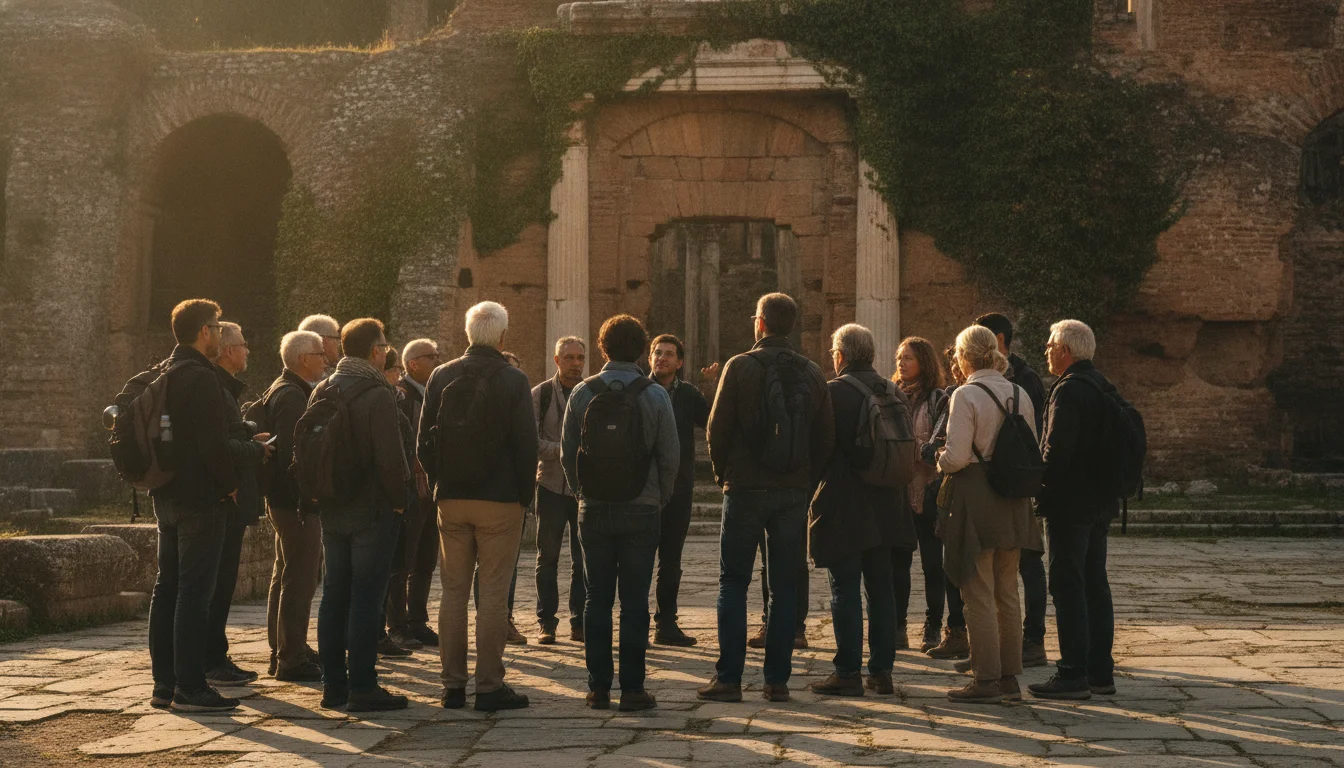
A pastor once told me his biggest fear was not the flight, the cost, or the itinerary. It was that his congregation would end up feeling like “forty strangers on a bus,” lost in a group too big to feel like a shared spiritual experience. I understood exactly what he meant, and I have built every group trip since around avoiding that outcome. Group travel and personal travel are not opposites. Done right, a group of thirty can feel more intimate than two people traveling alone, because they are sharing the experience with people they already know.
Here is how that actually works, mechanically, not just as a nice idea.
Why Group Size Matters More Than People Expect
Ten to forty is the range where heritage group travel works best, and the reasons are practical, not arbitrary. Below ten, you lose the cost efficiencies that make group travel affordable, since fixed costs like the coach and guide fee don’t spread thin enough. Above forty, a single coach and a single guide start to strain, and the trip usually needs to split into two coordinated groups rather than one, which changes the logistics significantly. Inside that ten-to-forty range, one coach, one guide, and one itinerary can serve everyone well, which is the foundation of keeping the experience unified rather than fragmented.
The Logistics That Make Group Travel Work
One guide, one coach, one itinerary. This sounds obvious, but it is the single biggest factor in whether a group trip feels cohesive. Everyone hears the same explanation at the same site at the same time, which means the group can actually discuss what they just saw over dinner instead of comparing four different versions of the story.
Room assignments planned in advance. Double-occupancy hotel blocks, handled correctly, mean no one is scrambling at check-in or awkwardly paired with a stranger. We ask for rooming preferences before departure specifically so this is settled before your group ever leaves home.
Meal logistics built for the group’s actual needs. Whether that means kosher catering, dietary restrictions, or simply seating a group of thirty in a restaurant that can handle it without a ninety-minute wait, this gets planned into the itinerary rather than handled on the fly.
Pacing that respects a mixed-age group. Congregation groups routinely span multiple generations in one trip. A good group itinerary paces walking distance and rest stops for the group’s actual composition, not for the fittest member.

Keeping It Personal Inside a Group of Thirty
The mechanics above are what make a group trip function. What makes it feel personal is different, and it comes down to structure inside the group itself.
Small moments built into a big schedule. Even with thirty people on one itinerary, the best trips build in moments of quiet reflection at key sites, time for a family to stand somewhere together without being rushed to the next stop. A good guide knows which sites call for that pause and which ones move faster.
Shared meals, not just shared buses. Group dinners where the day’s experience gets discussed together do more to build the “we experienced this as a community” feeling than almost anything else on the itinerary. This is where forty individuals actually become one traveling congregation.
The leader’s role stays central. On a well-run group trip, your congregation is still looking to you, the pastor or rabbi or educator, for the spiritual or educational framing, not just to a hired guide. We build the schedule to protect space for you to lead your own group’s reflection and teaching, rather than having the guide’s script crowd that out.
The Group Leader’s Job Changes, Not Disappears
A common worry among first-time group leaders is that a large group means losing the personal connection to their own people during the trip, since so much of the logistics gets handled by us. In practice the opposite tends to happen. Once hotel assignments, meals, and site logistics are off your plate, you have more bandwidth to actually be present with your congregation, not less. The mechanical work is exactly what we exist to absorb.
That is also the thinking behind our standing group policy: the group leader travels free when you bring fifteen or more participants. It is not just a cost benefit. It reflects that the leader’s real job on this trip is leading their people, and we want that job to be financially and logistically supported, not competing with your own travel costs for attention.
Choosing Between an Escorted Group Trip and Going It Alone
Some leaders wonder whether a smaller, self-guided approach might actually feel more personal than a full group tour. It is a reasonable question, and the honest answer depends on your group. Our guide on escorted versus self-guided heritage tours walks through that tradeoff directly, since it is really a different question than group size alone.
If you want to see how we structure the full group experience end to end, our group heritage tours page covers the model in detail, and our private tours page is worth a look if your numbers are closer to the smaller end of the range.
FAQ: Heritage Group Travel
What’s the ideal group size for a heritage tour?
Ten to forty participants works best. Below ten, the cost efficiencies of shared coach and guide costs shrink. Above forty, a single coach and guide usually can’t serve the group well, and the trip often needs to split into two coordinated groups.
How do you keep a large group from feeling impersonal?
Through structure: one guide and one itinerary so everyone shares the same experience, built-in time for quiet reflection at key sites, shared group meals, and protecting the group leader’s own role in leading reflection and teaching rather than letting logistics crowd it out.
Does the group leader still get personal time with their group?
Yes, usually more than leaders expect. Once we handle hotel assignments, meals, and site logistics, the leader has more bandwidth to be present with their congregation, not less. That is the point of us absorbing the mechanical work.
How are dietary needs and mobility differences handled in a group?
These get planned into the itinerary in advance rather than handled on the fly: meal logistics account for dietary restrictions, and pacing accounts for a mixed-age group so the trip doesn’t move at a pace only the fittest members can sustain.
Does the group leader really travel free?
Yes. With fifteen or more participants, the group leader’s seat, land and air, is covered, with the cost spread across the group as a small per-person amount built into the price.
If you are weighing whether your congregation or group is the right size and shape for a trip like this, tell me roughly how many people you are expecting and I will help you think it through.
Contact us whenever you want to start planning.