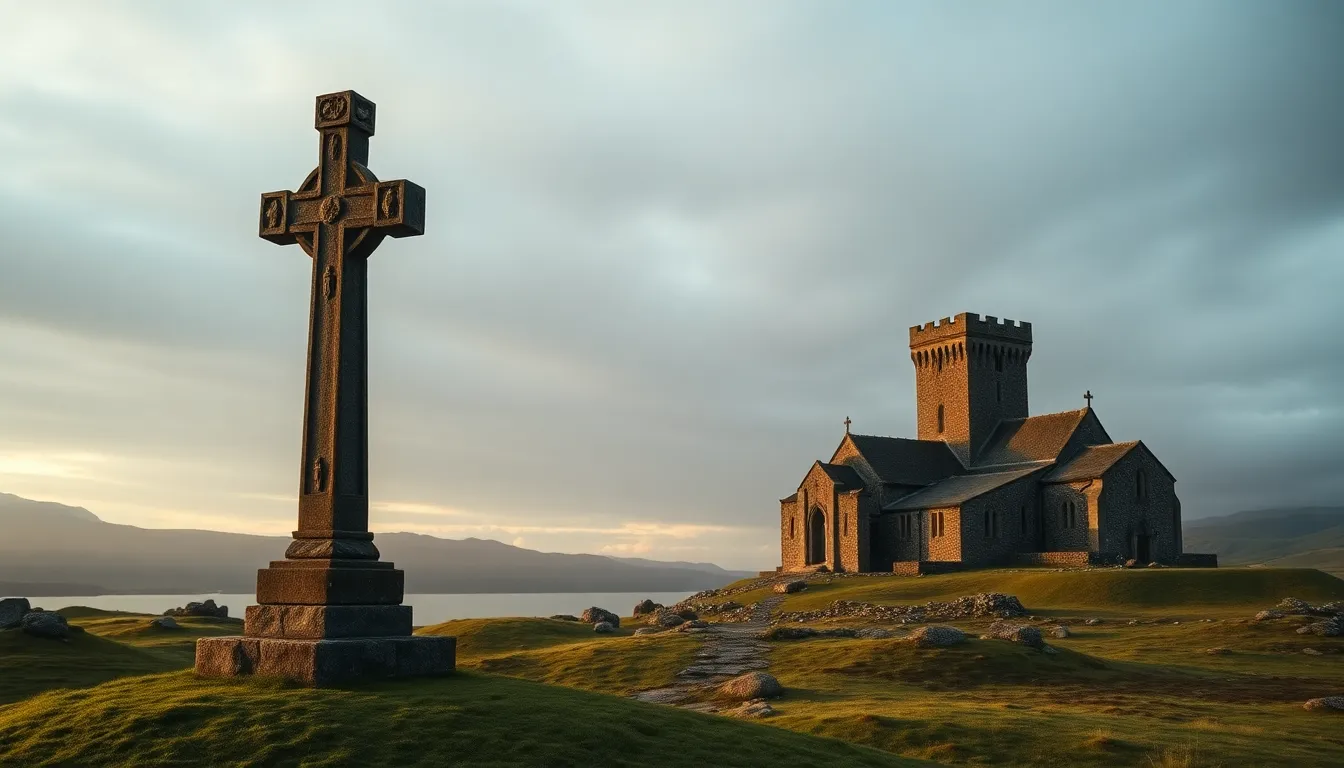
More than once a pastor has told me, “We want to walk where Celtic Christianity began, and we cannot tell whether that means the United Kingdom or Ireland.” It is a fair confusion. The Celtic church did not respect modern borders. Columba was Irish-born but did his great work on a Scottish island. Patrick was British by birth but is buried in Ireland. The story belongs to both, which is exactly why the choice is harder than it looks.
So let me lay out the two the way I would on a planning call, because the Celtic heritage of the UK and the Celtic heritage of Ireland overlap, but they are not the same journey, and the right one depends on which thread of the story your congregation came to follow.
The Same Story, Two Homelands
Celtic Christianity was a single movement that spread across the Irish Sea in both directions for centuries. Trying to assign it to one country misses the point. But each side holds different anchors.
The United Kingdom side, mostly Scotland and the far north of England, holds Iona, where Columba landed in 563 and launched the mission that reached the Picts and the north. It holds Lindisfarne, the Holy Island off the Northumberland coast where Aidan carried the faith south. The UK thread is the story of the mission spreading outward, of monks crossing water to plant the gospel in new ground.
The Ireland side holds the origin. It holds Patrick at Armagh and Downpatrick, Brigid at Kildare, the monastic city of Glendalough, and the high crosses of Clonmacnoise on the Shannon. The Ireland thread is the story of where Celtic Christianity was born and how it built a golden age of monasteries and manuscripts.
One country is the cradle. The other is the great sending. Both are real, and which one calls your group tells you where to go.
The Case for the United Kingdom
For many faith groups, the UK side of the Celtic story is the stronger first journey.
Iona is unmatched as a destination. I will say it plainly. There is no single site in Ireland that does to a group what Iona does. The crossing by ferry to a small, treeless island, the restored abbey, the sense of standing at the launching point of the northern mission, all of it lands hard. For a congregation that wants one defining moment, the UK has it.
It pairs with Patrick across a short crossing. Here is what people miss. Northern Ireland is part of the United Kingdom, which means a UK Celtic journey can include the Patrick sites at Armagh and Downpatrick alongside Scotland’s Iona, all under one itinerary, with only a short sea crossing between Scotland and the Antrim coast. You get both the sending and a piece of the origin in one trip.
The geography tells the mission story. Traveling from Iona down toward Lindisfarne traces the actual path the gospel took as it spread south through the north of Britain. For a group that loves the missionary thread, walking it in order is powerful.
The honest tradeoff is that the UK does not give you the dense concentration of monastic ruins and high crosses that Ireland does. The story here is about movement, not accumulation.
The Case for Ireland
Ireland makes a strong case as the homeland of it all.
It is where the story starts. If your congregation wants to stand where Patrick actually ministered, where the faith first took the Irish island, Ireland is the only answer. Downpatrick, Armagh, the Hill of Slane where tradition says Patrick lit the Paschal fire, these are origin sites, and origin matters to a lot of groups.
The monastic ruins are extraordinary. Glendalough in its wooded valley, Clonmacnoise on the Shannon, the high crosses at Monasterboice, the round towers, the manuscript heritage that gave the world the Book of Kells. Ireland concentrates Celtic Christian heritage more densely than anywhere on earth. A group that wants to be surrounded by it goes to Ireland.
The hospitality carries the trip. Irish warmth is not a cliche. For a congregation traveling together, the welcome and the music and the ease of the place add something to the journey that is hard to name but easy to feel.
The tradeoff is that Ireland, taken alone, leaves out Iona and the great northern sending. You get the cradle but not the launch.
How a Group Should Actually Choose
When a leader cannot decide, I ask what their people came for, and the answer settles it.
Are you drawn to the origin or the mission?
If your congregation wants to stand where Celtic Christianity was born, with Patrick and the early Irish monasteries, choose Ireland. If they are drawn to the mission spreading outward, to Columba and Iona and the gospel crossing water to new ground, choose the UK. Origin or sending. That is the cleanest fork in the road.
Do you want concentration or a defining peak?
Ireland gives you density, ruin after ruin, cross after cross. The UK gives you Iona, a single peak that can carry an entire trip. Some groups want to be immersed in heritage; others want one moment that marks them. Know which your people are.
How important is the Patrick story specifically?
If Patrick is the heart of what your group wants, note that the UK route through Northern Ireland reaches the major Patrick sites at Armagh and Downpatrick while still including Iona in Scotland. That combination is often the answer for a group that wants both threads. Our comparison of Iona and Lindisfarne goes deeper on the two great island sites if the mission thread is what pulls you.
The Practical and Financial Picture
Logistically, the two are more alike than different. Both involve island crossings, both reward a coach itinerary with a guide who knows the saints, both ask for hotels in smaller towns rather than big cities. Neither is meaningfully cheaper than the other once you account for the ferries and the ground.
The factor that shapes the budget most is the group leader benefit. With Heritage Tours, the group leader travels free when 15 or more participants join the trip, covering flights, hotels, ground transport, ferry crossings, meals, and site admissions. That holds whether you choose the UK, Ireland, or a combined journey, so the cost rarely needs to drive the decision. If you are weighing how the trip is structured overall, our guide on a private group tour versus a shared departure covers what shapes the price.
FAQ: UK vs Ireland for Celtic Heritage
Is Celtic Christian heritage stronger in the UK or Ireland?
Both are essential, but they hold different parts of the story. Ireland is the cradle, where Patrick ministered and where the great monasteries like Glendalough and Clonmacnoise grew. The UK, mainly Scotland and northern England, is the great sending, home to Iona and Lindisfarne, where the northern mission launched. Neither is stronger; they are different chapters of one movement.
Can I see both Iona and the Patrick sites on one trip?
Yes, and this surprises many groups. Northern Ireland is part of the United Kingdom and sits a short sea crossing from Scotland’s Antrim-facing coast. A single UK itinerary can include Iona in Scotland and the Patrick sites at Armagh and Downpatrick in Northern Ireland, giving you both the northern mission and a key piece of the Irish origin.
Which is better for a group focused on Saint Patrick?
If Patrick is the whole focus, Ireland and Northern Ireland together hold the core sites: Downpatrick, Armagh, and the Hill of Slane. A UK itinerary through Northern Ireland reaches the main Patrick sites while adding Iona, which many Patrick-focused groups find is the richer combination.
Does Ireland or the UK have more Celtic monastic ruins?
Ireland, by a clear margin. Glendalough, Clonmacnoise, Monasterboice, the round towers, and the high crosses concentrate Celtic Christian heritage more densely than anywhere in the UK. If your group wants to be immersed in ruins and crosses, Ireland delivers that; the UK’s strength is the defining island sites rather than sheer volume.
Does the group leader travel free on either route?
Yes. With Heritage Tours, the group leader travels free when the group includes 15 or more participants, whether you travel the UK, Ireland, or a combined Celtic itinerary. It covers the full trip: flights, hotels, ground transport, ferry crossings, meals, and site admissions.
If your congregation is drawn to Celtic Christianity and you are not sure whether the UK or Ireland fits the thread your people want to follow, I would be glad to help you sort it out. The story spans both, and the right starting point depends on what your group came to walk.
Explore our United Kingdom destination page, see how we run our group heritage tours, or start the conversation here.