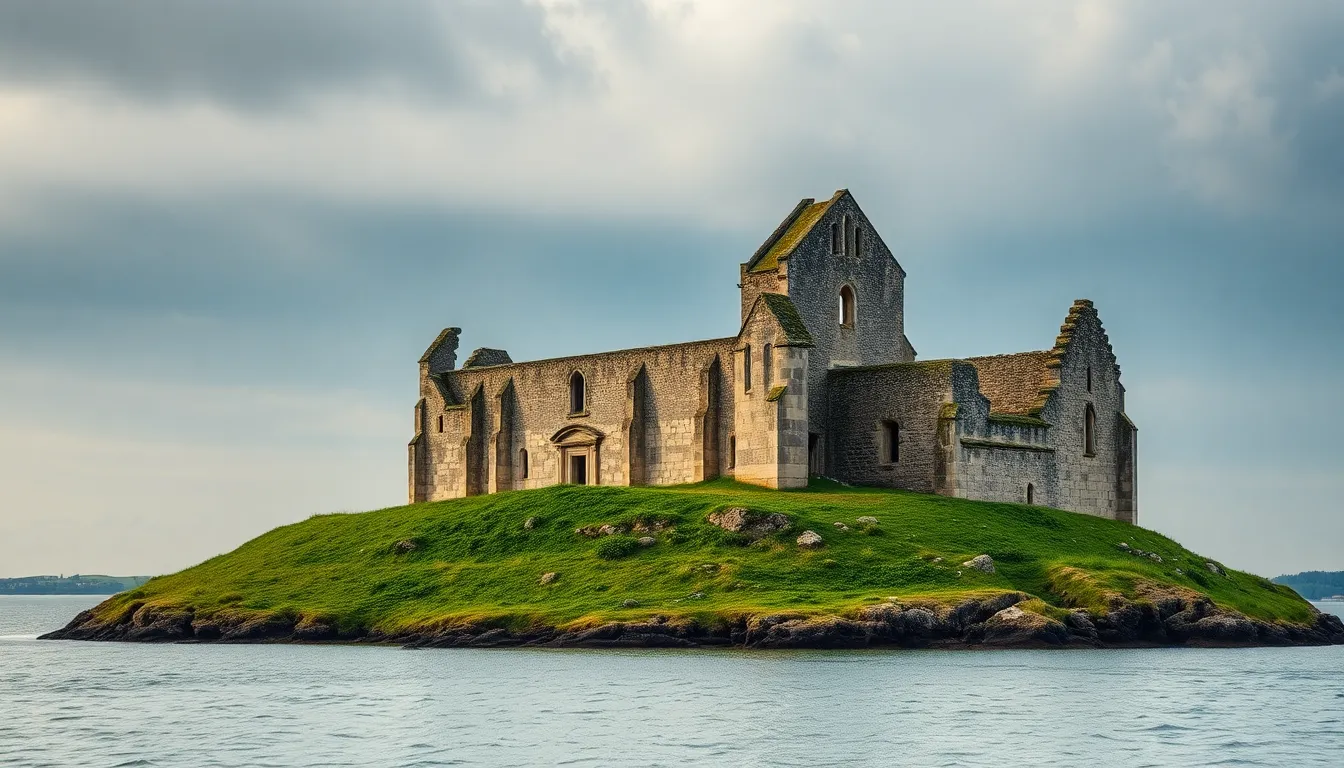
When a group wants a Celtic pilgrimage built around a holy island, two names come up: Iona and Lindisfarne. I have led congregations to both, and the question I get is always some version of “which one is the real one?” The honest answer is that they are two halves of the same story. Columba’s mission on Iona sent Aidan south, and Aidan founded Lindisfarne. One launched the northern mission; the other carried it into England. Choosing between them means choosing which end of that thread your group wants to hold.
So let me set them side by side the way I would on a planning call, because they look similar on a map, two small holy islands off the coast, but reaching them and standing on them are genuinely different experiences.
Two Islands, One Mission
It helps to understand how they connect before you compare them.
Iona sits off the western tip of Mull in the Scottish Hebrides. Columba landed there in 563, founded his monastery, and from that windswept rock the gospel went out to the Picts and across the north. Iona is the source, the launching point of Celtic Christianity in Britain.
Lindisfarne, the Holy Island, sits off the Northumberland coast in the northeast of England. In 635 Aidan came from Iona to found a monastery there at the invitation of King Oswald, and from Lindisfarne the faith spread through Northumbria and beyond. It is also where the Lindisfarne Gospels, one of the great illuminated manuscripts, were made. Lindisfarne is the great fruit of Iona’s sending.
So this is not really a rivalry. It is a sequence. But for a single trip, your group usually anchors on one, and they ask for different things.
The Case for Iona
For many groups, Iona is the deeper pilgrimage, and here is why.
It is the source. Standing on Iona, your group is standing where the northern mission began. That sense of origin, of being at the headwaters, moves people in a way that is hard to match. For a congregation that wants to feel the beginning of something, Iona is it.
The remoteness does spiritual work. Getting to Iona is genuinely a journey. You cross to Mull, drive the length of the island, then take a passenger ferry across the Sound. By the time your group steps onto Iona, they have traveled, and the effort sets them up to receive the place. The restored abbey, the quiet, the sea on every side, all of it lands harder because of what it took to arrive.
The abbey is alive. Iona is not just ruins. The restored abbey is a working place of worship and community, and a group can join in the rhythm of prayer there. That living quality gives Iona an immediacy that pure ruins do not have.
The tradeoff is the effort. Iona is the harder island to reach, and it asks for a full day of travel built around ferry timings.
The Case for Lindisfarne
Lindisfarne has its own pull, and for some groups it is the better choice.
It carries the manuscript heritage. The Lindisfarne Gospels were created here, and for a group moved by the marriage of faith and art in the Celtic church, that heritage is a powerful anchor. Standing where those pages were illuminated connects the gospel to the long work of preserving it.
The tidal causeway is unforgettable. Lindisfarne is reached by a causeway that floods at high tide and clears at low tide. Twice a day the island is cut off from the mainland. Crossing on the tide-bound road, knowing the sea will close it behind you, gives a group a vivid, physical sense of stepping apart from the world. It is one of the most memorable approaches in any pilgrimage I lead.
It is easier to reach than Iona. Lindisfarne sits closer to the road network, and once the tide is right, the crossing is a short drive rather than a ferry coordination. For a group with limited days or older members, Lindisfarne is the gentler island.
The tradeoff is that Lindisfarne is the fruit rather than the root. It is glorious, but it does not carry the sense of origin that Iona holds.
The One Thing That Decides It: The Crossings
More than the history, the practical access shapes a group’s experience of each island, and this is where planning earns its keep.
Iona and the ferries
Reaching Iona means coordinating two ferry legs and a drive across Mull, all on the operator’s timetable and all subject to weather in the Hebrides. It is entirely doable, and the reward is worth it, but it requires an itinerary with margin built in. A private group itinerary lets you build the day around the right crossing with room for weather, rather than racing a fixed schedule.
Lindisfarne and the tides
Lindisfarne’s causeway is governed by the tide, and the safe crossing windows are published in advance to the minute. You cannot cross when the tide is in. Period. A group has to plan arrival and departure around those windows, which means the day is built around the tide table. Get it right and the experience is magical. Get it wrong and you are stranded or shut out. This is exactly the kind of detail where a guide who knows the islands matters. For a wider view of how the island crossings shape a UK itinerary, our guide on a private group tour versus a shared departure covers why timing flexibility is worth so much.
Why Many Groups Do Both
Here is what I often suggest when a group cannot choose: do both, in order. Begin on Iona, where the mission launched, then travel south and end on Lindisfarne, where it bore fruit. Walking the islands in the sequence the gospel actually traveled turns a pilgrimage into a story with a beginning and an end. It asks for more days, but for a group built around the Celtic church, the through-line is worth it. Our guide on choosing Scotland or Wales for a first trip can help if you are still deciding how wide to make the journey.
The Group Leader Benefit
Whichever island anchors your pilgrimage, the economics work the same way. With Heritage Tours, the group leader travels free when 15 or more participants join the trip. That covers the pastor, rabbi, or educator organizing everything, on flights, hotels, ground transport, ferry crossings, meals, and site admissions. Whether your group ends up on Iona, on Lindisfarne, or on both, that benefit holds, which keeps the decision focused on the pilgrimage rather than the budget.
FAQ: Iona vs Lindisfarne
Is Iona or Lindisfarne the more important Celtic Christian site?
Both matter deeply, but in different ways. Iona is the source, where Columba launched the northern mission in 563. Lindisfarne is the great fruit of that mission, founded from Iona by Aidan in 635 and home to the Lindisfarne Gospels. Iona carries the sense of origin; Lindisfarne carries the spread of the faith into England and its manuscript heritage.
Is Lindisfarne in Scotland or England?
Lindisfarne, the Holy Island, is in England, off the Northumberland coast in the northeast. Iona is in Scotland, in the Hebrides off the west coast. They sit at opposite ends of the country, which is why a trip including both involves real travel between them, tracing the path the mission actually took.
Which island is easier to reach for an older group?
Lindisfarne. It is reached by a tidal causeway that, when the tide is right, is a short drive from the mainland road. Iona requires a longer journey, a ferry to Mull, a drive across the island, then a passenger ferry to Iona itself. For groups with limited mobility or fewer days, Lindisfarne is the gentler choice.
How do the tides affect a visit to Lindisfarne?
Lindisfarne is cut off from the mainland twice a day at high tide. The safe crossing windows are published in advance, and a group must time arrival and departure around them. This makes the day depend on the tide table, which is why a guide who knows the island is essential. The flooded causeway is also part of what makes the visit memorable.
Can we visit both Iona and Lindisfarne on one trip?
Yes, and many groups do. Visiting them in order, Iona first as the source, then Lindisfarne as the fruit, lets your pilgrimage follow the path the gospel traveled. It asks for more days because the islands sit far apart, but for a group built around the Celtic church, the sequence gives the whole journey a clear arc.
If your group is planning a Celtic pilgrimage and you are weighing Iona, Lindisfarne, or both, I would be glad to help you build it around the right crossings and tides so the islands give your people everything they hold.
Explore our United Kingdom destination page, see how we run our group heritage tours, or start the conversation here.