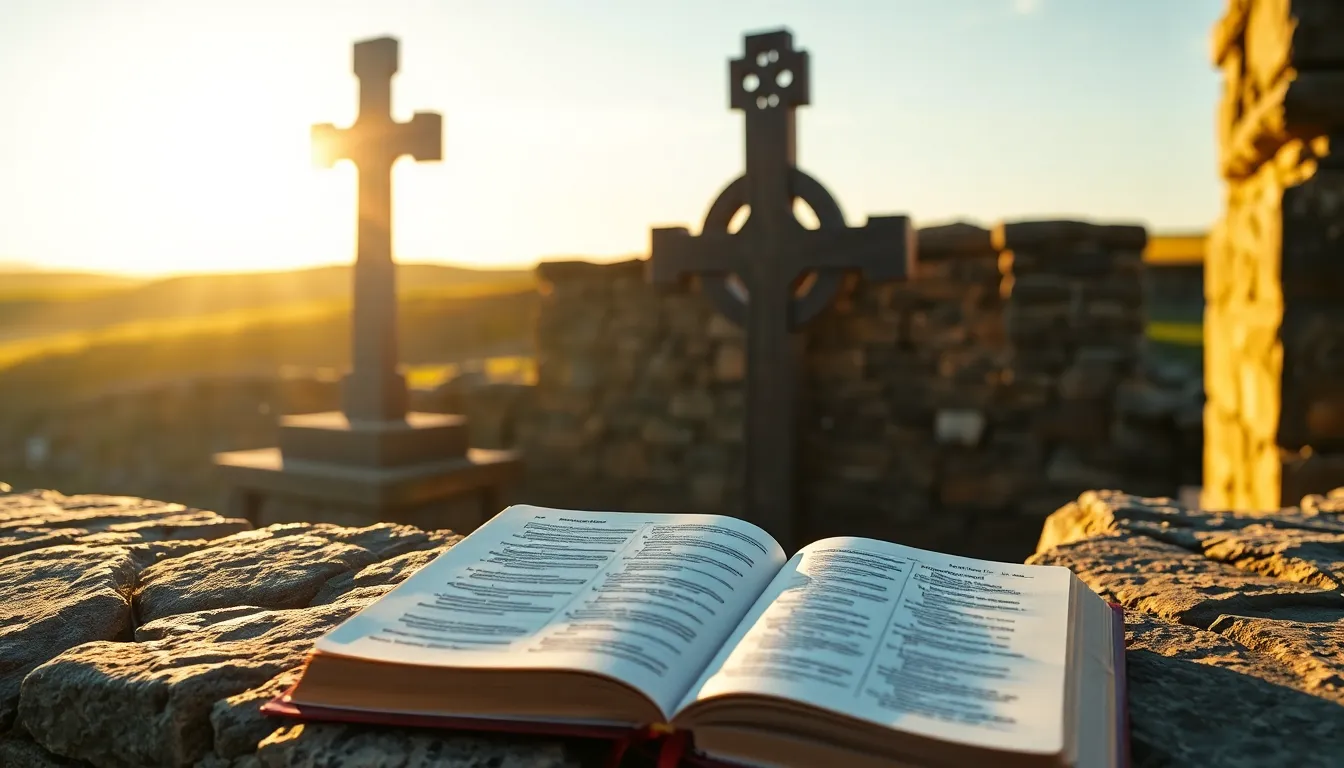
The difference between a good heritage trip and one that changes people is almost always the teaching around it. I have watched two groups stand in the exact same abbey on Iona, hear the same guide, see the same stones, and walk away with completely different experiences. One group saw an old ruin in a beautiful place. The other understood they were standing in the cradle of how the faith reached their part of the world. The difference was not the site. It was the framing their leader gave it.
That framing is your work, and it is work no guide can do for you. A local guide carries the history of a place. Only you, who knows your people and the faith they hold, can turn that history into teaching that lands. So this guide is about exactly that: how clergy turn a trip through Scotland, Wales, and Northern Ireland into a curriculum, not just an itinerary.
Treat the Trip as a Course, Not a Tour
The most useful shift a leader can make is to stop thinking of the trip as a sequence of sites and start thinking of it as a course with a syllabus. A course has a question it is answering, a structure that builds, and a destination it is moving toward. A tour just visits places.
When you frame the trip as a course, every decision gets easier. You know which sites belong and which are pleasant distractions. You know what to teach before you leave, what to draw out at each site, and how to tie it together at the end. Your people stop experiencing the trip as a blur of beautiful places and start experiencing it as a single argument unfolding across days. The full range of threads these nations offer is laid out in our group tour guide for Britain’s nations, and choosing one of them as your course’s spine is the first move.
The Three Great Threads You Can Teach
These nations hold three teaching threads that work beautifully for a faith group. You do not teach all three. You choose one as your spine and let the others appear as context.
Celtic Christianity
This is the story of how the faith reached these islands and spread, carried by figures like Columba and Patrick, lived out in island monasteries and remote communities. The teaching here is about a particular shape of Christian life: deeply rooted in place, disciplined, missionary, woven into the landscape. For a congregation, the lesson is about how faith takes root and travels, and what it costs to carry it. Standing on Iona, your people are not looking at ruins. They are looking at the launch point for the Christianization of much of northern Britain.
The Reformation
Scotland’s Reformation under John Knox is one of the most teachable chapters in church history, because it is so concrete. The convictions, the conflicts, the consequences are all written into the buildings and the city of Edinburgh. The teaching thread here is about conviction under pressure, about what people believed strongly enough to overturn a whole society for. For a congregation wrestling with what it means to hold the faith firmly in their own time, this thread is direct and bracing.
Revival and Faithfulness Under Pressure
The Welsh Revival of 1904, when the Spirit swept through ordinary chapels and valleys, and the story of the Covenanters who held to their faith at the cost of their lives, form a third thread about cost and renewal. The teaching here is about what happens when faith moves through a people, and what it asks of them. This thread tends to land hardest emotionally, because it is about ordinary believers, not famous figures.
Most leaders choose one thread and find that the other two naturally appear as the trip moves. The clergy planning the practical side of all this will find our guide on building your congregation’s trip from scratch helpful for fitting the teaching to the route.
Teach Before You Leave
The single highest-leverage thing a leader can do is teach the framework before the trip, not during it. A few sessions in the weeks before departure, laying out the thread you have chosen, the figures and events your people will encounter, and the question the trip is answering, multiplies everything that happens once you arrive.
The reason is simple. At the site itself, your people’s attention is full. They are taking in the place, the weather, the guide, the emotion of being there. That is the worst moment to introduce new historical information. If they arrive already knowing who Columba was and why he mattered, the site confirms and deepens what they learned. If they are meeting him for the first time at the abbey, half the encounter is spent just trying to catch up. Front-load the learning so the trip becomes recognition rather than introduction.
Frame Each Site in the Morning
On the trip itself, your teaching role at each site is small and precise. A few minutes in the morning, before the day begins, is usually enough. Remind your people what they are about to see, place it in the thread, and pose the question you want them carrying as they walk. Then step back and let the guide carry the history and let the place do its own work.
Resist the urge to teach constantly. Heritage sites teach through presence and silence as much as through words, and a leader who narrates everything crowds out the encounter. Your job is to open the door each morning and then get out of the way. The most powerful teaching often happens in the quiet you protect, not the words you add.
Make Space for Reflection, Where the Learning Settles
Information becomes formation in reflection, and that is the part most trips skip. Build unhurried evenings into the trip where your group can process together, because the real learning settles when people put words to what they felt. Some of the deepest understanding on these journeys does not happen at the site at all. It happens at dinner, when someone says what the abbey stirred in them and the table goes quiet.
Give those evenings a light structure. A single question, a short passage, a few minutes of shared reflection. Not a lecture, just enough scaffolding to let people connect the day’s encounter to the thread and to their own faith. This is where a tour becomes formation, and it is entirely in your hands.
Tie It Together at the End
A course has a conclusion, and your trip needs one too. On the final evening, draw the thread together. Name what your people have seen across the days and what it adds up to. Return to the question you posed at the start and let the group answer it now, out of their own experience. Send them home not with a scrapbook of separate sites but with a single understanding they can carry into their faith and pass on to others.
This closing is also what turns travelers into advocates for the next trip, because people who understood what they experienced want others to have it too.
How the Logistics Support the Teaching
None of this teaching work is possible if you are also managing the logistics. That is the quiet argument for running the trip with an operator who knows these nations. With the coach, the ferries, the accommodation near the heritage, the local guides, and the pace all carried by Heritage Tours, your attention stays free for the part only you can do. And when your group reaches 15 or more participants, you, the leader, travel free, with your full trip covered, which means you can give yourself fully to teaching and shepherding rather than worrying about your own cost. See how that works on our group heritage tours page.
FAQ: Educational Framing for Heritage Trips
How is an educational heritage trip different from a regular group tour?
An educational trip is built around a teaching thread, treated like a course with a question, a structure, and a conclusion, rather than a sequence of sites. The leader frames each place within that thread, teaches the framework before departure, and makes space for reflection so information becomes formation. A regular tour shows the sights. An educational trip helps a congregation understand why these places shaped the faith they hold.
Which teaching thread should I choose for my congregation?
Choose one of three: Celtic Christianity (how the faith reached and spread through these islands), the Reformation (conviction under pressure, centered on Scotland and John Knox), or revival and faithfulness under cost (the 1904 Welsh Revival and the Covenanters). Pick the one your people most need to encounter, make it your spine, and let the other threads appear as context rather than trying to teach all three.
Should I teach the history during the trip or before it?
Before it. At the site, your people’s attention is full of the place, the guide, and the emotion of being there, which is the worst moment to introduce new historical information. Teach the framework in a few sessions before departure so the trip becomes recognition and deepening rather than a scramble to catch up. On the trip, keep your teaching to a few framing minutes each morning.
How do I make sure the learning actually sticks?
Build unhurried evenings for reflection, because information becomes formation when people put words to what they felt. Give those evenings a light structure, a single question or short passage, and let the group process together. Much of the deepest understanding happens at dinner rather than at the site. Then tie the whole thread together on the final evening so people go home with one understanding, not a blur of separate places.
How do I find time to teach if I’m also running the trip?
You let the operator run the trip. With the coach, ferries, accommodation, local guides, and pace all handled by Heritage Tours, your attention stays free for the teaching only you can do. And because the leader travels free at 15 or more participants, with the full trip covered, you can give yourself entirely to shepherding rather than logistics or your own cost.
If you want your congregation to come home understanding what they saw rather than just remembering that it was beautiful, the framing is everything, and it is the part of the trip you are uniquely equipped to lead. I am glad to help you shape a route around the thread you want to teach.
Start the conversation here, and see the regions side by side on our United Kingdom destination page.