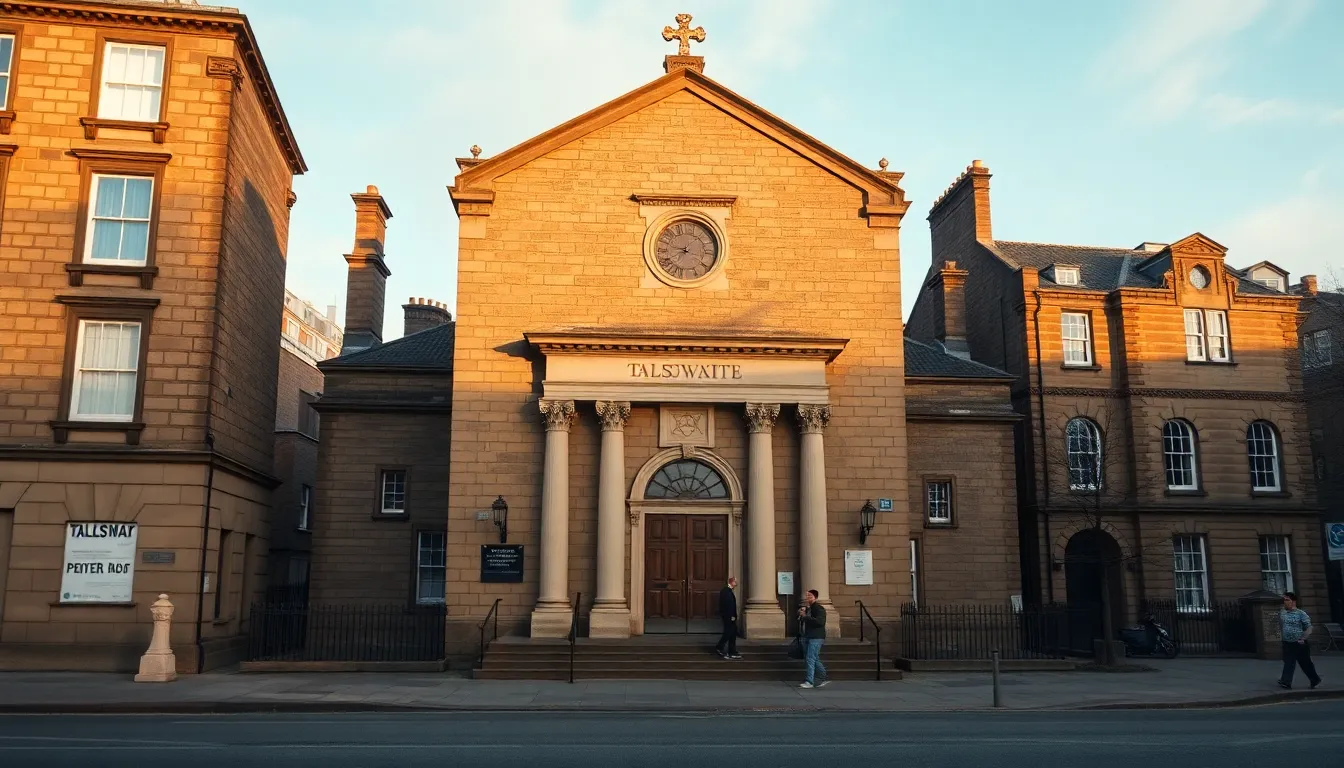
When I bring a group into the synagogue on Salisbury Road in Edinburgh, I like to give them one number before anything else: 1816. That is the year this congregation was formally established. To put it in perspective, that is before Queen Victoria was born, before the modern state of Germany existed, before most of the buildings on the Royal Mile took their present form. A Jewish congregation has prayed continuously in this city for more than two centuries. For a faith group, that continuity is the whole point. This is not a relic. It is an unbroken line.
If you are a rabbi, a minister, or an educator planning a heritage journey through the United Kingdom and giving Scotland its due, the Edinburgh Hebrew Congregation is the religious heart of any Edinburgh visit. Let me tell you its story and how to visit it well.
A Congregation Older Than Most
The Edinburgh Hebrew Congregation traces its formal beginning to 1816, though Jews were living and gathering to pray in the city before that. It is one of the oldest Jewish congregations in Scotland and among the older continuous congregations in Britain. For a community that never grew large, that longevity is striking. Edinburgh’s Jewish population has always been modest, yet the congregation has held together across more than two hundred years, through immigration waves, two world wars, and the slow demographic shifts of the twentieth century.
The congregation reflects the character of its city. Edinburgh has long been a place of universities, medicine, and law, and its Jewish community took on that professional, intellectual flavor. This was never a Gorbals-style immigrant enclave. It was a smaller, more dispersed community, woven into the life of one of Europe’s great academic cities. When I explain the congregation to a group, I frame it against Glasgow’s larger, more working-class community to the west. The two together show how varied Scottish Jewish life really was.
Before Salisbury Road
The congregation did not begin at its present home. Over the nineteenth century it met in a series of locations as the community grew and shifted. Early gatherings were in the Old Town, near the university and the South Bridge, where the first community clustered. As Edinburgh expanded and as immigration from Eastern Europe added numbers in the later nineteenth century, the community’s center moved toward the South Side.
This movement is part of the story I tell on a walking tour of Jewish Edinburgh. The congregation’s wandering through the city, from one rented or purpose-adapted space to another, mirrors the community’s own growth and settling. By the early twentieth century, the need for a permanent, purpose-built home had become clear.
The Salisbury Road Synagogue
The synagogue on Salisbury Road, in the South Side, opened in 1932 and has been the home of the Edinburgh Hebrew Congregation ever since. It sits in the part of the city where the immigrant-era community had settled, near the university and the Meadows, and it remains the center of Jewish religious life in Edinburgh today.
The building is dignified rather than ostentatious, which suits both the city and the community. Edinburgh is a city of restraint in its architecture, and the synagogue fits that register. Inside, the sanctuary carries the calm and seriousness of a space that has been prayed in for generations. The ark, the bimah, and the gallery anchor the room, and the overall feeling is one of continuity and care rather than grandeur.
For a group, the value of Salisbury Road is not architectural spectacle. It is presence. You are standing in the living home of a congregation that has existed since 1816, in the building it built for itself in 1932 and has maintained ever since. That sense of a community keeping faith with itself across two centuries is what moves people here.
Visiting the Congregation
Because this is an active congregation, a visit is arranged in advance rather than a walk-in. I always tell group leaders that this is a feature, not an obstacle. Being hosted by a working community, rather than touring an empty monument, is what makes the visit feel personal and real. You are a guest, welcomed into a community’s spiritual home.
A few practical points help a visit go well. Reach out well ahead of your trip to arrange access, since the congregation is small and visits are coordinated around community life. Be mindful that Shabbat and festival times shape availability, as they would for any active synagogue. And come ready to listen. The people who can tell you about this congregation know its story from the inside, and a good visit leaves room for that.
When the timing allows, a visit here pairs naturally with a wider walk through the South Side, tracing the streets where the immigrant community lived, before arriving at the synagogue as the living endpoint of that story.
Where the Congregation Fits in a Scottish Trip
Salisbury Road is the natural religious anchor of an Edinburgh heritage day, and Edinburgh in turn is best seen as part of a wider Scottish leg. The city sits an hour by train from Glasgow, and the two communities together tell the full Scottish story. In Glasgow, a group can trace the industrial immigrant world from the Gorbals to Giffnock and study the records held at the Scottish Jewish Archives. In Edinburgh, the smaller, older, professional community and its long-lived congregation offer a different and complementary picture.
I encourage group leaders to hold the two cities in contrast. The lesson of seeing both is that Scottish Jewry was not one thing. It was a working-class enclave in one city and a dispersed professional community in another, each with its own shape. And both are distinct from England, formed through Scotland’s own ports and routes. That distinctiveness is exactly why I treat Scotland as its own chapter rather than a footnote to London.
Continuity, Loss, and Care
A congregation that has survived since 1816 has lived through everything the twentieth century threw at European Jewry. Many families connected to the Edinburgh community had relatives in Eastern Europe who were murdered in the Holocaust. The city and its Jewish families also offered refuge in the 1930s, taking in some who fled the rising danger on the continent, including through the universities. When I stand with a group in the Salisbury Road sanctuary, I make room to name both the loss and the refuge. A small congregation that endured, remembered its dead, and opened its doors to the persecuted is telling a story worth pausing for.
That, in the end, is what the Edinburgh Hebrew Congregation offers a faith group. Not spectacle, but steadfastness. A community that has kept the lamp lit in this city for more than two hundred years, and still does.
FAQ: The Edinburgh Hebrew Congregation
When was the Edinburgh Hebrew Congregation founded?
It was formally established in 1816, making it one of the oldest Jewish congregations in Scotland and among the older continuous congregations in Britain. Jews were gathering to pray in Edinburgh before that date, but 1816 marks the formal beginning of the congregation that continues today.
Where does the congregation worship?
At the synagogue on Salisbury Road in Edinburgh’s South Side, which opened in 1932 and has been the congregation’s home ever since. It sits near the university and the Meadows, in the district where the immigrant-era community had settled.
Can groups visit the Salisbury Road synagogue?
Yes, with advance arrangement. Because it is an active congregation, visits are coordinated rather than walk-in, and timing works around Shabbat and festivals. Being hosted by a living community is part of what makes the visit personal. Reach out well before your trip to arrange access.
What is the character of Edinburgh’s Jewish community?
Smaller and more professional than Glasgow’s, and closely tied to the city’s universities, medicine, and law. It was never a dense immigrant enclave like Glasgow’s Gorbals. Its strength is continuity: a modest community that has held together for more than two centuries.
How does the congregation fit into a Scottish heritage tour?
It is the religious anchor of an Edinburgh visit, which pairs best with Glasgow an hour away. Glasgow offers the industrial immigrant story and the Scottish Jewish Archives; Edinburgh offers the older, smaller, professional community and its long-lived congregation. Together they give a group the full and varied picture of Jewish Scotland.
If your community’s journey includes Scotland, the Salisbury Road congregation makes a quietly powerful stop, and I would be glad to help arrange a visit and build it into a wider Scottish itinerary. You can see how we structure these journeys at our United Kingdom destination page and our group heritage tours, where the group leader travels free with fifteen or more participants.
Contact us whenever you are ready to start planning.