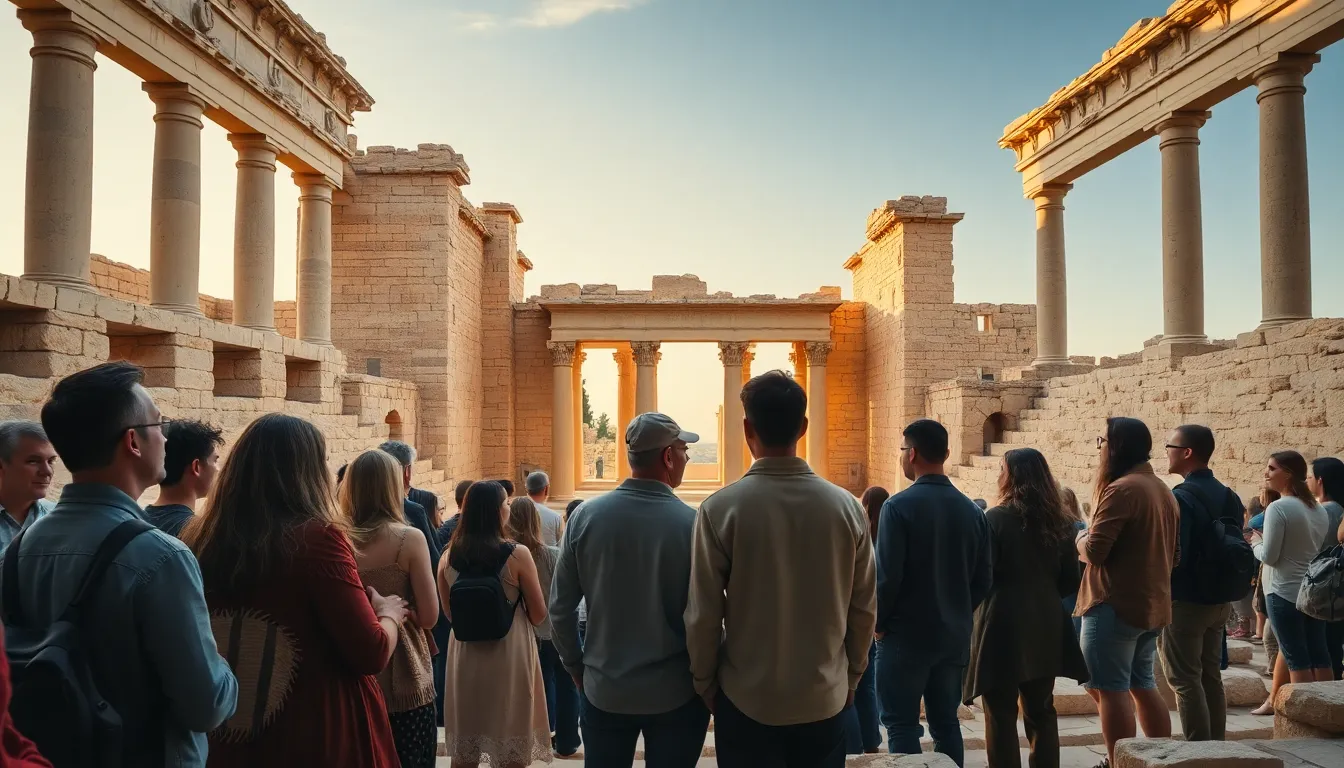
A rabbi asked me once, half-joking, whether there was a magic number for a group. He had thirty people interested and was nervous it was either too many or not enough. I told him there is no single magic number, but there are real thresholds where the experience and the economics change, and once you understand them, you can choose the size that fits your congregation rather than guessing. We landed his group at twenty-six, it worked beautifully, and his leader spot was free. Let me walk you through the thinking, because group size is one of the most consequential decisions you will make, and most leaders make it by accident.
I have led faith groups across Turkey for many years, and I have watched the same group of sites feel completely different depending on how many people stand in front of them. Size shapes the cost per person, the intimacy of the spiritual moments, the pace of the days, and how much of your own attention gets pulled into logistics. Here is how to think about it.
The Economics: Why Size Drives Cost
The blunt truth is that group travel costs are heavily shaped by fixed expenses spread across the number of travelers. A private coach, a licensed guide, and the leader’s own travel cost roughly the same whether twelve people come or twenty-six. Spread those fixed costs across more travelers and the price per person drops. Spread them across too few and it climbs, sometimes steeply.
This is why very small groups, say eight or ten people, often end up paying noticeably more each, or force compromises like sharing transport and guides with strangers. It is not that small groups are bad. It is that they carry a real cost premium, and you should go in knowing that.
The Free-Leader Threshold
Here is the number that matters most for a congregation leader. With Heritage Tours, the group leader travels free when you bring fifteen or more participants. That threshold is not arbitrary. Fifteen is roughly the point where the group economics become healthy enough that the leader’s place is covered by the structure of the trip rather than added onto everyone else’s cost.
For a pastor or rabbi, this changes the whole planning conversation. Below fifteen, you are usually paying your own way or asking the congregation to absorb it. At fifteen and above, your travel is covered, which makes it far easier to say yes to leading, and far easier to pitch the trip to your board. I tell leaders to treat fifteen as the first real target, because crossing it unlocks the free-leader benefit and tends to settle the per-person price into a comfortable range. Our practical tips for Turkey heritage travel page covers how this fits into the wider budget picture.
The Experience: What Each Size Range Actually Feels Like
Economics are only half the story. The other half is what the trip feels like, and here the trade-offs run the opposite direction from cost. Let me describe the ranges honestly.
Small Groups (Roughly 10 to 15)
A smaller group is intimate and nimble. Conversations at dinner include everyone. The guide can answer individual questions. You can change plans on the fly, linger longer at a site that moves people, and move through restaurants and boarding without the friction of large numbers. The spiritual moments, a reading at a riverside, a quiet service in a cave church, feel close and personal.
The trade is cost per person, which runs higher, and the fact that you may not clear the free-leader threshold if you sit at the very bottom of this range. For a tight-knit group that values closeness over price, small is a fine choice, just go in clear-eyed about the math.
Mid-Sized Groups (Roughly 16 to 28)
This is the range I find works best for most congregations, and it is where I steer leaders who ask. It clears the free-leader threshold comfortably, brings the per-person cost into a healthy place, and still preserves a real sense of community. There are enough people for energy and shared experience but not so many that individuals get lost. One guide and one coach handle the group cleanly. The spiritual moments still feel intimate because everyone can gather close at a site.
If I had to name a sweet spot for a Turkey heritage trip, it would sit right in this range, around twenty to twenty-five. Large enough to be healthy economically and socially, small enough to stay personal.
Larger Groups (Roughly 30 to 45 and Beyond)
Larger groups bring the lowest per-person cost and a wonderful sense of a whole community on the move. There is real joy in a big congregation traveling together. But the logistics shift. Above thirty or so, you often need a second guide or coach, boarding and meals take longer, and the personal, intimate moments get harder to create because the group is simply big. At sites, gathering forty people close enough to hear and feel a reading takes more orchestration.
None of this rules out large groups. We run them well, often by splitting into smaller sub-groups for site visits while keeping everyone together for meals and travel. But a leader choosing a large group should know they are trading some intimacy for cost savings and community scale, and should plan for the extra coordination.
How to Choose the Right Size for Your Congregation
A few questions help leaders land on the right number.
What is your congregation’s appetite, realistically? Do not plan for forty if your honest interest list is eighteen. Build the group you actually have.
What matters more to your people, cost or closeness? A budget-conscious congregation may happily accept a larger group for the savings. A group seeking a more reflective, intimate journey may prefer to stay mid-sized even at a slightly higher price.
Where is your free-leader threshold? For most leaders, getting to fifteen is the first goal, since it covers your own travel. From there, every additional traveler tends to ease the per-person cost a little more.
How much logistics do you want to manage? Larger groups are more work, even with a good operator handling the heavy lifting. Be honest about your own bandwidth.
When you have a sense of the answers, we can model the actual numbers for you. You can see how we structure these journeys on our Turkey destination page or read more about the leader experience on our group heritage tours page. If you are also weighing when to travel, group size interacts with season, since peak windows fill faster, and our guides to spring and fall travel cover that timing.
FAQ: Group Size for a Turkey Heritage Tour
What is the ideal group size for a Turkey heritage tour?
For most congregations, somewhere in the range of sixteen to twenty-eight works best, with a sweet spot around twenty to twenty-five. That range clears the free-leader threshold, keeps the per-person cost healthy, and still preserves the intimacy that makes the spiritual moments land. Smaller groups feel more personal but cost more each, while larger groups save money but trade away some closeness.
How does group size affect the cost per person?
A lot, because the big fixed costs, the coach, the guide, and the leader’s own travel, are roughly the same regardless of headcount. Spreading them across more travelers lowers the price each person pays. That is why groups of eight or ten often pay a real premium, and why crossing into the mid-sized range brings the per-person cost down into a comfortable place.
What is the free-leader threshold?
With Heritage Tours, the group leader travels free when you bring fifteen or more participants. Fifteen is the point where the group economics become healthy enough to cover the leader’s place within the structure of the trip. For a pastor or rabbi, reaching fifteen is usually the first planning target, since it covers your own travel and makes the trip far easier to propose to your congregation.
Can you run large groups of forty or more?
Yes, and they can be a joy, with the lowest per-person cost and the energy of a whole community traveling together. The trade is logistics. Above thirty or so you often need a second guide or coach, and intimate moments take more orchestration. We handle large groups by splitting into smaller sub-groups at sites while keeping everyone together for meals and travel.
How do I figure out the right size for my congregation?
Start with your honest interest list rather than an aspiration, then weigh what your people value more, cost or closeness. Aim first to clear fifteen for the free-leader benefit, and consider how much logistics you personally want to manage. Once you have a rough number, we can model the real per-person figures so you can choose with the actual math in front of you.
If you are trying to figure out how big your group should be, that is a conversation I genuinely enjoy, because it is where the trip starts to become real. There is no magic number, only the right number for your congregation, and we can find it together by looking at your interest list and your priorities side by side.
Contact us whenever you are ready to start planning.