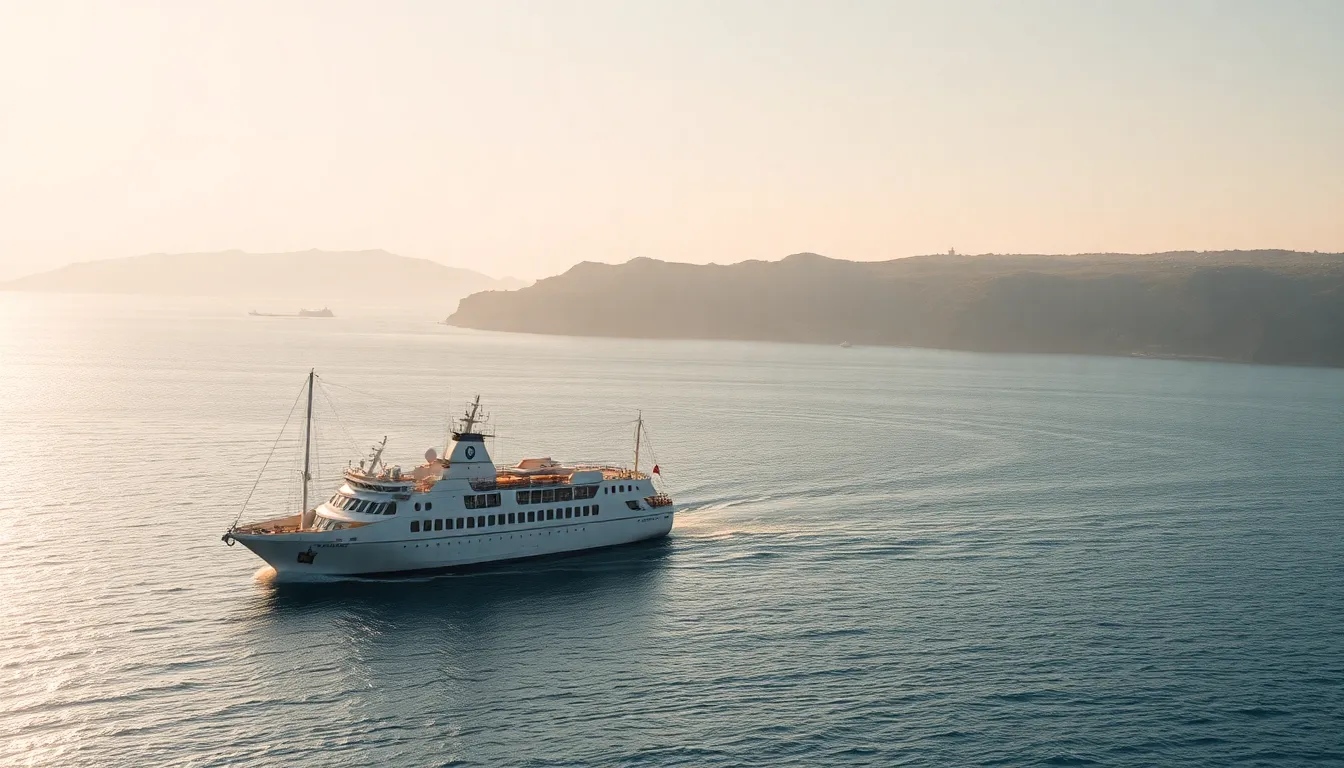
There is a moment on the combined Turkey and Greece trip that I wait for every time. The group has spent a week in Turkey, walked through Ephesus, read the letters to the Seven Churches, stood where the early church took shape in Asia. Then we cross the Aegean, and they step ashore at Philippi, the first church in Europe, and somebody realizes they are watching the gospel move continents in real time. That crossing is not just a travel day. It is the hinge of the whole New Testament story, and feeling it under your feet changes how a congregation reads the book of Acts forever.
This is a two-week itinerary that pairs the two halves of the early Christian world. The Seven Churches of Revelation and Paul’s Asian ministry on the Turkish side, then his European mission across Greece. It is the most complete heritage journey we run, and the order matters: Asia first, then Europe, the way the story actually unfolded. Here is how it runs.
Days 1 and 2: Istanbul
Your group arrives in Istanbul, the Byzantine and Ottoman crossroads of the Christian world. Day 1 is arrival and rest, with an easy evening walk through Sultanahmet to set the pace. Day 2 covers Hagia Sophia, the largest cathedral in the world for nearly a thousand years, the Basilica Cistern, and the Grand Bazaar. Starting in a building where Christians worshipped for a millennium grounds the trip before it moves into ruins and open fields.
Day 3: Fly to Izmir, Ephesus Begins
A short morning flight brings the group to Izmir, ancient Smyrna and one of the Seven Churches. The afternoon begins at Ephesus, the largest city of Roman Asia, where Paul spent nearly three years. Your group walks the marble street, the terraced houses, the Library of Celsus, and the great theater that held 25,000, the place of the riot in Acts 19.
Group leader note: Ephesus is brutally hot from June through September with almost no shade. We schedule it early in the day during summer. Hats and water, every time. Tell your group before leaving the hotel.
Day 4: The Seven Churches, Aegean Cluster
A full day on the Revelation churches near the coast. Smyrna’s agora in Izmir, then Pergamon (Bergama) with its dramatic hilltop acropolis, the city Revelation calls the place of “Satan’s throne.” Reading the letters in the cities they were sent to is the core of the Turkish half. For groups who want all seven churches in depth, our 10-day Seven Churches itinerary covers the full circuit.
Day 5: Sardis, Philadelphia, and the Lycus Valley
We continue the Revelation route inland. Sardis, with its spectacular temple of Artemis and one of the oldest synagogues in the ancient world, then Philadelphia, the church given an open door. The day ends near Pamukkale, positioned for the last two churches.
Day 6: Laodicea and Hierapolis
Laodicea, the lukewarm church, where the geography explains the metaphor: its water arrived neither hot like Hierapolis’s springs nor cold like the mountain streams, but tepid through the aqueducts. Hierapolis next door holds the traditional tomb of the apostle Philip and the white travertine terraces. That completes the Seven Churches.
Day 7: Miletus and the Crossing Point
Miletus, where Paul gave his farewell to the Ephesian elders in Acts 20, makes a fitting close to the Asian chapter. His words, “none of you will see my face again,” land hard in the great theater where he spoke them. We then position the group near the coast for the crossing to Greece. Depending on the season and ferry schedules, the Aegean crossing runs from the Turkish coast to a Greek island and onward, or we connect by a short flight. We handle the logistics either way.
Day 8: Cross to Greece, Travel North to Thessaloniki
The crossing day. Your group moves from Asia to Europe, the same direction Paul traveled after the vision at Troas when “a man of Macedonia” begged him to come over and help. We make our way north toward Thessaloniki, the base for Paul’s Greek mission and one of the great Jewish heritage cities of the world, once called the Jerusalem of the Balkans.
Day 9: Philippi and Lydia’s Baptism Site
Philippi is where the gospel first reached European soil and the first European church was planted. Your group sees the forum, the basilicas, and the traditional site of the prison where Paul and Silas sang at midnight. A short distance away is the river where Lydia, a seller of purple, became the first recorded European convert. Many groups hold a baptism renewal at the modern baptistery there. I have watched people weep at that riverside. It is the emotional center of the Greek half.
Day 10: Thessaloniki and Berea
The morning covers Thessaloniki itself, where Paul preached for three Sabbaths and to which he wrote two letters, with its Roman ruins and Byzantine churches like the Rotunda and Hagios Demetrios. In the afternoon we visit Berea, modern Veria, where the Bereans “searched the scriptures daily.” The Bema of the Apostle Paul there, with its mosaics, is a meaningful place to talk with your group about testing what you hear against scripture.
Days 11 and 12: South to Athens and Mars Hill
We travel south to Athens. Day 11 settles the group and visits the Acropolis and the ancient agora. Day 12 is the Areopagus, Mars Hill, where Paul addressed the philosophers and pointed them from their altar “to an unknown god” toward the God who made the world. Standing on the rock with the Parthenon above, your group understands what Paul was up against and what he offered.
Group leader note: The Areopagus rock is smooth and slippery. For older members, take it slow and use the stairs. This is a place to give people time.
Days 13 and 14: Corinth and Departure
Day 13 is Corinth, where Paul stayed eighteen months, longer than anywhere else in Greece, working as a tentmaker and writing to a divided, cosmopolitan church. The bema where he stood before Gallio, the temple of Apollo, and the Acrocorinth towering above all make First Corinthians make sense in a way no commentary can. Ending here gives the group the full arc, from Paul’s Asian ministry to his most mature European church.
Day 14 is departure from Athens. We arrange transfers so the last morning stays calm.
Why Do Both Countries in One Trip
Turkey and Greece are not two destinations. They are two halves of one story. Turkey holds the churches of Revelation and the ground where the early church organized itself in Asia. Greece holds the European mission. Crossing the Aegean in the middle of the trip lets your congregation experience the gospel moving from one continent to the next, exactly as Acts describes it. If you have less time, our 7-day footsteps of Paul itinerary covers the Turkish missionary route on its own, and the 14-day complete itinerary goes deeper into Turkey alone.
One practical note as you plan: with Heritage Tours, the group leader travels free when you bring fifteen or more participants. For a pastor building a two-week congregation trip, that is real money, so factor it in early.
FAQ: Combined Turkey and Greece Heritage Trip
What is the best order, Turkey first or Greece first? Turkey first. It follows the New Testament chronology: the early church took shape in Asia Minor before Paul crossed into Europe. Starting in Turkey with Ephesus and the Seven Churches, then crossing the Aegean to Philippi and the Greek mission, lets your group experience the story in the order it actually happened.
How do you cross between Turkey and Greece on this trip? Depending on season and schedules, we connect the two countries by an Aegean ferry through the Greek islands or by a short flight. Both work. We handle the timing, the transfers, and the border logistics, and we build the crossing as a meaningful moment in the trip rather than a dead travel day.
Is two weeks enough for both Turkey and Greece? Two weeks covers the core of both: the Seven Churches and Ephesus in Turkey, then Philippi, Thessaloniki, Berea, Athens, and Corinth in Greece. It is full but not rushed if the route is planned well. Groups wanting Cappadocia or the Greek monasteries at Meteora should add three to four days.
Can this combined trip serve a group interested in Jewish heritage too? Yes. Sardis in Turkey holds one of the oldest synagogues in the ancient world, Izmir has a living Sephardic community, and Thessaloniki was one of the great centers of Sephardic Jewish life. A combined itinerary can honor both the Christian and Jewish stories. We build interfaith and combined-focus trips regularly.
When is the best time of year for a Turkey and Greece trip? Late spring, May to June, and early fall, September to October. The weather is comfortable for walking the sites, the Aegean crossing is reliable, and the worst of the summer heat and crowds are gone. We steer most groups to these windows for a two-week trip.
If you are starting to picture this journey for your congregation, I would love to help you build it. The story is whole when you do both countries, and the crossing in the middle is something your people will carry home. See how we run these trips on our Turkey heritage page or learn how the group experience works on our group heritage tours page.
Contact us whenever you are ready to start planning.