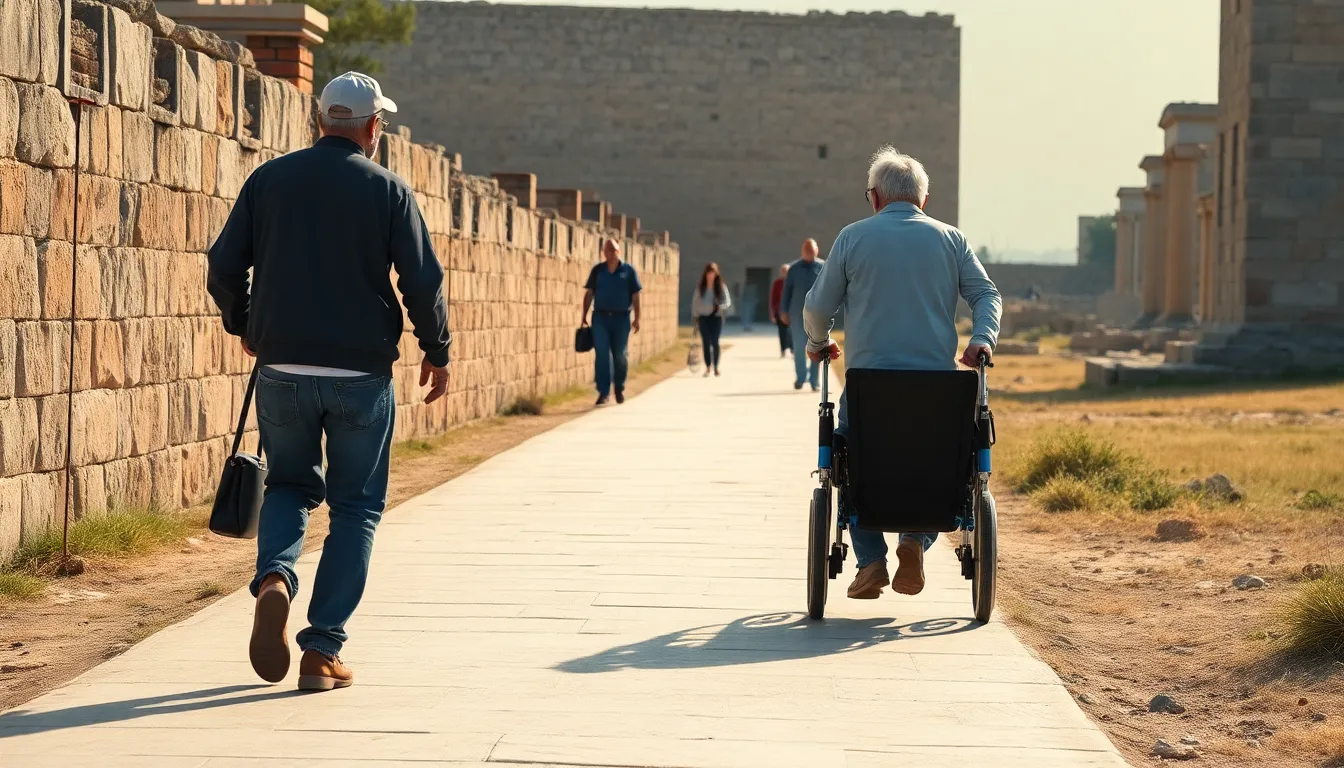
A pastor called me a few years ago, frustrated. He wanted to take his congregation to Turkey, but a third of his core members used canes, walkers, or had knees that could no longer manage stairs and rough ground. Every itinerary he had been quoted assumed everyone could hike. He had nearly given up. We built him a trip instead, and at the end of it one of his members, a woman in her eighties who had been certain she would have to stay home, stood at the House of the Virgin Mary and told me it was the most important day of her life. She got there. That is what this itinerary is about.
Let me be clear about what an accessible Turkey trip is and is not. It is not a watered-down tour that skips the meaningful sites. It is a carefully chosen route that reaches the great heritage places by their gentlest paths, paces the days for limited stamina, and refuses to leave anyone behind. Many of Turkey’s most significant sites are more reachable than people assume, once you know which entrances, slopes, and arrangements make them work. Here is how I build a mobility-conscious trip that gives a group with limited walkers the real thing.
How an Accessible Itinerary Is Built
One principle shapes everything below. An accessible trip is designed around the hardest case in the group, not the easiest. If one member uses a wheelchair, the whole itinerary is planned so that member reaches the core of every site, even if the able members go further. We choose sites with smooth or paved access, we arrange private transport that drops the group close to entrances rather than at distant car parks, and we build generous rest into every day. The result is a trip nobody has to opt out of. That design runs through the whole plan.
I should say plainly that some of Turkey’s sites cannot be made accessible. The deep underground cities of Cappadocia, with their narrow tunnels and steep stairs, are not feasible for limited walkers, and I will not pretend otherwise. This itinerary substitutes equally meaningful accessible sites for the ones that are out of reach. Honesty about that is part of doing it right.
Days 1 to 3: Istanbul, the Accessible Capital
Istanbul is a strong base for an accessible trip because its greatest sites are largely on level ground and well served by smooth transport.
Day 1 is arrival and rest, with no demanding plans. If the group has energy, a slow evening in Sultanahmet to see the Blue Mosque from the square, which is flat and open, sets the tone gently.
Day 2 is Hagia Sophia and the surrounding square. Hagia Sophia’s main floor is largely level and reachable, and standing inside this thousand-year cathedral is fully within reach for limited walkers. We arrange entry at the most accessible point and allow plenty of time. The upper gallery involves a ramp that is steep, so for members who cannot manage it, we make sure the main floor experience is complete in itself. The afternoon is a Bosphorus boat cruise, which is one of the most accessible great experiences in the city, the whole group seated, the entire skyline gliding past.
Day 3 is a gentle morning at a level site such as the Topkapi Palace courtyards or the Spice Bazaar’s main concourse, with the group’s private vehicle close at hand for rest. We keep day three light. Three full Istanbul days at a slow pace beat two rushed ones.
Group leader note: The Basilica Cistern, beautiful as it is, involves stairs down and is difficult for limited walkers, though it has improved its access in recent years. We assess each member’s ability and substitute a level alternative when needed rather than forcing the descent. We confirm current access before you travel.
Days 4 and 5: Cappadocia, by Its Gentlest Paths
People assume Cappadocia is impossible for limited walkers because of the underground cities and valley hikes. It is not, if you choose the right sites. The landscape itself, which is the real wonder, is best seen from viewpoints that vehicles can reach directly.
Day 4 is the accessible heart of Cappadocia. We drive to the panoramic viewpoints over the fairy chimneys and valleys, where the group can take in the otherworldly landscape from level, vehicle-accessible overlooks. We visit the parts of the Goreme area with smoother access to see the cave-church tradition, choosing the churches with the gentlest approaches. The deep underground cities we skip, replacing them with these reachable wonders.
Day 5 is a relaxed day built around the landscape and rest. A pottery workshop in Avanos, which is level and seated, gives the group a rich cultural experience without walking. The shared sunset over the valleys, reached by vehicle to an accessible viewpoint, closes the Cappadocia stay. Every member sees it.
Group leader note: Cappadocia hotels vary enormously in access, since many are built into rock with steps everywhere. We book specifically for accessible rooms and level access, which requires choosing the hotel carefully. This is the kind of detail that decides whether the region works for your group.
Days 6 and 7: Ephesus and the House of the Virgin Mary
Ephesus is, happily, one of the more accessible major ancient sites in Turkey, because its main route runs along a single gentle slope on a relatively smooth marble street, and the House of the Virgin Mary is reachable by vehicle nearly to the door.
Day 6 is Ephesus by its accessible route. We enter from the upper gate and move slowly down the gentle main slope, past the Library of Celsus and the great theater, on ground that, while ancient, is largely manageable for those who can walk slowly with support. For members in wheelchairs, much of the central avenue is navigable with assistance, and we plan the route and the rest stops in advance. This is the visit the frustrated pastor’s congregation thought they could never have.
Day 7 is the House of the Virgin Mary, the quiet stone chapel on the hillside that vehicles reach almost to the entrance. This is the most accessible deeply meaningful site on the whole trip, and it is where that woman in her eighties had her most important day. We give it time and calm. The afternoon is rest near the coast.
Group leader note: Ephesus is very hot from June through September, which is harder on limited walkers than on anyone. We schedule the visit for early morning, bring water and shade, and keep the group’s vehicle positioned for anyone who needs to rest. For an accessible group, the heat plan is as important as the access plan.
Building Your Accessible Trip
Every group’s needs are different. Some have one or two members using canes; others travel with wheelchairs and need every detail confirmed. The itinerary above is the mobility-conscious frame, and we tailor it precisely to the people coming, after a real conversation about each member’s ability. If your group spans a wide range of ages and abilities, our multigenerational Turkey itinerary pairs well with this approach, and if you have only a few days, our weekend Istanbul itinerary can be adapted for limited walkers in the flattest part of the country. The fuller route is in our 12-day Turkey heritage itinerary, and the whole country is laid out on our Turkey heritage page.
One thing worth knowing as you plan: with Heritage Tours, the group leader travels free when you bring fifteen or more participants. For a leader making sure no one in the congregation is left behind, that helps make the trip possible.
FAQ: Planning an Accessible Turkey Trip
Can a group with wheelchairs and limited walkers really tour Turkey’s heritage sites?
Yes, more than most people expect. Hagia Sophia’s main floor, the Bosphorus cruise, the Ephesus main avenue, and the House of the Virgin Mary are all reachable for limited walkers when the route, entrances, and transport are planned carefully. We design the trip around the hardest case in the group so nobody has to opt out of the meaningful moments.
Which Turkey sites are not accessible for limited walkers?
The deep underground cities of Cappadocia, with their narrow tunnels and steep stairs, are not feasible, and the Basilica Cistern involves a stair descent. We are honest about these and substitute equally meaningful accessible sites, like the panoramic Cappadocia viewpoints and level cultural experiences, rather than pretending the hard sites can be managed.
How do you handle the heat for an accessible group?
Carefully, because heat is harder on limited walkers. We schedule the major sites for early morning, especially Ephesus, bring water and shade, and keep the group’s private vehicle positioned so anyone who needs to rest can. For an accessible trip the heat plan matters as much as the access plan.
Do hotels in Turkey have accessible rooms?
Many do, but it varies enormously, especially in Cappadocia where hotels are built into rock with steps throughout. We book specifically for accessible rooms and level access, which means choosing each hotel deliberately rather than taking the standard tour options. This is one of the most important parts of planning an accessible trip well.
Can Heritage Tours plan around our specific group’s mobility needs?
Yes. We start with a real conversation about each member’s ability, then build the route, transport, pacing, and hotels around the actual people coming. No two accessible trips are the same, and we would rather plan carefully than promise something that leaves a member stranded. Start the conversation here.
If you have been told your congregation cannot make a trip like this because of mobility, I would like the chance to show you otherwise. The great sites are more reachable than you have been led to believe, and no one has to stay home. You can learn how the group experience works on our group heritage tours page, and reach out whenever you are ready.
Contact us to start planning.