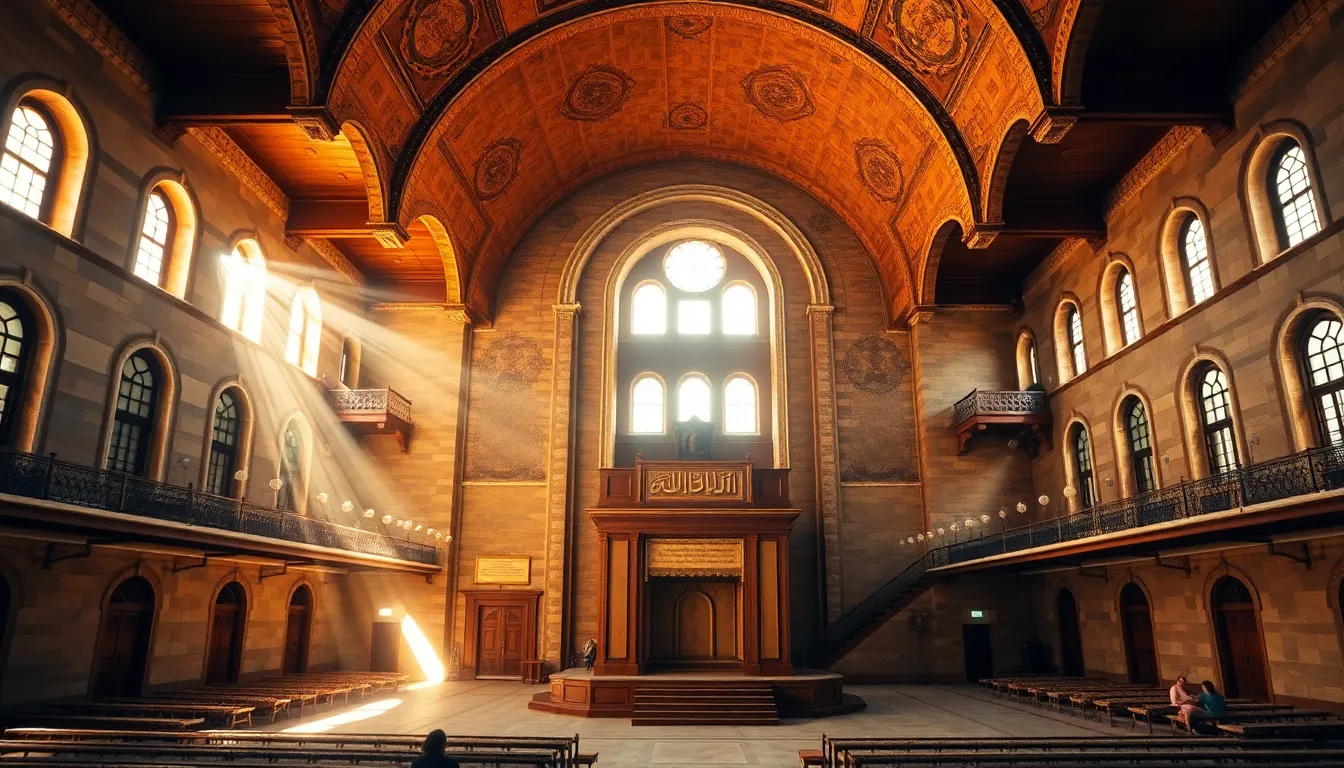
I remember a rabbi turning to me in the Ahrida Synagogue in Balat, running his hand along the boat-shaped bimah, and saying, “My grandmother’s family came through here. They prayed in a room like this.” That is what a Turkey Jewish heritage trip does. When the Jews were expelled from Spain in 1492, the Ottoman Sultan welcomed them, and they built communities here that lasted five centuries. Istanbul, Edirne, and Izmir hold the synagogues, the cemeteries, and the living remnants of one of the great chapters of Sephardic history. For a synagogue community, walking that history in person is something a book cannot give.
This is a focused week built around the three centers of Ottoman Jewish life. It moves at a pace that respects Shabbat and gives the group room to feel the weight of these places rather than rush past them. Here is how it runs.
Day 1: Arrival in Istanbul
Your group flies into Istanbul, the heart of Sephardic life in the Ottoman world. Day 1 is arrival and rest. If the group lands early, an easy evening walk near the hotel sets the pace. Do not stack a heavy site onto a jet-lagged first afternoon. The history here deserves a group that can absorb it.
Day 2: The Jewish Quarter of Balat
We begin in Balat, one of the oldest continuously inhabited Jewish neighborhoods anywhere in the world. The Ahrida Synagogue dates to before the Ottoman conquest and is famous for its bimah shaped like the prow of a ship, recalling Noah’s ark or, some say, the boats that carried the exiles from Spain. Nearby stands the Yanbol Synagogue, and the streets themselves still carry the texture of centuries of Jewish life.
In the afternoon we visit the Jewish Museum of Turkey, housed in the former Zulfaris Synagogue, which tells the story of five hundred years of Ottoman and Turkish Jewry. It frames everything the group will see the rest of the week.
Group leader note: Active synagogues in Istanbul require advance security clearance for group visits, including Neve Shalom. We arrange this, but your participants should know in advance so the security process does not feel alarming on arrival.
Day 3: Neve Shalom and the Galata Quarter
The morning is Neve Shalom, the largest and most prominent synagogue in Istanbul, the center of communal life and, sadly, the site of attacks in past decades. It is a working congregation, and visiting it is a chance to talk honestly with your group about both the richness and the fragility of Jewish life here.
The Galata and Karakoy district nearby holds more of the community’s history, including older synagogues and the streets where Sephardic families lived and traded for generations. The afternoon can stay lighter, with time near the Galata Tower and the surrounding quarter.
Day 4: Day Trip to Edirne and the Great Synagogue
This is the day that surprises people. Edirne, about two and a half hours northwest of Istanbul, was the Ottoman capital before Istanbul and holds the Great Synagogue of Edirne, one of the largest synagogues in Europe. It was abandoned for decades, fell into ruin, and was beautifully restored in 2015. Most Turkey itineraries skip Edirne entirely. For a Jewish heritage group, it is worth every hour of the drive.
The restored sanctuary is breathtaking, built to serve a community of thousands that has now largely dispersed. Standing in that vast, mostly empty hall is a powerful and bittersweet experience, and groups tend to linger. I have led a few groups in a short Mincha service there, and the sound of even a small minyan filling that enormous restored space is something the participants talk about for the rest of the trip. It is a room built for a community that is gone, brought briefly back to life by the people who came to remember it.
Group leader note: The Edirne day works far better with an overnight stay. The same-day round trip is doable but hard on older participants. We can arrange comfortable lodging in Edirne and add the Selimiye Mosque, one of the masterpieces of Ottoman architecture, to the morning before returning.
Day 5: Travel to Izmir, the Sephardic Capital of the Aegean
A short flight brings the group to Izmir, ancient Smyrna, which became one of the most important Sephardic cities in the world. Izmir’s old Jewish quarter, Kemeralti, holds a remarkable cluster of historic synagogues within a few narrow streets, several of them restored in recent years through a dedicated heritage project.
The Signora, Algazi, Bikur Holim, and Shalom synagogues each have their own character, and walking among them gives a vivid sense of how dense and vibrant Jewish life here once was. Several sit so close together that you can stand in one courtyard and see the doors of two more, a layout that tells you how concentrated this community was at its height. The afternoon is for the heart of Kemeralti and its bazaar, where Jewish, Greek, Armenian, and Turkish merchants traded side by side for centuries.
Day 6: Izmir’s Jewish Heritage and Sardis
In the morning we go deeper into Izmir’s Jewish story, including the historic Jewish cemetery and any of the Kemeralti synagogues not seen the day before. The community here is small now but active, and meeting its present alongside its past gives the trip honesty.
In the afternoon we drive to Sardis, about an hour inland, home to one of the oldest and largest ancient synagogues ever excavated, dating to the Roman period. The scale of the Sardis synagogue, set within a grand civic complex, shows that Jewish life in Asia Minor goes back not five hundred years but well over two thousand. It is a fitting place to end the heritage arc. The same region holds deep Christian history too, which our 10-day Seven Churches itinerary traces in detail.
Day 7: Departure
We transfer the group to Izmir’s airport for the journey home, handling the logistics so the final morning stays calm.
How This Trip Adapts to Your Community
Every synagogue community comes to Turkey with a different connection. Some have ancestral roots in Salonica or Izmir. Some come as educators building a Sephardic history curriculum. Some want more time for prayer and reflection at the active congregations, others want the archaeological depth of Sardis. We shape the pacing and the emphasis around your group. If you want to combine this with the broader heritage of the country, the 12-day heritage itinerary weaves Jewish and other sites together, and the 14-day complete itinerary adds Cappadocia and the east.
One practical note as you plan: with Heritage Tours, the group leader travels free when you bring fifteen or more participants. For a rabbi or educator organizing a community trip, that shapes the budget from the start.
FAQ: Jewish Heritage in Turkey
What are the most important Jewish heritage sites in Turkey? The core sites are the Balat synagogues and Jewish Museum in Istanbul, Neve Shalom, the restored Great Synagogue of Edirne, the cluster of historic synagogues in Izmir’s Kemeralti quarter, and the ancient synagogue at Sardis. Together they span more than two thousand years, from the Roman-era Jewish community of Asia Minor to the Sephardic world that flourished after 1492.
Why is Turkey significant in Jewish history? When Spain expelled its Jews in 1492, the Ottoman Empire welcomed them, and Sultan Bayezid II is famously said to have marveled that Spain would impoverish itself to enrich his lands. The exiles built thriving communities in Istanbul, Edirne, Izmir, and Salonica that preserved Ladino language and Sephardic tradition for five centuries. Turkey is one of the central chapters of post-expulsion Jewish life.
Can a Jewish heritage trip to Turkey include active synagogues? Yes, and it should. Istanbul and Izmir both have living congregations. Visiting them requires advance security clearance, which we arrange, and it gives your group a chance to connect with the present community, not only its monuments. We coordinate timing carefully around Shabbat and the congregations’ own schedules.
Is seven days enough for Turkey’s Jewish heritage? Seven days covers the three main centers well: Istanbul, Edirne, and Izmir, plus the ancient site at Sardis. If your community wants to add Cappadocia, the broader country, or more reflective time, we extend to ten to fourteen days. The seven-day version is focused and complete on its own.
How do you handle kosher meals and Shabbat for a group? We plan the itinerary around Shabbat from the start, with appropriate lodging and a restful pace, and we arrange kosher catering through the established community channels in Istanbul and Izmir. Tell us your community’s standards early and we build the trip to honor them.
If you are imagining this journey for your community, I would be glad to help you shape it. The history is real, the synagogues are still standing, and the story comes alive once your people are inside these rooms. See how we run these trips on our Turkey heritage page or learn how the group experience works on our group heritage tours page.
Contact us whenever you are ready to start planning.