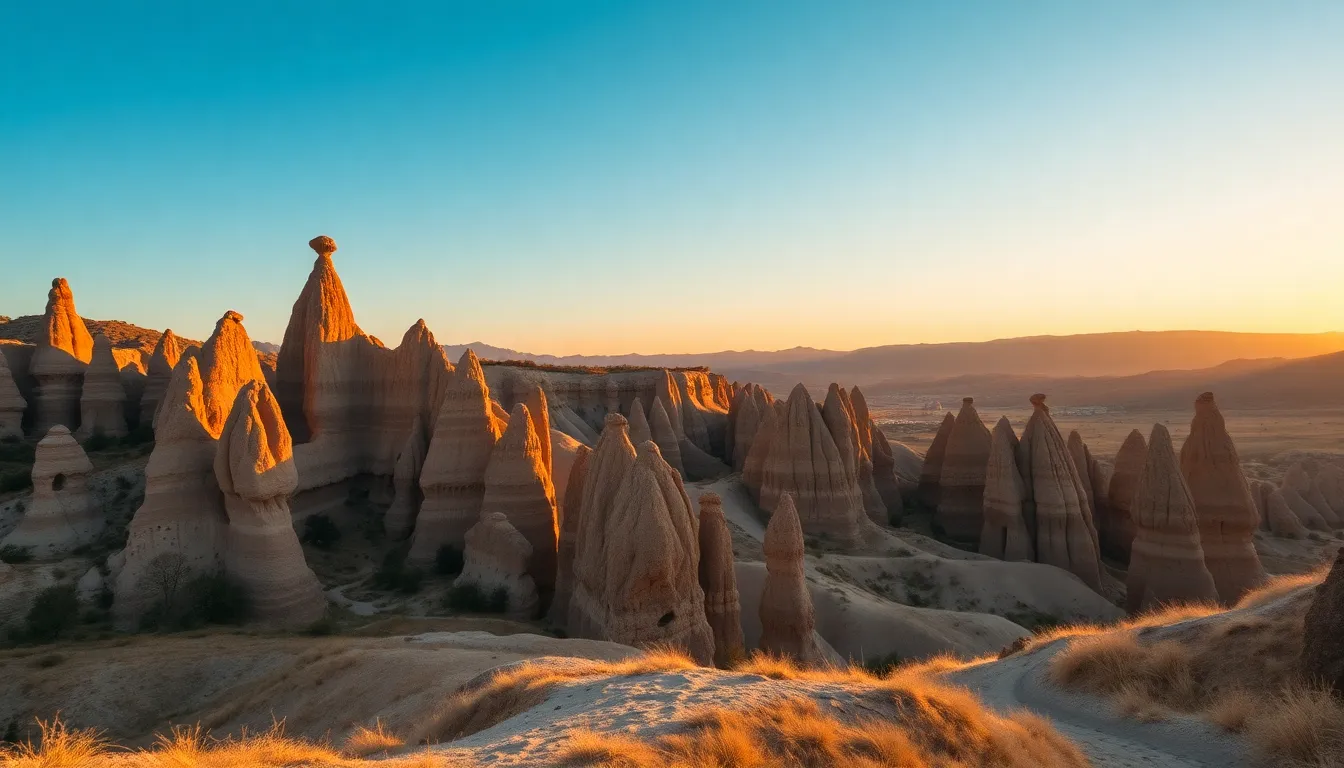
People come to Cappadocia for the hot air balloons and the moonscape, and that is fine. But the reason I bring faith groups here is underground and inside the rock. Early Christians carved churches, monasteries, and entire hidden cities into this soft volcanic stone, some as far back as the fourth century. They worshipped here, they hid here during persecution, and they painted the gospel onto cave walls in frescoes that still glow. When your group steps into a thousand-year-old church the size of a living room and reads the same scenes the painters left on the ceiling, the early church stops being ancient history.
Five days is the right length to do Cappadocia properly without rushing. It is a short, intense, focused trip, ideal as a standalone or as an extension to a larger Turkey journey. Here is how I structure it.
Day 1: Arrival and the Goreme Valley
Your group flies into Kayseri or Nevsehir, the two airports that serve the region, and we transfer to the hotel. Many groups stay in a cave hotel in Goreme or Uchisar, rooms carved into the rock itself, which becomes part of the experience.
Day 1 is arrival and a gentle introduction. In the late afternoon, a stop at a panoramic viewpoint over the Goreme valley sets the scene. The fairy chimneys, the carved cliffs, the whole strange beauty of the place. Let the group take it in before the heavier days begin. A sunset over the valley on the first evening is something they remember.
Day 2: Goreme Open Air Museum and the Cave Churches
This is the heart of the trip. The Goreme Open Air Museum is a former monastic complex with some of the best-preserved rock-cut churches in the world. The frescoes here date mostly to the tenth and eleventh centuries, and they are vivid: the Nativity, the Baptism, the Last Supper, the Crucifixion, painted directly onto curved stone ceilings.
The Karanlik Kilise, the Dark Church, is the standout. Because so little light reached it over the centuries, its frescoes kept their color better than almost any others, and they are extraordinary. There is a small extra fee to enter and it is worth every lira.
Take the full morning here. In the afternoon, the nearby valleys hold more carved churches and chapels, quieter and less visited, where your group can sit and reflect without crowds.
Group leader note: The cave churches involve narrow doorways, low ceilings, and uneven steps cut into rock. They are intimate spaces, not built for crowds or for anyone needing a steady handrail. If you have participants with mobility concerns, talk to us in advance and we will plan which churches work and where to take it slow.
Day 3: Derinkuyu Underground City and the Ihlara Valley
The underground cities are the other half of Cappadocia’s Christian story. At Derinkuyu, an entire community lived below ground, eight levels deep, with churches, stables, kitchens, ventilation shafts, and great rolling stone doors to seal the passages against invaders. Thousands of people sheltered here. Walking down through it, your group feels in their bodies what it meant to protect a faith community under threat.
In the afternoon we drive to the Ihlara Valley, a green gorge cut by a river, its walls lined with more cave churches. The walk along the valley floor is one of the loveliest parts of the trip, shaded and quiet, with chapels tucked into the cliffs. After the close air of Derinkuyu, the open valley is a welcome change of pace.
Group leader note: Derinkuyu has narrow, steep passages and low sections where you stoop to pass. It is not claustrophobic for most people, but anyone uneasy in tight spaces should know in advance. There are ways to see the main levels without the most demanding sections, and we plan for that.
Day 4: Monasteries, Pottery, and Reflection
Day 4 eases the intensity. The Selime Monastery, a vast cathedral-like complex carved into a rock outcrop, is one of the largest religious structures in the region and gives a sense of how monastic life was organized here. Many groups find it one of the most striking stops of all.
In the afternoon we visit the town of Avanos, known for centuries of pottery-making along the red clay banks of the river, and leave the group open time. After three full days, a slower afternoon to process what they have seen is not wasted time. It is part of the trip. A reflective service or group discussion fits naturally here.
If your group has a particular interest in the Cappadocian Fathers, this is also the day to add the church and museum sites connected to St. Basil and the Gregories in the wider region. Their fourth-century work defining the doctrine of the Trinity grew directly out of this landscape, and walking the country that shaped their theology gives the names in the creeds a place to live. I often read a short passage from Basil’s writings on the monastic life here, with the carved cliffs in view. It connects the ruins to the ideas that came out of them.
Day 5: Sunrise and Departure
For groups who want it, the optional pre-dawn hot air balloon flight over the valleys is unforgettable, hundreds of balloons rising together over the fairy chimneys as the sun comes up. It is weather-dependent and books up fast, so we arrange it well ahead. For groups who prefer to stay grounded, a sunrise from one of the high viewpoints captures much of the same beauty, with the balloons themselves filling the sky overhead.
After breakfast, we transfer the group to the airport. Cappadocia is a short flight from Istanbul, which makes this an easy region to attach to a longer journey.
Cappadocia as a Standalone or an Extension
Five days makes Cappadocia a satisfying trip in its own right for a group focused on early Christian heritage. It also slots neatly into a wider Turkey journey. Our 12-day heritage itinerary builds Cappadocia into a national tour, and the 14-day complete itinerary gives it room alongside Istanbul, the Aegean, and the east. If your group’s focus is the New Testament churches rather than the monastic period, our 10-day Seven Churches itinerary is the better thread.
One practical note as you plan: with Heritage Tours, the group leader travels free when you bring fifteen or more participants. For a pastor or educator building a group trip, that shapes the budget from the start.
FAQ: Cappadocia Heritage Itinerary
What is the Christian significance of Cappadocia? Cappadocia was a major center of early Christian and monastic life from the fourth century onward. It is the homeland of the Cappadocian Fathers, Basil the Great, Gregory of Nyssa, and Gregory of Nazianzus, whose theology shaped the early church. Believers carved hundreds of churches and entire underground cities into the volcanic rock, both for worship and for refuge during persecution.
How many days do you need in Cappadocia? Three days covers the essential sites, the Goreme cave churches and one underground city. Five days lets you add the Ihlara Valley, Selime Monastery, and reflective time, which is the version I recommend for faith groups. It keeps the pace humane and leaves room for the quiet moments that give the trip meaning.
Are the cave churches and underground cities accessible for older travelers? Partly. The cave churches have low doorways and rock-cut steps, and the underground cities have narrow, steep passages. Most older travelers manage the main sites with care, and we plan which churches and levels work for the group you bring. No one has to attempt the most demanding sections to experience the heart of Cappadocia.
Is the hot air balloon flight worth it for a group? For most groups, yes, but it is weather-dependent and not for everyone. The flights launch before dawn, book up well in advance, and can be canceled for wind. We arrange it for those who want it and never make it the centerpiece, so the trip holds together whether or not the balloons fly.
Can Cappadocia be combined with the rest of Turkey? Easily. It is a short flight from Istanbul, which makes it a natural addition to a larger heritage journey. Many groups pair it with Istanbul and the Aegean coast for a full picture of the country’s Christian and Jewish history. Our longer itineraries build it in.
If you are imagining this journey for your group, I would be glad to help you shape it. The churches are real, the underground cities are still there, and the early church comes alive once your people are standing inside the rock. See how we run these trips on our Turkey heritage page or learn how the group experience works on our group heritage tours page.
Contact us whenever you are ready to start planning.