When a group leader asks me when to bring their community to Portugal, I almost always steer them to spring or fall, and then the real question begins: which one. Both are excellent windows. They are not identical, and the difference between them comes down to weather, crowds, and, for a faith group, the calendar laid on top.
I have led Portugal groups in both seasons for years, and I have a slight preference depending on the community. Let me give you the honest head-to-head, so you can weigh it for your people rather than just for the weather chart.
Why Spring and Fall, Not Summer or Winter
First, a word on why the comparison is between these two seasons at all.
Summer in Portugal, especially July and August, is hot, crowded, and expensive. The interior towns where the Sephardic heritage sites sit can be genuinely warm, the coast is packed with European holidaymakers, and prices peak. It is not impossible, but for a mixed-age heritage group it is rarely the best choice.
Winter is mild compared to much of Europe but can be wet and gray, particularly in the north and the interior. Some sites keep shorter hours, and the contemplative outdoor experiences, the plaza at Fatima, the hilltop walk in Belmonte, are less inviting in the rain.
That leaves spring and fall as the two windows that combine comfortable weather, manageable crowds, and a full experience of the sites. So the real planning decision for most groups is between these two.
Spring (March to May): Renewal and the Fatima Calendar
Spring is, for many groups, the most resonant season in Portugal, and I will tell you why.
Weather and Landscape
Spring brings mild temperatures, green hills, wildflowers across the interior, and long, comfortable days for site visits. The Portuguese countryside is alive after winter, and the interior towns like Belmonte and Tomar are at their most beautiful. For walking the sites, the weather is gentle and forgiving.
The Faith Calendar
This is where spring earns its edge for Christian groups. The Lenten and Easter season pulls naturally toward spring, and a heritage trip framed by that liturgical season carries a weight that off-season travel does not. And for Fatima specifically, the major pilgrimage season begins on May 13, the anniversary of the first apparition. A spring trip can be timed to that date, putting your group at Fatima for one of the most significant gatherings of the year. That timing is powerful, and groups feel it.
For Jewish groups, spring around Passover carries its own resonance, since the Sephardic expulsion and survival story sits in conversation with the themes of the season.
The Trade-Off
Spring is more crowded, especially around Easter and the May 13 Fatima pilgrimage, and prices run higher. If you travel in peak spring, expect more visitors at the major sites and book earlier. The resonance is worth it for many groups, but it is not the quiet season.
Fall (September to November): Quiet, Golden, and Underrated
Fall is my quiet favorite for a lot of communities, and it is genuinely underrated.
Weather and Landscape
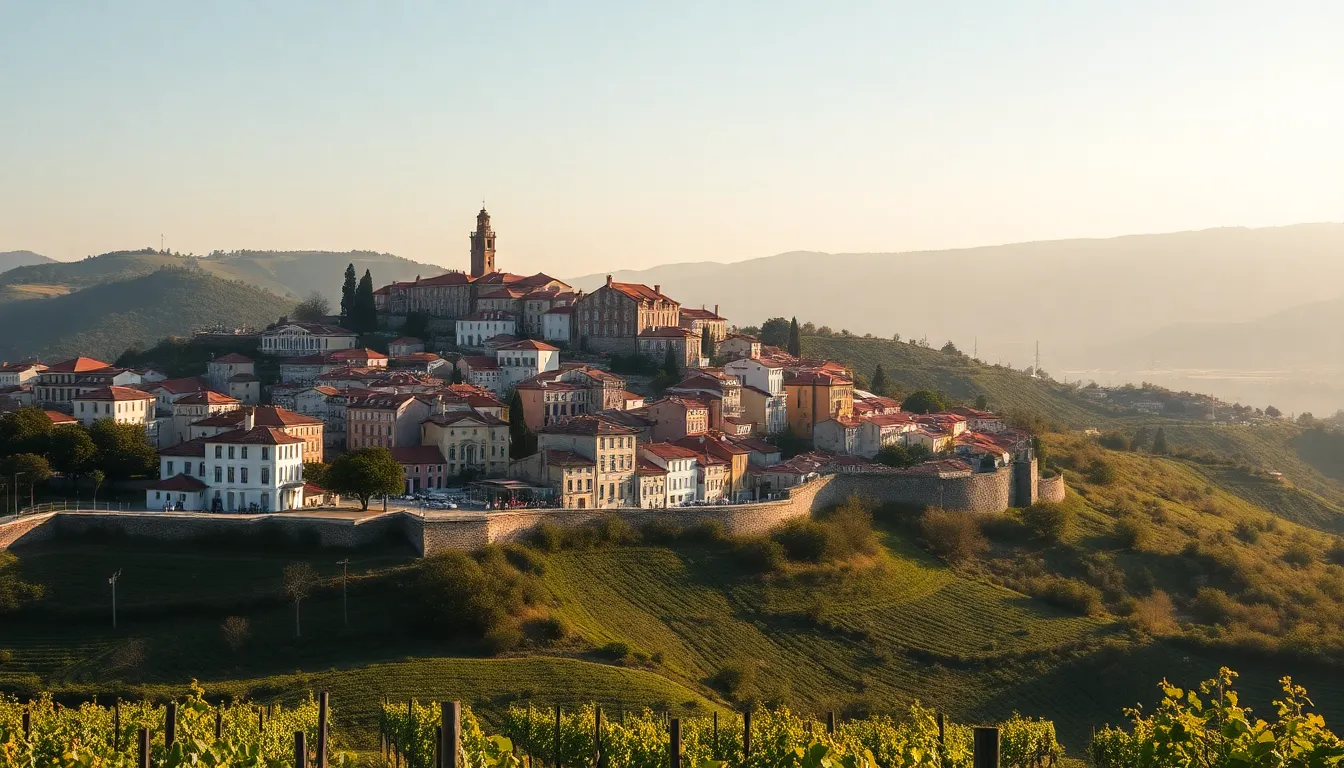
Early and mid fall in Portugal is warm, clear, and settled, often more reliably dry than spring. The light turns golden, the harvest is in across the wine country, and the heat of summer is gone. Late October and into November cool further but stay comfortable for site visits in most of the country. For a group that struggles with heat, fall removes that difficulty entirely.
The Faith Calendar
For Jewish groups, fall has a specific advantage. The High Holiday season, Rosh Hashanah through Sukkot, keeps congregations close to home through September and into October. When it lifts, there is often a collective readiness for a major trip. Late October and November become a natural window when the calendar clears and the community has energy for travel. Several of our most meaningful Portugal groups travel in exactly this window.
For Christian groups, Fatima’s pilgrimage season runs through October 13, the anniversary of the final apparition, so an early-fall trip can still catch a major feast day with thinner crowds than May.
The Trade-Off
By late November, weather grows less predictable and some daylight is lost. And fall lacks the Lenten and Easter framing that gives spring its liturgical pull for Christian groups. If that seasonal frame matters to your congregation, spring has the edge.
The Head-to-Head: How They Actually Compare
Let me put the two side by side on what matters.
Weather
Roughly a tie, with a slight edge to early fall for reliability. Spring is green and alive but can bring spring showers. Early fall is often the most settled and dry. Both are comfortable for mixed-age groups.
Crowds and Cost
Fall wins on this. Spring, especially around Easter and the May Fatima pilgrimage, is busier and pricier. Fall, particularly after the early-October Fatima date, is quieter and often less expensive. For groups watching budget and crowds, fall is the gentler choice.
Faith Calendar
This depends on your community. Spring wins for Christian groups wanting the Lenten and Easter frame and the May 13 Fatima pilgrimage. Fall wins for Jewish groups traveling in the open window after the High Holidays. Match the season to your congregation’s calendar, and the answer often makes itself.
Fatima Feast Days
Both seasons offer one. May 13 anchors spring; October 13 anchors fall. The May date draws the largest crowds; the October date is significant but somewhat thinner. If you want a feast-day pilgrimage with fewer people, fall delivers it. We go deeper on building around the sanctuary in our Fatima-focused versus broad Portugal comparison.
How I Help Leaders Choose
Here is the counsel in plain terms.
Choose spring if your congregation is Christian and wants the Lenten or Easter frame, if you want to be at Fatima for the major May 13 pilgrimage, and if you do not mind larger crowds and higher prices for that resonance. Choose fall if you want gentler weather reliability, lighter crowds, and lower cost, if your community is Jewish and traveling in the natural post-High-Holiday window, or if you simply want a quieter, golden trip with a feast day still available in early October.
When a leader has no calendar constraint pulling them either way, I lean fall, for the quiet and the value. When the liturgical season or the May pilgrimage matters, spring is worth every extra euro and every extra visitor. You can see how the itineraries work across seasons on our Portugal destination page and our group heritage tours page. If you are still deciding how much country to cover, our look at a Lisbon-only versus full-country trip pairs naturally with the season question.
One practical note that holds in both seasons: with Heritage Tours, the group leader travels free with 15 or more participants, so the season you choose does not change the leader’s own cost.
FAQ: Spring vs Fall for a Portugal Heritage Tour
Is spring or fall better for a Portugal heritage tour?
Both are excellent, and the right choice depends on your community. Spring suits Christian groups wanting the Lenten and Easter frame and the major May 13 Fatima pilgrimage, though it brings larger crowds and higher prices. Fall offers more reliable dry weather, lighter crowds, lower cost, and a natural post-High-Holiday window for Jewish groups, with a Fatima feast day still available in early October.
When are the major Fatima pilgrimage dates?
The main pilgrimage season runs from the 13th of each month, May through October. May 13 marks the anniversary of the first apparition and draws the largest crowds, while October 13 marks the final apparition. A spring trip can center on May 13; an early-fall trip can catch October 13 with thinner crowds.
Which season has better weather in Portugal?
It is close. Spring is green and alive but can bring showers, while early fall is often the most settled and dry. Both are comfortable for mixed-age groups doing outdoor site visits. By late November, fall weather grows less predictable. If reliable dry weather is your priority, early fall has a slight edge.
Which season is cheaper and less crowded?
Fall, generally. Spring peaks around Easter and the May Fatima pilgrimage, raising both crowds and prices. Fall, especially after the early-October Fatima date, is quieter and often less expensive. For groups watching budget and crowd levels, fall is the gentler choice.
Does the season affect the Belmonte or Sephardic sites?
The interior heritage towns like Belmonte and Tomar are beautiful in both spring and fall, with comfortable walking weather in each. Spring brings green hills and wildflowers; fall brings golden light and the harvest. Both seasons serve the Sephardic itinerary well, so for those sites the choice comes down to crowds, cost, and your community’s calendar rather than the sites themselves.
If you are weighing spring against fall for your community’s Portugal journey, that is one of the first conversations I like to have, because the right season usually falls out of your congregation’s own calendar once we talk it through. Contact us whenever you are ready to start planning the timing.