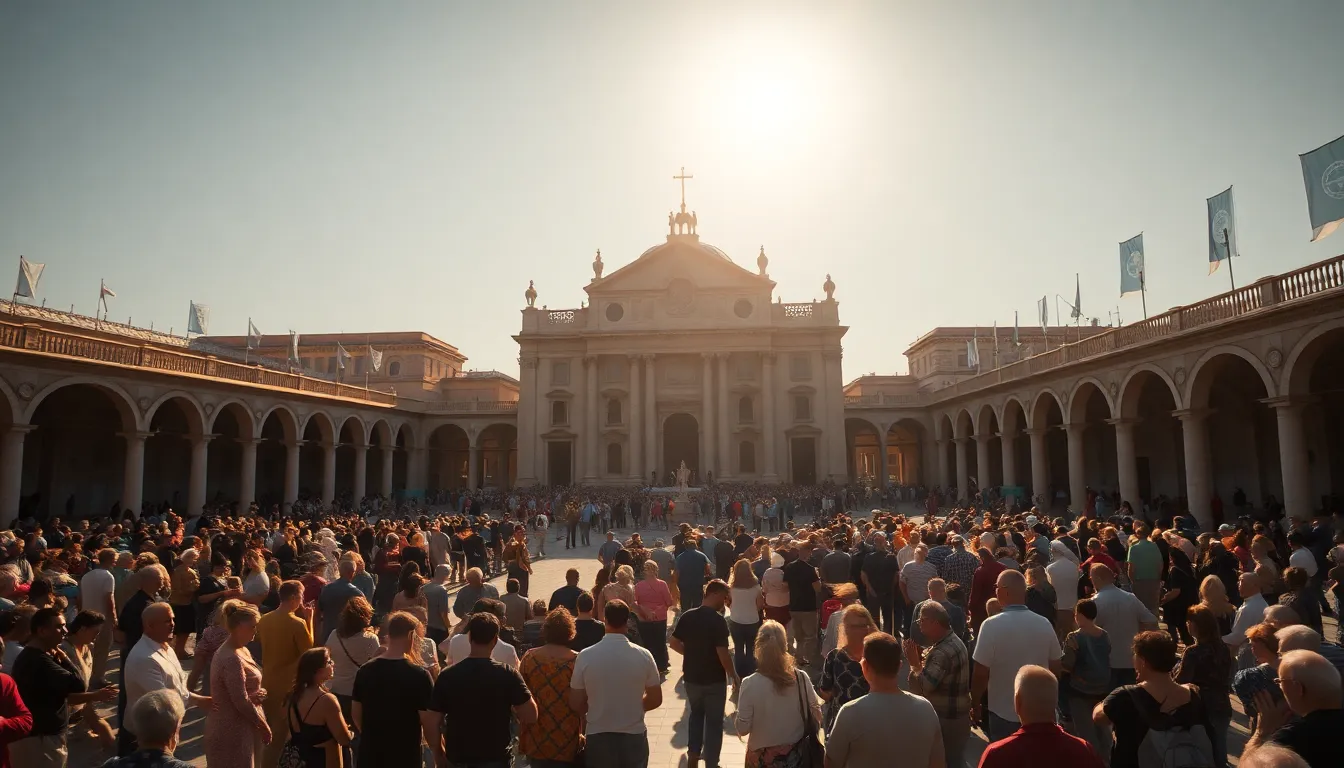
When a pastor calls me about a first Christian heritage trip for the congregation, Italy is usually already in their head. Rome, the Vatican, the catacombs. It is the default. And then somewhere in the conversation they mention Fatima, and I can hear them start to wonder whether Portugal might be the better fit for their particular church.
I have led groups to both. They are both wonderful, and they are not interchangeable. The choice between them is really a choice about what kind of encounter you want your people to have on their first trip. Let me walk you through it honestly, because the wrong fit can turn a once-in-a-lifetime trip into something that does not land the way you hoped.
What Each Country Is Actually About
Start by being clear on what each place centers.
Italy, for a Christian heritage group, is about the institutional and historical heart of the faith. Rome is the church of Peter and Paul, the catacombs of the early martyrs, the Vatican, the great basilicas, Assisi and Saint Francis, the whole sweep of two thousand years of Christianity laid out in stone and art. It is vast, dense, and overwhelming in the best sense. Italy is where the story of the church as an institution is most fully written.
Portugal is more focused, and its center of gravity is Fatima. In 1917 three shepherd children reported apparitions of the Virgin Mary, and Fatima became one of the most significant Marian pilgrimage sites in the world. Portugal is about devotion, apparition, and a more intimate, prayerful kind of pilgrimage. It is not trying to tell the whole history of the church. It is centered on an encounter.
So the first question is not which country is holier. It is which encounter your congregation needs: the grand institutional history, or the focused devotional pilgrimage.
The Case for Italy on a First Trip
Italy has real advantages for a congregation’s first heritage journey, and I will not undersell them.
The sheer density of significance is unmatched. In Rome alone your group can stand at Saint Peter’s tomb, walk the catacombs where the persecuted church buried its dead, see the Sistine Chapel, and pray at the four major basilicas, all within a few days. Add Assisi, and you connect to Francis and a spirituality that crosses every denominational line. For a congregation that wants to feel the full weight and span of Christian history, Italy delivers more recognizable, bucket-list sites than anywhere.
Italy is also denominationally broad. Catholics, Protestants, and Orthodox visitors all find their story in Rome, because Rome is where the shared early history of the whole church lives. For a mixed congregation, that breadth is genuinely useful.
The honest trade-offs are crowds and pace. Rome in particular is busy and large, and a group can leave exhausted rather than renewed if the itinerary tries to see everything. Italy rewards a disciplined plan and a guide who knows when to slow down. The grandeur can also keep the experience at arm’s length. It is easier to be a tourist of history in Rome than to be a pilgrim.
The Case for Portugal on a First Trip
Portugal’s strength is the opposite of Italy’s, and for many congregations it is the better first trip precisely because of that.
Fatima is a place built for prayer, not sightseeing. The plaza, the candlelight processions in the evening, the basilica, the simple sites where the children lived, these create a contemplative rhythm that an institutional itinerary rarely achieves. Groups that come to Fatima tend to pray more and rush less. For a congregation whose first goal is spiritual renewal rather than historical survey, that matters enormously.
Portugal is also more manageable. The country is smaller, the pace gentler, the crowds outside peak Marian feast days far lighter than Rome. A first-time group, especially one with older members, often finds Portugal less tiring and more spiritually focused. You can pair Fatima with Lisbon, the monastery at Batalha, the medieval pilgrimage town of Tomar, and the coast, and still keep the trip centered and unhurried.
The trade-off is breadth. Portugal does not give you the catacombs, the Vatican, or the two-thousand-year institutional sweep. If your congregation specifically wants to walk the history of the early church, Portugal will feel narrow. It is deep rather than wide.
If you want to understand how tightly to build the trip around Fatima itself, we compared a Fatima-focused tour against a broader Portugal itinerary in its own piece.
Practical Factors: Cost, Pace, and Group Comfort
Beyond the spiritual question, a few practical points decide a lot of trips.
Pace and Group Fatigue
Italy asks more of a group physically. Rome involves significant walking, large sites, and dense days. Portugal is gentler and more contained. For a congregation with a wide age range, Portugal often produces a more comfortable, less exhausting trip.
Cost
Both can be done well at a range of budgets, but Portugal generally runs somewhat lower than Italy on hotels, dining, and ground costs, and its tighter geography means fewer travel days. For a first trip where the congregation is testing the waters of group travel, Portugal’s lower total cost can make the difference in filling the group. And on the leader’s side: with Heritage Tours, the group leader travels free with 15 or more participants, in either country.
First-Trip Confidence
For a church that has never traveled together, the focused, prayerful, manageable nature of Portugal can build confidence for bigger trips later. Many congregations do Portugal first and Italy second, in that order, and find it works beautifully.
How I Help Leaders Decide
Here is the short version of the counsel I give.
Choose Italy if your congregation wants the full historical sweep of the church, the recognizable landmark sites, and a denominationally broad survey, and if your group has the energy for a dense, ambitious trip. Choose Portugal if your first goal is a prayerful, focused, Marian pilgrimage, if you want a gentler pace, and if Fatima speaks to your community’s devotional life.
For a true first trip with a mixed-age congregation that wants renewal more than survey, I often lean Portugal. It is the trip that sends people home changed rather than just impressed. You can explore the Portuguese itinerary on our Portugal destination page and see how the format works on our group heritage tours page. If you are still deciding whether you even need the whole country, our look at a Lisbon-only versus full-country trip is a useful next read.
FAQ: Portugal vs Italy for Christian Heritage
Is Portugal or Italy better for a first Christian heritage trip?
It depends on what your congregation needs. Italy gives you the full institutional and historical sweep of the church, Rome, the Vatican, the catacombs, Assisi, and is unmatched for breadth and recognizable sites. Portugal is more focused, centered on the Marian pilgrimage at Fatima, with a gentler pace and a more prayerful, contemplative rhythm. For a first trip aimed at spiritual renewal rather than historical survey, many congregations find Portugal the better fit.
What is Fatima and why does it draw faith groups to Portugal?
Fatima is one of the world’s most significant Marian pilgrimage sites. In 1917, three shepherd children reported apparitions of the Virgin Mary there. Today the basilica, the plaza, the evening candlelight processions, and the children’s home sites create a place built for prayer rather than sightseeing. It draws Christian groups seeking a focused devotional pilgrimage rather than a broad historical tour.
Which trip is easier for a congregation with older members?
Portugal is generally gentler. The country is smaller, the pace more contained, the crowds lighter outside peak feast days, and the walking less demanding than Rome’s large sites and dense days. Italy is more rewarding for breadth but asks more of a group physically. For a wide-age congregation, Portugal often produces a more comfortable trip.
Is Portugal cheaper than Italy for a heritage tour?
Generally, yes. Portugal tends to run somewhat lower on hotels, dining, and ground costs, and its tighter geography means fewer travel days and a lower total trip cost. With Heritage Tours, the group leader also travels free with 15 or more participants in either country, which helps the planning math regardless of destination.
Can a group do both Portugal and Italy?
Yes, though many congregations do them as separate trips rather than one combined journey, because each deserves its own focus. A common and effective sequence is Portugal first, as a focused and confidence-building first trip, then Italy later for the fuller historical sweep.
If you are deciding between Portugal and Italy for your church’s first heritage journey, I would be glad to talk through what fits your congregation. The right first trip is the one that matches your people and your hopes for them, not the one with the longest list of famous sites. Contact us and let’s find it together.