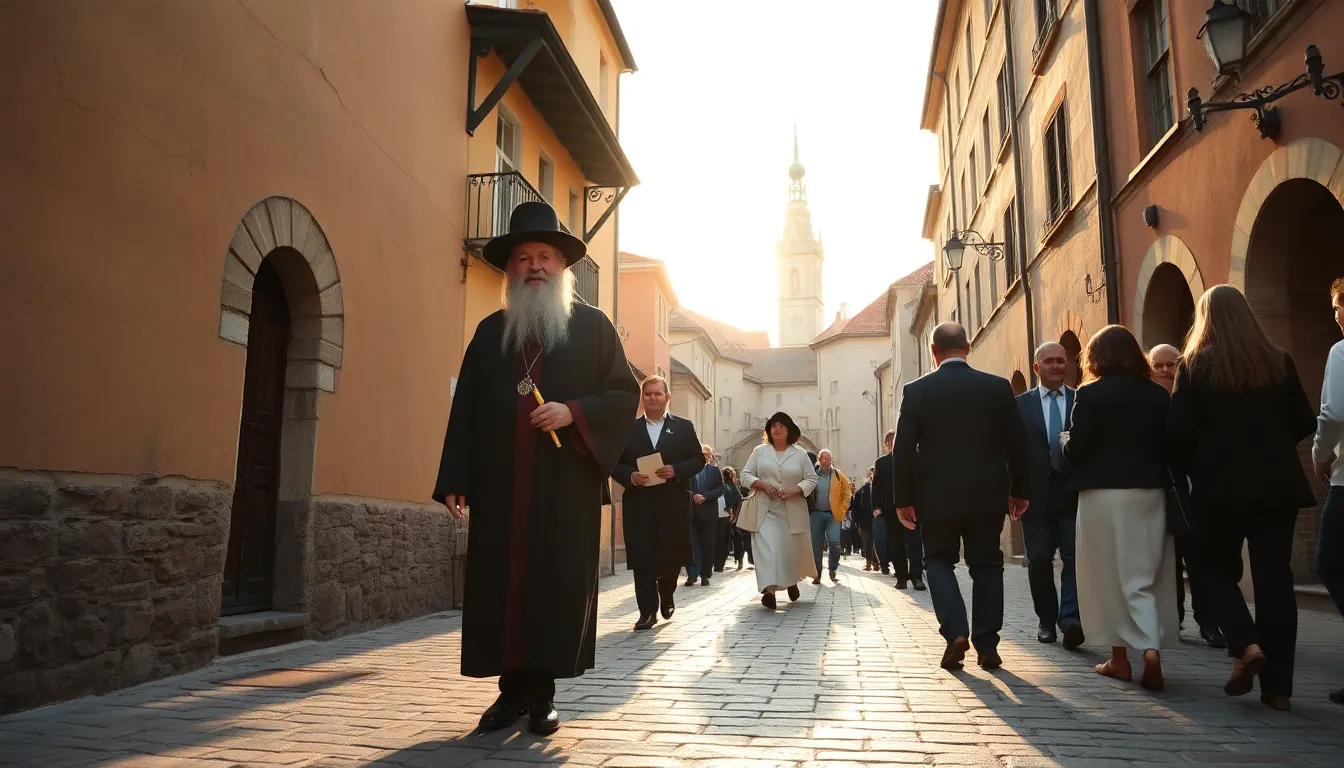
The first time a rabbi called me about leading his congregation to Poland, he said something I have heard many times since. “I know I have to bring them. I just don’t know if I can carry it.”
I understood exactly what he meant. Leading a congregation to Poland is not like leading them to Israel or anywhere else. You are not just the person who booked the buses. You are the spiritual authority your community looks to when they are standing at the edge of Birkenau and they do not know what to do with their hands or their grief. That is a real weight, and if you feel it, you are taking the job seriously.
I have spent over forty years helping group leaders plan heritage journeys. The rabbis I work with tend to ask the same questions, in the same order, and worry about the same things. So let me walk you through how a rabbi actually leads this trip, from the first conversation with your board to the kaddish you will say in a place you will never forget.
Start With Why Your Congregation, Why Now
Before you pick a date or a route, you need to answer one question for yourself. Why this community, and why now?
The answer shapes everything. A congregation marking a milestone anniversary leads differently than one responding to a rise in antisemitism. A community with many descendants of Polish Jews carries a different trip than one whose connection is more communal. None of these reasons is better than another. But you need to name yours, because it becomes the frame you return to again and again, in your sermons before the trip and at the sites themselves.
When you can say to your board, “We are going because our children are growing up without ever having stood where this happened, and that distance is dangerous,” you have given them a reason that is bigger than tourism. That clarity is what gets a trip approved and what gets people to sign up.
The Free Leader Program and Your Board Conversation
Let me get the practical money question out of the way early, because it changes the board conversation.
When your group reaches 15 participants, you travel free. Airfare, hotel, ground transportation, the meals included in the itinerary, and entry to every site. That is the standard Heritage Tours policy, and it applies to every group journey we run.
For a rabbi, this matters in a specific way. The person doing the spiritual and logistical work of leading a congregation through Poland should not also be asking the shul to cover the cost of their seat. With the leader program, your travel is part of the structure, not a line item someone on the finance committee has to defend. You hit 15 participants, and your spot is fully covered. Not discounted. Covered.
That removes the most awkward part of the board conversation and lets you focus on what the trip will mean for the community.
Heritage and Remembrance, Held Together
Here is the decision that will define the entire journey, and it is yours to make consciously.
A remembrance journey focused only on the sites of destruction, Auschwitz-Birkenau, Treblinka, the Warsaw Ghetto, gives your community the act of bearing witness. That is sacred work. But a journey that holds remembrance inside the larger story of Polish Jewish life gives the grief a context that I believe your community needs.
Why the Pre-War Story Belongs in a Remembrance Trip
When your congregation spends a morning in Krakow’s Kazimierz quarter, walking past synagogues that stood for centuries, and then visits the POLIN Museum to encounter a thousand years of Jewish civilization, something shifts. They learn that what was destroyed was not an abstraction. It was a world. Yeshivas, markets, music, weddings. Lublin was once called the Jerusalem of Poland.
Then, when you bring them to Auschwitz the next day, they understand the scale of the loss in a way that a memorial-only trip cannot teach. They are not mourning numbers. They are mourning a civilization they have now seen with their own eyes.
Most rabbis I work with choose this fuller path. Both are valid. What matters is that you choose, rather than letting the route choose for you.
Leading the Spiritual Preparation Before You Leave
This is the work only you can do. Heritage Tours can build the itinerary and handle every logistic. We cannot prepare your community’s souls. That is your role, and it begins months before departure.
The Sermons and Study Sessions
In the weeks before the trip, I encourage rabbis to teach toward Poland from the bimah and in study sessions. Teach the history of Polish Jewry, not only its end. Read survivor testimony together. Study the liturgy of mourning your group will use on-site, so that when you stand at Birkenau and begin El Malei Rachamim, the words are familiar and the moment can be fully present.
Preparing People for Their Own Responses
Tell your community honestly what Auschwitz will ask of them. Some will weep. Some will go silent. Some will feel nothing in the moment and then feel ashamed of that. Naming all of these responses in advance gives people permission to feel whatever they feel. There is no correct way to react to that place, and your community needs to hear that from you before they arrive.
Caring for the Descendants in Your Group
Some of your members may be descendants of Polish Jews. When they stand at Auschwitz, they may be standing where their own family was murdered. Their experience of this trip is different in kind, not degree.
Know before you leave who these members are. Have a private conversation with each of them. Ask what they need. Some will want quiet time alone at specific sites. Others may want to visit their family’s town of origin. Heritage Tours can often build a personal stop into the group itinerary, even when the town is off the standard route. Arranging that for a congregant is one of the most meaningful things a rabbi can do on this journey.
What You Lead On-Site, and What We Handle
On the ground, the division of labor is clear. We handle the logistics. You lead the souls.
You are met at the airport and transferred to your hotel. Every touring day begins and ends with a bus pickup at the hotel. You are never hailing taxis or navigating Polish public transit with thirty people behind you. Our local guides are educators, not script-readers. The guide at Auschwitz will read your group, adjust the pace, and create the space your community needs rather than rushing through a fixed talk.
That frees you to do the work that is yours alone. You decide where the group pauses to say kaddish. You lead El Malei Rachamim at Birkenau. You hold the silence after. You gather everyone for a few words at the end of a hard day. The itinerary is also built with an emotional arc in mind, so we never stack two heavy memorial sites back to back without something restorative between them, which gives you the room to lead these moments well.
The Kaddish You Will Say
I want to speak directly about the heart of this trip for a rabbi.
There will be a moment, almost certainly at Birkenau, when your community gathers and you lead the mourner’s kaddish for people whose names you will never know. You are saying kaddish on behalf of the murdered, many of whom left no one alive to say it for them.
Prepare for that moment before you leave. Decide where you want to stand and what you will say. And give yourself permission to be moved, because your community is watching you to learn how to hold this. Your composure is not coldness. Your tears are not weakness. Either can lead them well, as long as you are present.
After You Return Home
The trip does not end when the plane lands. Poland stays with people for weeks and months. It surfaces in conversations, in dreams, in unexpected silences.
Plan for this. Schedule a community gathering two or three weeks after you return, and create space for people to share what the journey meant. Some congregations carry it forward into a study group, a memorial service, or community action. The form matters less than the intention.
Do not use the word closure. This is not a journey that closes anything. It opens something. What your community does with that opening, under your leadership, is the real measure of the trip.
FAQ: How a Rabbi Leads a Heritage Trip to Poland
How does a rabbi start planning a congregation’s trip to Poland?
Start by naming why your community is going and why now, because that frame guides every later decision. Then bring the plan to your board with the free leader program in hand, so the cost conversation is simple. Decide whether you want a remembrance-only journey or a fuller heritage and remembrance trip. Heritage Tours handles the route, guides, hotels, and logistics, which leaves you free to focus on preparing your community spiritually.
Should the trip focus only on Holocaust sites or include pre-war Jewish life?
Most rabbis I work with choose to include both. A remembrance-only trip gives your community the act of witness, which is sacred. But adding Kazimierz, the POLIN Museum, and Lublin gives the grief context by showing the civilization that was destroyed, not only its destruction. Your community mourns more fully when they have first seen what was lost.
How do I prepare my congregation for the emotional weight of Auschwitz?
Teach toward the trip in sermons and study sessions for months beforehand. Read testimony together and study the mourning liturgy you will use on-site. Tell people honestly that responses range from tears to silence to numbness, and that all of them are acceptable. Have private conversations with any descendants of Polish Jews in your group about what they need.
What does the free leader program cover for a rabbi?
Once your group reaches 15 participants, your travel is fully covered: airfare, hotel, ground transportation, the meals included in the itinerary, and all site entries. It is not a discount. Your seat is part of the structure, which means you are not asking the congregation to fund the cost of leading them.
What is the rabbi’s role on the ground versus what Heritage Tours handles?
We handle every logistic: airport transfers, daily hotel pickups, expert local guides, and an itinerary paced with the emotional arc in mind. You lead the spiritual work that only you can do. You decide where to say kaddish, you lead El Malei Rachamim at Birkenau, you hold the silence, and you gather the community at the end of each demanding day.
If you are a rabbi beginning to think about bringing your congregation to Poland, I would be glad to talk it through with you. Tell me about your community, what you are hoping for, and what worries you. I have walked many rabbis through this, and I will tell you honestly whether we are the right fit for your group.
You can see how we structure these journeys at our Poland heritage destination page or learn how the leader experience works on our group heritage tours page. When you are ready, contact us and we will begin.