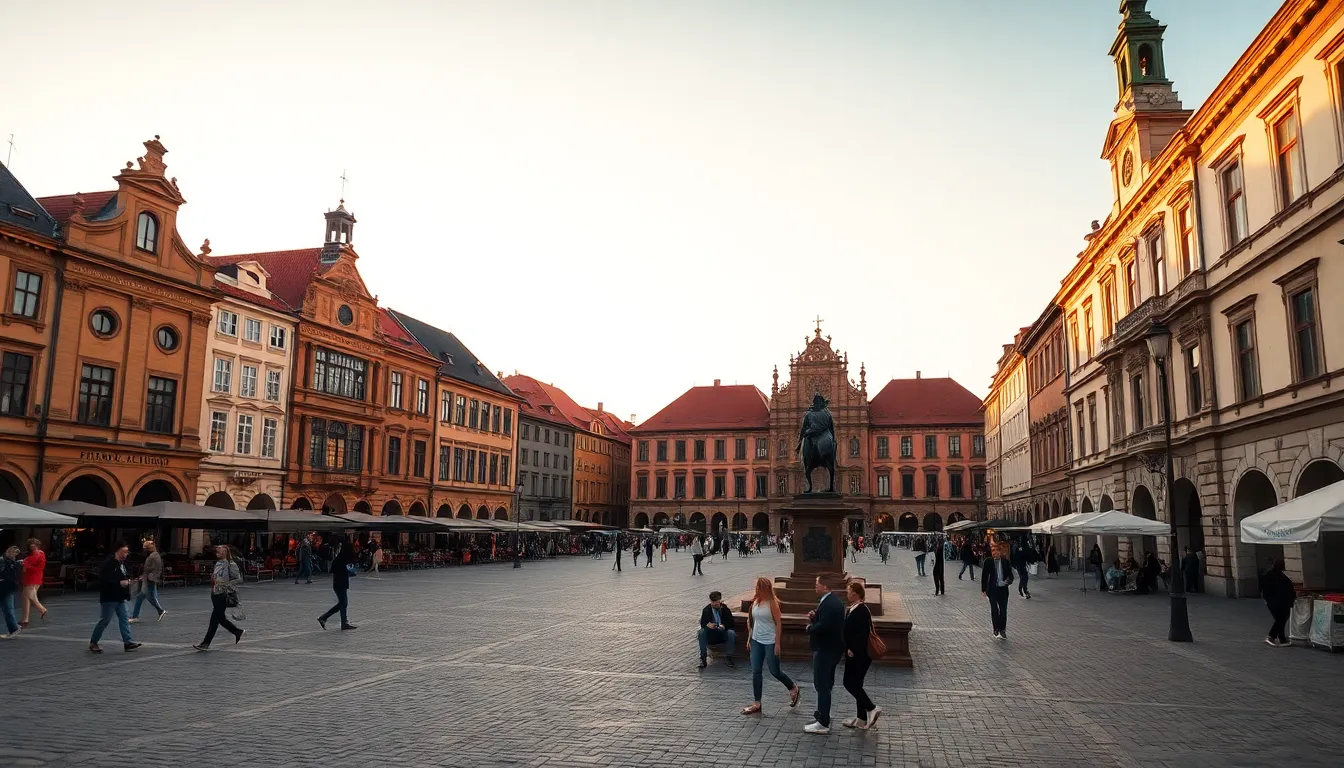
The most practical question I get from leaders planning a Poland trip is not about format or timing. It is about length. “Can we just do Krakow and Auschwitz in a few days, or do we need to see the whole country?”
It is a fair question, and the honest answer is that both can be right. I have sent communities home from a focused four-day Krakow trip deeply moved, and I have sent communities home from a ten-day full-country journey having understood something they could not have grasped in less. The difference is not that one is better. The difference is what your community needs, how much time they have, and what story you are trying to tell.
This guide is for rabbis, pastors, and educators trying to decide how much trip to plan. I will walk you through what a Krakow-only journey gives you, what the full country adds, and how to choose the right length without either shortchanging the experience or over-building it.
What “Krakow-Only” Actually Means
When people say a Krakow trip, they usually mean a base in Krakow with a day trip to Auschwitz-Birkenau, plus time in the city itself. And there is a real reason this works as a complete experience.
Krakow holds Kazimierz, the historic Jewish quarter, with its synagogues and its centuries of Jewish life. It holds the ghetto area and the Schindler factory museum. And it sits about ninety minutes from Auschwitz-Birkenau, the site most communities consider the heart of their journey. So a Krakow base puts a group within reach of both the life that was lived here and the largest site of its destruction.
A focused Krakow trip usually runs four to six days. For many communities, that is a complete and powerful journey.
When a Krakow-Only Trip Is Enough
Limited Time or First-Time Travelers
If your community can only get away for a long weekend or a short week, Krakow gives you a full heritage experience without rushing. Some leaders feel they must see everything or the trip is incomplete. That is not true. A well-built Krakow journey with proper time at Kazimierz and Auschwitz-Birkenau stands on its own.
For a congregation taking its first heritage trip together, the focus can actually help. Fewer transitions, less travel fatigue, more time to absorb what they are seeing rather than rushing between cities.
Budget and Group Logistics
A shorter trip costs less per person, which can be the difference between a community going and not going. It is also easier to fill. Asking your congregants for four days is a smaller ask than ten, and you may reach the participant numbers that make the group economics work more quickly.
A Single, Focused Purpose
If your community’s purpose is specific, to stand at Auschwitz-Birkenau together, to say Kaddish or hold a service there, to walk Kazimierz, then Krakow delivers that purpose cleanly. Adding cities does not deepen a focused purpose. Sometimes it dilutes it.
What the Full Country Adds
Warsaw: The Capital and Its Ghetto
The full-country journey almost always includes Warsaw. And Warsaw adds something Krakow cannot. The story of the largest Jewish community in prewar Europe, the Warsaw Ghetto, the Uprising, and the POLIN Museum of the History of Polish Jews, which tells a thousand years of the story in one extraordinary building. A community that visits only Krakow misses Warsaw’s particular weight.
Lublin, Majdanek, and the Smaller Towns
A fuller itinerary can reach Lublin and the Majdanek camp on its edge, eerily preserved and far less visited than Auschwitz. It can reach the small towns and shtetls where so much of Jewish life actually happened, away from the cities. For communities tracing ancestry or wanting the fuller texture of the lost world, these places matter enormously. Our full Poland itinerary lays out how these connect across a journey.
The Arc Across the Whole Country
Here is what the full country gives that no single city can. An arc. Moving from Warsaw to Lublin to Krakow, a group travels across the geography of the whole story, the breadth of the life that was lived and the scale of what was lost. That sense of a country once full of Jewish life, encountered city by city, builds an understanding that a single base cannot.
A full-country journey usually runs eight to ten days. For communities with the time, it is the more complete encounter.
How to Choose the Right Length
Let me make this concrete.
Choose Krakow-only when your community has limited time, a tighter budget, a first heritage trip, or a single focused purpose centered on Auschwitz-Birkenau and Kazimierz. Four to six days. Complete and powerful on its own.
Choose the full country when your community has eight to ten days, when you want the breadth of the whole story including Warsaw and POLIN, when people are tracing ancestry across regions, or when this is a study journey meant to teach the full history. The full arc.
The mistake I see most often is not choosing wrong. It is over-building. A community with five days available trying to cram in four cities ends up exhausted and rushed, absorbing nothing well. If you have limited time, do less, and do it deeply. That is almost always the better trip.
A Middle Path
There is also a sensible middle. A seven-day trip with a Krakow base plus two or three nights in Warsaw gives a group the two essential cities, POLIN and Auschwitz-Birkenau both, without the full-country travel load. For many communities this is the sweet spot, and it is one of the itineraries I build most often. Heritage Tours assembles all of these as custom group journeys, so the length fits your community rather than the other way around.
Whatever Length You Choose, Build It With Space
The single most common regret I hear is not “we should have seen more cities.” It is “we should have left more room to breathe.” Auschwitz-Birkenau is a long, heavy day. POLIN is dense. Kazimierz deserves unhurried time.
So whether you plan four days or ten, do not pack every hour. Leave space to debrief, to sit in silence, to let your spiritual leader lead a moment of reflection. A shorter trip with room to feel beats a longer trip that never lets anyone catch their breath. Our group leader’s guide to Poland goes deeper on pacing the emotional load.
FAQ: Krakow-Only vs Full Poland
Is a Krakow and Auschwitz trip enough for a heritage journey?
For many communities, yes. A four-to-six-day trip based in Krakow gives you Kazimierz, the historic Jewish quarter, the Schindler factory and ghetto area, and a full day at Auschwitz-Birkenau about ninety minutes away. If your purpose is focused on standing at the camp together and walking Krakow’s Jewish history, it is a complete journey on its own.
What does a full-country Poland trip add over Krakow?
The biggest addition is Warsaw, with the POLIN Museum and the Warsaw Ghetto story, which Krakow cannot replicate. A full journey can also reach Lublin, the Majdanek camp, and the smaller towns where much of Jewish life happened. It gives the breadth and arc of the whole story, usually across eight to ten days.
How many days do you need for a Poland heritage trip?
A focused Krakow trip runs four to six days. A full-country journey runs eight to ten. A popular middle path is about seven days with a Krakow base plus two or three nights in Warsaw, covering both essential cities without the full travel load. The right length depends on your community’s time, budget, and purpose.
Should a first-time group do Krakow only or the full country?
For a first heritage trip, a focused Krakow journey often works better. Fewer transitions and less travel fatigue let a community absorb what they are seeing rather than rushing between cities. Communities frequently return later for the full country once they are ready.
Does the free leader program apply to shorter Poland trips?
Yes. The group leader travels free with 15 or more participants, whether the trip is four days or ten. The length of the journey does not change how we structure group pricing.
If you are trying to decide how much Poland trip to plan for your community, I would be glad to help. Tell me how many days you have and what you most want your people to encounter, and I can shape the right length around that. You can read more at our Poland destination page, or contact us whenever you are ready to start planning.