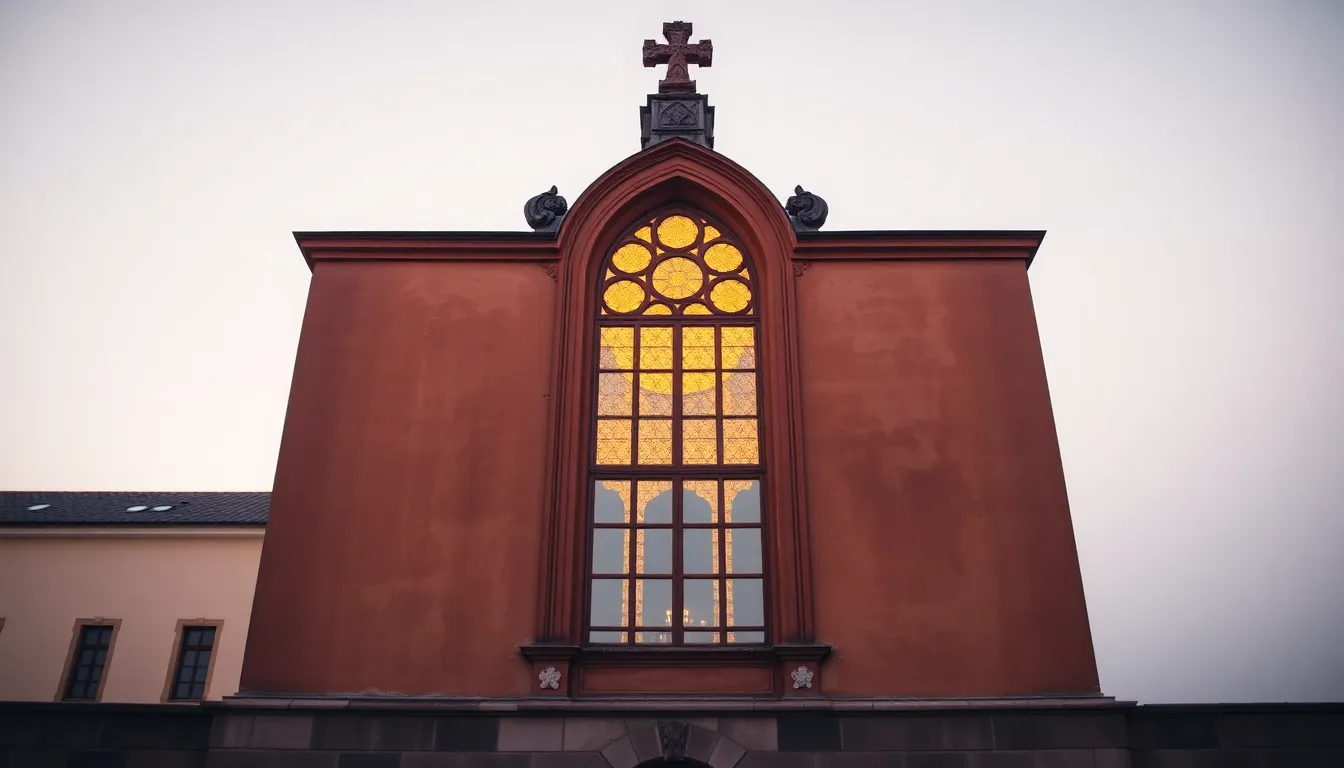
Some groups do not want all of Poland. They want one man’s Poland. They come to me wanting to walk where Karol Wojtyla walked, from the small town where he was born to the cathedral where he was ordained, to the window where, as pope, he spoke to his own people in his own city. For these groups I build a focused pilgrimage in the footsteps of John Paul II.
This is a more intimate trip than a broad Christian heritage tour. It stays mostly in the south, around Wadowice and Krakow, the heart of his world before and after he became Bishop of Rome. It moves at the pace of a life, not a checklist. And because John Paul II’s Poland cannot be separated from the suffering of his century, it includes Auschwitz, where his friend Maximilian Kolbe died, framed with the gravity that day demands.
If your group wants the fuller picture of Polish Catholic heritage, our 10-day Christian heritage itinerary adds Czestochowa and the Black Madonna. This itinerary is the saint himself.
How This Pilgrimage Is Shaped
I structure this journey chronologically, because following a life in order changes how your group understands it. You begin where he began, in Wadowice. You move to Krakow, where he studied in secret during the occupation, was ordained, served as priest and bishop, and finally as cardinal. You visit the Divine Mercy he championed and the place of sacrifice at Auschwitz that marked his theology of suffering. The route is a biography you walk through.
Mass and prayer are the structure, not an addition. Build those first, then the days fall into place.
Day 1: Arrival in Krakow
For this itinerary I fly groups directly into Krakow rather than Warsaw, because Krakow is the gravitational center of John Paul II’s Poland and your group will be based here.
Most people arrive in the afternoon. Rest is the only plan for Day 1. If your group gathers in the evening, an unhurried walk through the Old Town market square is a gentle first encounter with the city the pope loved more than any other.
Heritage Tours arranges airport pickup so the first evening is restful.
Day 2: Wadowice, Where the Story Begins
Today your group travels to Wadowice, about an hour from Krakow, the town where Karol Wojtyla was born in 1920.
Begin at the Basilica of the Presentation of the Blessed Virgin Mary, where he was baptized and where he served as an altar boy. Then visit the family home, now the Family Home Museum of John Paul II, which traces his childhood, the early loss of his mother and brother, and the world that shaped him. The museum is thoughtfully done and gives your group the human foundation of the saint.
Before you leave Wadowice, many groups stop for the kremowka, the cream cake the pope famously remembered from his boyhood here. It is a small, human moment, and pilgrimage has room for those.
Return to Krakow in the late afternoon.
Day 3: Krakow, the Young Wojtyla
Today follows the future pope’s early years in Krakow. Under the Nazi occupation, Wojtyla worked as a manual laborer at the Solvay quarry and chemical plant while studying for the priesthood in a clandestine seminary, since the occupiers had banned such training.
Visit the sites of his hidden formation and the churches connected to his early faith. Walk through the Old Town as he did as a young man drawn between theater, poetry, and the priesthood. Your guide will help your group feel the weight of choosing a vocation in a city under occupation, where seminarians were arrested and the cost was real.
Celebrate Mass at one of the churches of his youth if your clergy and schedule allow.
Day 4: Krakow, Priest, Bishop, Cardinal
Today moves to the heart of his ministry in Krakow. Begin at Wawel Cathedral, where he celebrated his first Mass in the crypt of Saint Leonard in 1946 and where he later served as archbishop. This thousand-year cathedral, holding the tombs of kings and Saint Stanislaus, was the seat of his episcopal authority.
Walk to the Archbishop’s Palace on Franciszkanska Street, his residence as bishop and cardinal. From its window he spoke to crowds during his papal visits home, and after his death in 2005 that window became a place of spontaneous mourning where Krakovians gathered by the thousands. Stand beneath the papal window with your group. It is a place that still holds the city’s love for him.
Celebrate Mass at the cathedral if you can arrange it.
Day 5: Lagiewniki, Divine Mercy and the John Paul II Sanctuary
Today belongs to the devotion John Paul II carried to the world. In the Lagiewniki district stands the Sanctuary of Divine Mercy, built around the convent where Saint Faustina Kowalska received the Divine Mercy revelations. As archbishop of Krakow, Wojtyla championed her cause, and as pope he canonized her and established Divine Mercy Sunday.
Venerate the relics of Saint Faustina and pray the Divine Mercy chaplet at three o’clock with pilgrims from across the world.
Beside the sanctuary rises the John Paul II Sanctuary, a center dedicated to his life and legacy, holding relics including a vial of his blood. Walk its chapels and the museum of his pontificate. Celebrate Mass here if your schedule allows. Together the two shrines hold the message that defined his theology: mercy that meets the world’s suffering.
Day 6: Auschwitz-Birkenau and Kolbe’s Witness
John Paul II’s Poland cannot be understood apart from the suffering of his century. In 1979, as pope, he visited Auschwitz and called it the Golgotha of the modern world. Your group goes where he went, and stands where his friend gave his life.
The evening before, prepare your group. Tell them what the day holds and how long it lasts. Let them know every reaction is normal, whether tears, silence, or numbness. As clergy, prepare a prayer or reflection. This is an act of witness, never a tour.
The day begins at Auschwitz I and moves to Birkenau, the extermination camp whose scale photographs cannot convey. At Auschwitz I, pause at the cell where Saint Maximilian Kolbe, the Franciscan priest, offered his life in place of a condemned fellow prisoner and died in the starvation bunker. John Paul II beatified and later canonized Kolbe, holding him up as a martyr of charity. Standing at that cell is the spiritual center of this day.
Move through the sites in silence, with room to pray. The return to Krakow is quiet, and Heritage Tours schedules nothing for the evening.
Day 7: Closing in Krakow and Departure
The final day returns to the city of his heart for a fitting close. If your schedule allows, celebrate a closing Mass together, perhaps at the cathedral or the John Paul II Sanctuary.
Then hold a time of reflection. Ask each person what they are carrying home from following this one extraordinary life across his homeland. In my experience, a pilgrimage built around a single saint leaves people with something very personal, and naming it together before they fly is where it settles.
Heritage Tours handles the airport transfer, so the final hours belong to your group.
FAQ: A John Paul II Heritage Itinerary for Poland
Which Poland sites are connected to John Paul II?
The essential ones are Wadowice, his birthplace, with the basilica where he was baptized and his family home museum; Krakow, where he studied in a clandestine wartime seminary, was ordained at Wawel Cathedral, and served as bishop and cardinal from the Archbishop’s Palace with its famous papal window; and Lagiewniki, home to the Divine Mercy sanctuary he championed and the John Paul II Sanctuary dedicated to his life. We follow these in chronological order so your group walks his life as a story.
Why fly into Krakow instead of Warsaw for this trip?
Because Krakow, not Warsaw, is the gravitational center of John Paul II’s Poland. He spent his formative decades there as student, priest, bishop, and cardinal, and most of the saint’s sites sit in or near the city. Basing your group in Krakow keeps travel time low and lets the days focus on his life rather than long transfers.
Should this pilgrimage include Auschwitz?
Yes. John Paul II visited Auschwitz as pope in 1979 and called it the Golgotha of our age, and his friend Saint Maximilian Kolbe died there giving his life for another prisoner. Standing at Kolbe’s cell is part of understanding the pope’s theology of suffering and mercy. We prepare groups carefully and frame the visit entirely as witness and remembrance, never as sightseeing.
Can we celebrate Mass at the John Paul II sites?
Yes, and we encourage it. We work to arrange Mass at Wawel Cathedral, the churches of his youth, the John Paul II Sanctuary, and a closing Mass to end the pilgrimage. Celebrating where he celebrated is the devotional heart of the trip, so we coordinate scheduling and permissions with your clergy ahead of time.
How does the group leader arrangement work?
With Heritage Tours, the group leader, whether a priest, pastor, or lay coordinator, travels free with fifteen or more participants. For a parish building a pilgrimage group, that math matters, so it is worth raising early as you plan and promote the trip.
If you are drawn to a pilgrimage in the footsteps of John Paul II, I would be glad to help you shape it around your parish and clergy. You can reach our group team here, broaden the journey with the 10-day Christian heritage itinerary, see the 10-day Poland heritage itinerary, and review the Poland destination overview. When you are ready, contact us.