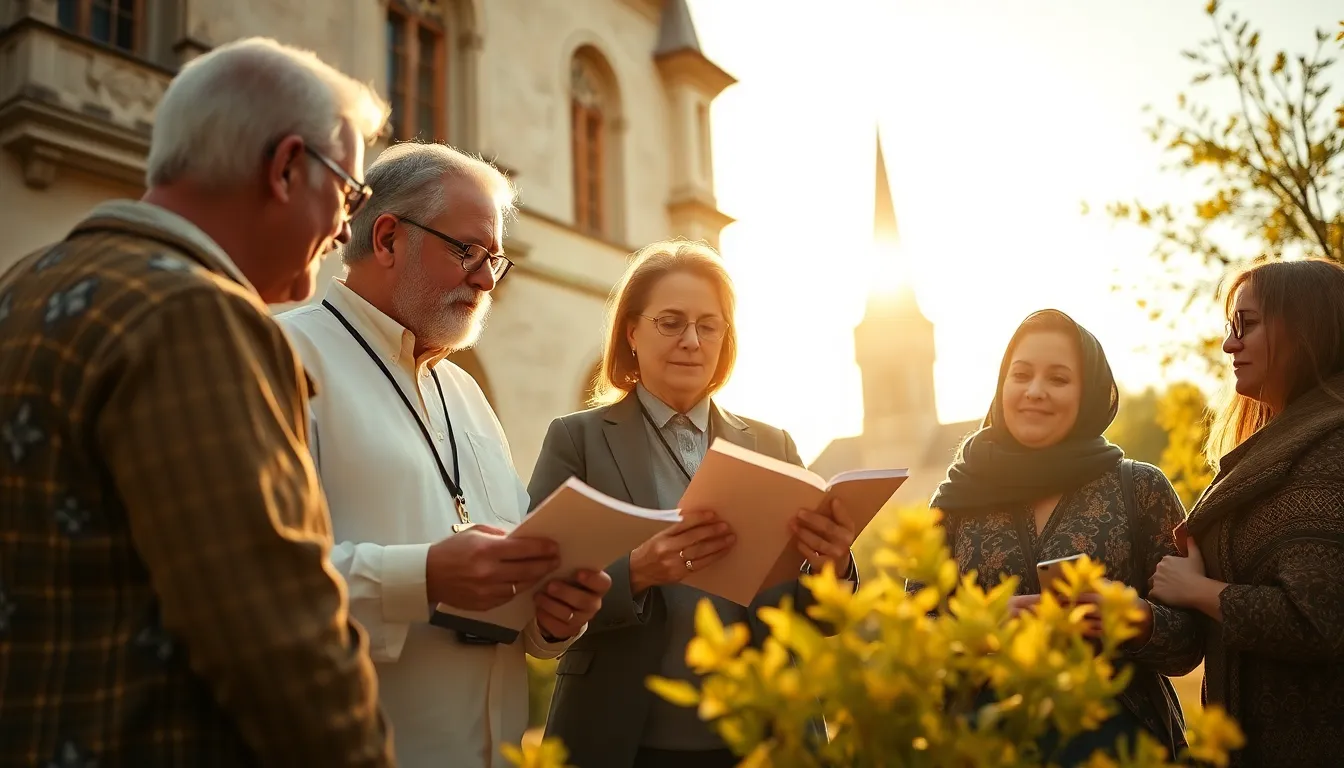
Most group leaders call me somewhere in the middle. They have already mentioned Poland from the pulpit once or twice, a few people have said yes in the lobby, and now they are staring at a blank calendar wondering how this actually becomes a trip. The distance between “we should go” and “we are at the gate” feels enormous when you have never crossed it.
It is not enormous. It is a sequence. I have helped group leaders plan heritage journeys for over forty years, and building a congregation’s Poland trip from scratch follows a path you can actually see from the beginning. Let me lay out that path, from the first sermon mention to wheels up, so you know what comes next at every stage.
Step One: The First Sermon Mention
The trip begins not with a budget but with a sentence from the front of the room.
Before you announce anything formal, plant the idea. Mention Poland in a sermon. Tell a story about why this matters now. Watch who comes up afterward. The people who approach you in the lobby, eyes a little wet, saying “I have always wanted to do this,” are your first travelers and often your first volunteers.
This early read tells you whether the appetite is there before you do any logistical work. Almost always, it is. Heritage journeys to Poland answer a hunger that congregations carry quietly, and naming it out loud is often all it takes to surface it.
Step Two: Decide What Kind of Journey You Are Building
Before recruiting in earnest, make the decision that shapes everything else.
Are you building a remembrance-focused journey centered on the sites of witness, Auschwitz-Birkenau, Treblinka, the Warsaw Ghetto? Or a fuller heritage and remembrance journey that holds those sites inside the larger story of Polish Jewish life, with Krakow’s Kazimierz quarter, the POLIN Museum, and towns like Lublin?
Most leaders choose the fuller path, because it gives the grief context. When your people have first seen the civilization that thrived for a thousand years, the visit to the sites of destruction means more. Make this choice consciously now, because it determines your route, your length, and how you describe the trip to your community.
Step Three: Set the Date Around Your Community’s Calendar
Pick the date next, and pick it around your congregation’s life, not around airfare.
Avoid your busiest liturgical seasons. Avoid the weeks your community is already stretched thin. Look for a window when people have both the energy and the flexibility for a demanding journey. For many congregations, late spring or early fall works well, after the major holidays have cleared and before the next season’s commitments pile up.
Set the date far enough out that you can actually build the group. Which brings us to the most important number in this whole process.
Step Four: Understand the Free Leader Math
Here is the number that drives your entire recruiting plan.
When your group reaches 15 participants, you travel free. Airfare, hotel, ground transportation, the meals included in the itinerary, and entry to every site. That is the standard Heritage Tours policy on every group journey.
This is not only a perk. It is the engine of your planning. The person doing the work of building this trip should not also be paying for their seat. And the 15-participant threshold gives you a concrete, reachable target. You are not trying to fill a bus of fifty. You are trying to reach fifteen, and the moment you do, your travel is fully covered and the group economics work for your community. Keep that number in front of you. Every recruiting decision serves it.
Step Five: Build the Timeline Backward From Departure
Now work backward from your departure date so nothing sneaks up on you.
Twelve Months Out: Announce and Open Sign-Ups
With the date and route set, make the formal announcement. Lead with the full heritage story, not with Auschwitz. Be specific about what people will see, and be honest about the emotional weight. Open sign-ups with a clear deadline for the first deposit.
Eight to Ten Months Out: Lock the Group
This is when you push toward your 15. Follow up personally with the people who expressed interest. Hold an information session. Collect deposits, because a deposit is the difference between someone who is interested and someone who is going. By this point you want to be at or near your threshold so the trip is confirmed.
Four to Six Months Out: Prepare the Community
With the group locked, shift into preparation. Begin teaching toward the trip in study sessions. Read testimony together. Have private conversations with any members who are descendants of Polish Jews about what they need, and ask Heritage Tours to build personal stops into the itinerary where it matters.
Final Weeks: Logistics and Heart
Confirm documents, packing, and practical details. But spend most of your energy on preparing people’s hearts. Tell them honestly what Auschwitz will ask of them and that every response, tears, silence, numbness, is acceptable.
Step Six: Let Heritage Tours Carry the Logistics
One reason this is buildable from scratch is that you are not building the hard parts. We are.
Your group is met at the airport and transferred to the hotel. Every touring day begins and ends with a bus pickup. You never hail a taxi or navigate Polish transit with your group behind you. Our local guides are educators who know the sites, the history, and how to work with heritage groups from different faith traditions. And we build the itinerary with an emotional arc in mind, never stacking two heavy memorial sites back to back without something restorative between them.
Your job is the community. Our job is everything that gets the community safely, thoughtfully, and well-paced through Poland. That division is what makes a from-scratch trip realistic for a first-time builder.
Step Seven: Wheels Up, and the Trip After the Trip
When you reach the gate with your group around you, the building is done. But the journey is not over when you land back home.
Poland stays with people for weeks and months. Plan a community gathering two or three weeks after you return so people can share what it meant. Some congregations carry it forward into a study group, a memorial service, or community action. The form matters less than the intention.
Do not call it closure. You built something that opens rather than closes, and what your community does with that opening is the real measure of the trip you built.
FAQ: Building a Congregation’s Poland Trip
How do I start planning a church or synagogue group trip to Poland?
Start with a sermon mention to test appetite, then decide whether you want a remembrance-focused or fuller heritage journey. Set a date around your community’s calendar, build your timeline backward from departure, and recruit toward 15 participants so your leader travel is covered. Heritage Tours handles the route, guides, hotels, and all logistics, which leaves you free to focus on building and preparing the group.
How long does it take to plan a Poland heritage trip from scratch?
Plan on roughly twelve months from formal announcement to departure. Announce and open sign-ups around twelve months out, lock your group of 15 or more by eight to ten months out, prepare the community in the four to six months before, and handle final logistics and heart preparation in the closing weeks. Starting earlier gives you more room to fill the group well.
How many people do I need before the trip is financially viable?
Fifteen is the key number. Once your group reaches 15 participants, the leader travels free, with airfare, hotel, ground transportation, included meals, and all site entries covered, and the group economics work for your community. Keep that threshold in front of you, because every recruiting decision should serve reaching it.
When should I collect deposits, and why do they matter?
Collect first deposits around eight to ten months out, with a clear deadline set at announcement. A deposit is what turns someone who is interested into someone who is actually going. Until you have deposits, you have a list of maybes. Once you do, you can confirm the trip and move into preparing your community.
Do I have to handle the logistics in Poland myself?
No. Heritage Tours handles airport transfers, daily hotel pickups, expert local guides, and an itinerary paced with the emotional arc in mind. You never navigate transit or manage transportation with your group behind you. Your work is the community: recruiting, preparing, and leading. Ours is everything that moves them safely and thoughtfully through Poland.
If you are staring at a blank calendar wondering how your congregation’s Poland trip becomes real, I would be glad to walk the sequence with you. Tell me where you are, whether that is a first sermon mention or a half-full sign-up sheet, and I will tell you exactly what comes next.
You can see how we structure these journeys at our Poland heritage destination page or learn how the leader experience works on our group heritage tours page. When you are ready to begin, contact us.