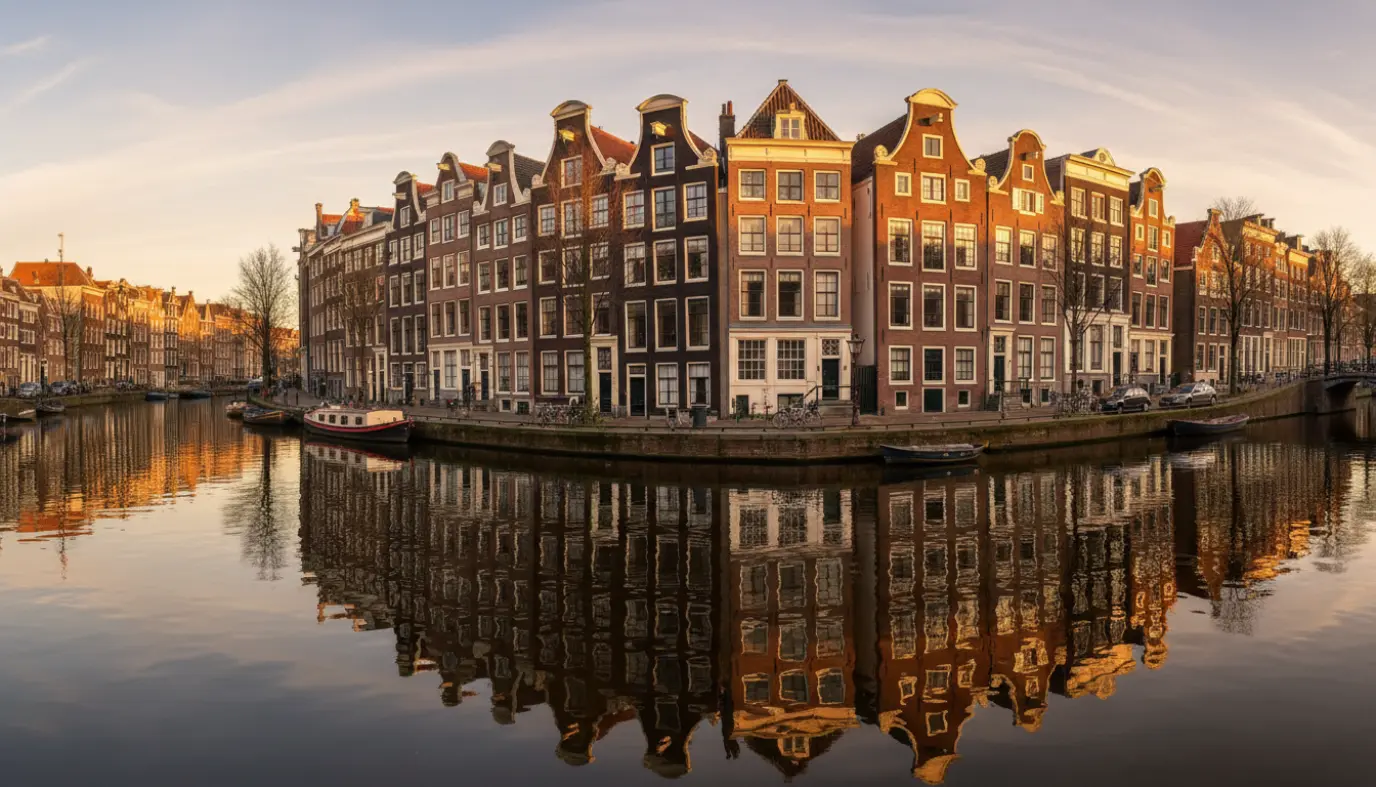
Why the Netherlands? A Heritage Destination Most Groups Overlook
When I suggest the Netherlands to a group leader, the first reaction is usually surprise. Israel, sure. Poland, of course. But the Netherlands?
Here is what most people do not realize: Amsterdam was once the largest center of Jewish life in Western Europe. In the 17th century, when Jews were expelled from Spain and Portugal, when doors across the continent were slamming shut, Amsterdam opened its gates. The Sephardic families who arrived built synagogues, printing houses, schools, and a community so vibrant that the city earned a name that still carries weight today: the Jerusalem of the North.
That story alone is worth the trip. But the Netherlands holds more than Jewish heritage. It is a country shaped by the Reformation, home to churches where Handel and Mozart played the same organ, and the site of some of the most painful chapters of the Holocaust. For a group leader planning a meaningful journey, whether you serve a Jewish congregation or a Christian community, the Netherlands offers something rare: depth without distance. You can reach Amsterdam from most American cities on a direct flight, and within a week, your group can experience centuries of faith, resilience, and sacred memory.
Amsterdam’s Jewish Quarter: “The Jerusalem of the North”
The Jewish Quarter in Amsterdam is not a reconstructed heritage district. It is a real neighborhood where real history happened, and much of it is still standing.
Start at the Portuguese Synagogue, built in 1675 by the Sephardic community that fled the Inquisition. It is one of the most beautiful synagogues in the world, and it still holds services by candlelight, the way it has for 350 years. No electric lights. No modern sound system. Just the glow of more than a thousand candles reflected on dark wood. When a Jewish group stands inside that space, they are not visiting a museum. They are standing in a place of continuous prayer.
Across the street, the Jewish Historical Museum occupies four connected Ashkenazi synagogues. Together, these buildings tell the full story of Jewish life in the Netherlands, from the golden age to the devastation of the war, to the slow, painful rebuilding that continues today. For a group leader, this museum is worth at least two hours. There is too much to absorb in a quick walkthrough.
Christian Sacred Sites Worth Building a Day Around
The Netherlands played a central role in the Protestant Reformation, and the physical evidence is still everywhere. In Haarlem, the Grote Kerk (St. Bavo Church) holds one of the finest pipe organs in Europe, an instrument that both Handel and a young Mozart came to play. For a Christian group, standing in that nave and hearing that organ is not just cultural appreciation. It is a connection to centuries of worship.
In Delft, the Nieuwe Kerk houses the tomb of William the Silent, the father of the Dutch Republic and a figure deeply connected to the struggle for religious freedom in Europe. Utrecht’s Dom Tower and its surrounding churches carry the marks of the Reformation in their very walls, where Catholic imagery was stripped away and Protestant simplicity took its place. These are not subtle changes. You can see the history written into the stone.
Anne Frank House and the Sites of Memory
Most groups include the Anne Frank House on their itinerary, and they should. But it is worth preparing for what the visit actually involves. The house is small. The rooms are narrow. The group will climb steep Dutch stairs into the hidden annex where Anne and her family hid for two years before they were betrayed.
What the house teaches, more than anything a book can convey, is scale. The physical smallness of the hiding place. The proximity to the street below. The absolute silence required to survive. For faith groups, this is not a historical exhibit. It is a confrontation with what happens when society turns against its neighbors.
Beyond the Anne Frank House, the Hollandsche Schouwburg (the Dutch theater where Jews were assembled before deportation) and the National Holocaust Names Memorial deserve time and attention. These sites form a network of memory across the city, and visiting them together gives a group a more complete understanding of what happened here.
Practical Guide for Group Leaders
If you are bringing a group to the Netherlands, here is what you need to know.
Getting around: Amsterdam is a canal city built for bicycles, not tour buses. Heritage Tours arranges hotel pickup and dropoff so your group does not need to navigate public transit. This matters more than it sounds when you have 25 people and a schedule.
How many days: Plan for at least four full days in Amsterdam to cover the Jewish quarter, Anne Frank House, and the key Christian sites without rushing. A week allows for day trips to Westerbork, Haarlem, and Delft, which are all worth the travel time.
Shabbat and Sunday considerations: If your group observes Shabbat, Amsterdam is one of the few cities in Europe where a Jewish group can attend Friday evening services at a historic synagogue. Heritage Tours coordinates these arrangements. Christian groups can attend services at active churches throughout the city.
Group leader benefit: With Heritage Tours, group leaders travel free when 15 or more participants join. This is a straightforward policy that offsets the real cost of organizing the trip.
Booking timeline: Start planning 6 to 9 months in advance. Anne Frank House requires group bookings well ahead of your travel dates, and popular seasons fill up.
FAQ: Netherlands Heritage Group Travel
What are the most important Jewish heritage sites in the Netherlands? The Portuguese Synagogue, the Jewish Historical Museum, and the Anne Frank House are the three essential stops in Amsterdam. Outside the city, Westerbork Transit Camp is the most significant Holocaust memorial site in the Netherlands and should not be missed if your schedule allows a day trip.
Is the Netherlands a good destination for Christian heritage groups? Yes. The Netherlands was central to the Protestant Reformation, and cities like Haarlem, Delft, and Utrecht hold churches, cathedrals, and historical sites that speak directly to the Christian faith tradition. Many groups combine Jewish and Christian heritage into a single itinerary.
How many days do you need to see the main heritage sites in Amsterdam? Four full days is the minimum for Amsterdam’s core heritage sites. A week allows for day trips to Westerbork, Haarlem, and Delft, which significantly deepen the experience.
Can a group leader travel free on a Heritage Tours trip to the Netherlands? Yes. When 15 or more participants join a group heritage tour, the group leader travels free. This applies to the full itinerary, including accommodations and site visits.
What is the best time of year to visit Amsterdam for a heritage trip? Late spring (April to May) and early fall (September to October) offer the best balance of weather, manageable crowds, and full access to heritage sites. Summer is possible but significantly more crowded at major sites like the Anne Frank House.
The Netherlands is not always the first destination that comes to mind for a heritage journey. But once you understand what is there, the depth of Jewish and Christian history preserved in its synagogues, churches, and memorial sites, it becomes hard to imagine leaving it off the list. If you are considering the Netherlands for your community, explore our Netherlands heritage tours and see what a week in this country can hold.