First, Let’s Define the Terms
When most travel sites talk about “private vs. group tours,” they mean a solo traveler choosing between a private car and a bus full of strangers. That is not your situation.
If you are a rabbi or pastor organizing a heritage trip, a group tour means your community travels together on a route built for groups of 15 or more, with Heritage Tours handling the itinerary, ground transport, hotels, and local guides. You travel with your people, not with a random assortment of tourists.
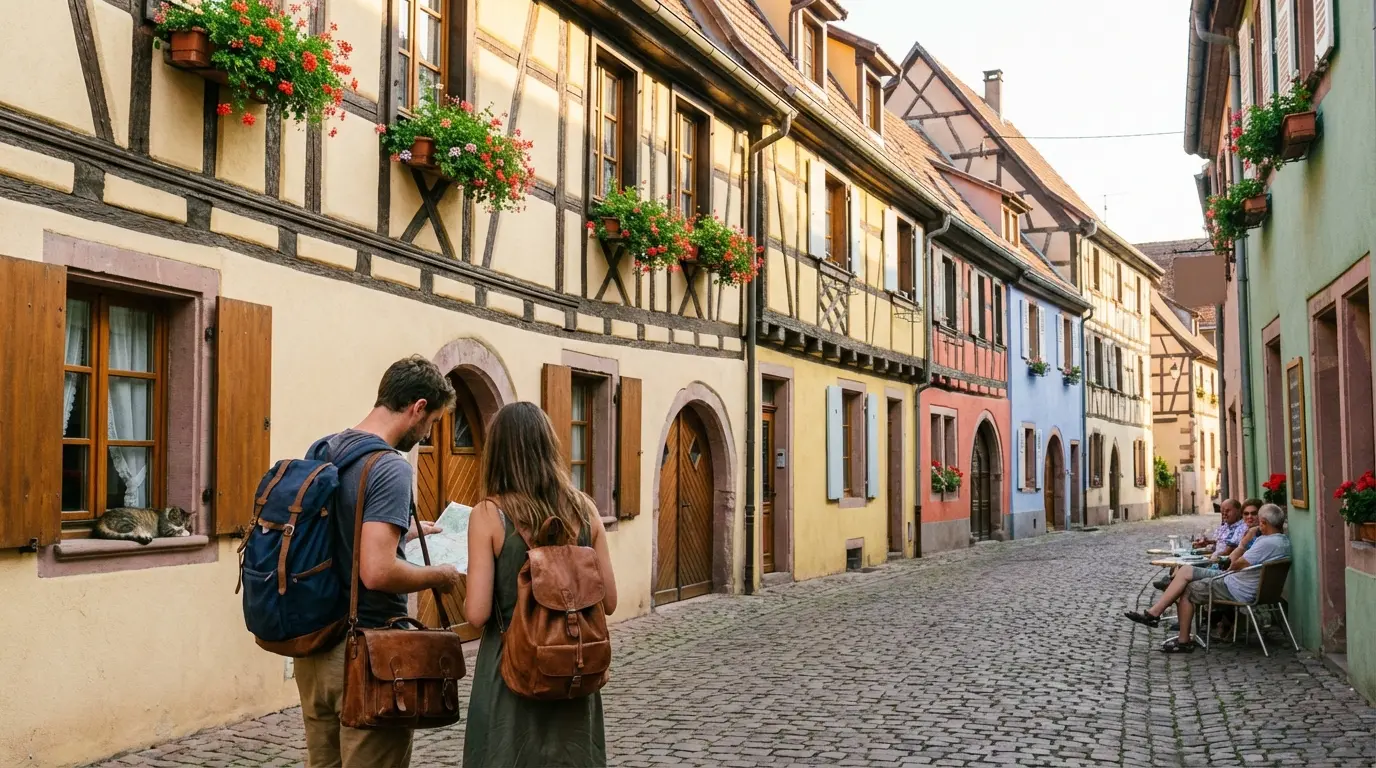
A private tour means your community (which could be as few as 2 or as many as 12 to 14 people) travels on a fully customized route with a dedicated guide and vehicle, at your own pace. It is private in the sense that no one outside your group is on the trip, not private in the sense of traveling alone.
Both formats are led by you. Both are built around heritage and faith. The difference is in structure, cost, and flexibility.
The Case for a Group Tour: Community, Cost, and the Free Leader Benefit
Group tours have three significant advantages for community leaders.
Cost per person is lower. When 15 to 30 people share ground transport, hotel blocks, and guide costs, the per-person price drops substantially. For congregation members on a fixed budget, this can be the difference between going and not going.
The group leader travels free. With 15 or more participants, Heritage Tours covers your airfare, hotel, meals, and transport. This is a real financial benefit. For a ten-day trip to France, the savings are significant.
Community bonding deepens. There is something about a group of 20 or 25 people sharing a heritage journey that builds bonds in ways a smaller trip cannot. Standing together at Lourdes during the candlelight procession, or walking through the Memorial de la Shoah as a community, creates shared memories that strengthen the congregation long after the trip ends.
Group tours also benefit from Heritage Tours’ established relationships with hotels and heritage sites. Group bookings often get access and pricing that individual bookings do not.
For a detailed walkthrough of how group tours work, see our guide for pastors and rabbis planning a group heritage tour to France.
The Case for a Private Tour: Control, Flexibility, and Custom Focus
Private tours have their own strengths, and for certain groups, they are the better choice.
You set the pace. A private tour moves at exactly the speed your group wants. If you want to spend three hours in Chartres Cathedral instead of the ninety minutes a larger group schedule allows, you can.
The itinerary is entirely yours. While group tours are customizable, private tours are built from scratch. Every stop, every meal, every evening is designed around your specific interests. A small seminary cohort studying medieval Jewish scholarship could spend two full days in Troyes and Alsace. A pastor’s study group could devote three days to Lourdes alone.
Group dynamics are simpler. Managing the needs and expectations of 8 people is very different from managing 25. For leaders who prefer a more intimate, discussion-oriented experience, a private tour allows that.
Scheduling is more flexible. Private tours can run on dates that might not work for a full group tour, including shoulder-season windows or dates that align with specific academic or liturgical calendars.
When Group Tours Work Best
Group tours tend to be the right choice when:
You are leading a large synagogue or church group. If you can recruit 15 or more participants, the financial benefits are clear, including the free leader travel.
This is a first-time heritage trip for your community. A well-structured group tour with experienced local guides takes the uncertainty out of a new destination. Heritage Tours has run this kind of trip for over forty years. If you are early in the process, our complete guide for group leaders walks through planning a group pilgrimage step by step.
Community building is a core goal. If part of the trip’s purpose is to strengthen bonds within your congregation, the shared experience of a larger group amplifies that.
Budget matters. The per-person cost of a group tour is meaningfully lower than a private tour. For communities where price is a barrier to participation, the group format opens the door wider.
When Private Tours Work Best
Private tours tend to be the right choice when:
Your group is small. A seminary class of 8, a family tracing its heritage, or a study group of scholars all fit naturally into the private format.
This is a return visit. If your community has already done the “greatest hits” tour of France, a private trip can go deeper into specific interests. A second visit focused entirely on the Comtat Venaissin, or a week devoted to Alsatian Jewish heritage, or a Lourdes-centered pilgrimage with extended retreat time.
You need a specific academic or spiritual focus. Private tours are ideal for groups with a narrow, deep interest. A group studying Rashi’s methodology. A pastoral team preparing a sermon series on medieval Christian devotion. These groups need a different kind of itinerary than a general heritage overview.
Flexibility is essential. If your travel dates are constrained or your group has specific dietary, mobility, or scheduling needs, a private tour can accommodate them more easily.
Making the Decision: A Simple Framework
Ask yourself three questions.
How many people are coming? If 15 or more, the group tour format with its free leader benefit is hard to beat financially. If fewer than 15, a private tour is likely the natural fit.
What is the trip’s primary purpose? Community bonding and broad heritage exposure point toward a group tour. Deep scholarship, intimate reflection, or specialized interests point toward private.
Is this your first time or a return visit? First-time trips work wonderfully as group tours. Return trips often benefit from the custom depth of a private format.
Heritage Tours offers both options, and there is no pressure to choose one over the other. For an overview of what France offers as a heritage destination, see our France heritage travel guide.
FAQ: Group vs. Private Heritage Tours in France
What is the difference between a private and group heritage tour in France? A group tour brings your community (typically 15 to 35 people) on a structured itinerary with shared transport and guides. A private tour serves a smaller group (2 to 14 people) on a fully customized itinerary at your own pace. Both are led by you and organized by Heritage Tours.
Do group leaders travel free on Heritage Tours group trips to France? Yes. When your group reaches 15 confirmed participants, the leader’s airfare, hotel, meals, and ground transport are fully covered. This benefit applies to group tours only.
Can a private tour still accommodate a community group of 20 people? A group of 20 would typically be structured as a group tour, which offers better pricing and the free leader benefit. Private tours are designed for smaller groups of 2 to 14 people.
Which tour format is better for a synagogue or church group visiting France? It depends on the group size and purpose. A large congregation group (15 or more) will usually benefit from a group tour’s structure, pricing, and free leader travel. A small study group, seminary cohort, or family heritage trip is often better served by a private tour.
Does Heritage Tours offer both private and group tours to France? Yes. Heritage Tours builds both formats with the same level of care, local expertise, and custom itinerary design. The choice depends on your group’s size, goals, and preferences.
The right format is the one that serves your community best. It also helps to know how to choose a faith-based tour operator before you commit to either option. If you are weighing the options and want to talk it through, visit our France destination page or reach out to us directly. We are happy to help you decide.