Why Timing a Circuit Is Different from Timing a Single Destination
When you are visiting one city, timing is straightforward. Check the weather, check the crowds, book your trip.
A three-city heritage circuit through Prague, Budapest, and Vienna is different. Each city has its own peak season, its own holiday calendar, and its own crowd patterns. What works beautifully in Vienna in a given week might coincide with a national holiday in Hungary that closes the very site you planned to visit. And for groups observing Shabbat, the day your inter-city train travels cannot fall on Saturday, which means the calendar shapes your route.
The right time to visit depends on who your group is, what your group observes, and what kind of experience you want.
Here is how each season works for heritage groups on this circuit.
Spring (March through May): The Peak for Heritage Groups, and for Good Reason
Spring is when most heritage groups travel to Central Europe, and the reasons are solid. The weather in all three cities is mild, typically between 10 and 20 degrees Celsius (50 to 68 Fahrenheit). The days are long enough for full site visits without losing light. The gardens at Prague Castle and the Buda Hills in Budapest are green and welcoming.
The downside is that Prague in April and May is genuinely crowded. The Old Town Square, Charles Bridge, and the Josefov quarter will have significant tourist traffic. This does not prevent meaningful visits, but groups should expect to share the space.
For Jewish groups, Passover typically falls in March or April. Heritage sites remain open during Passover, but kosher dining options in Prague become even more limited. If your group is traveling during Passover, advance meal arrangements are essential.
Easter is the major consideration for Christian groups in spring. Easter services at St. Vitus Cathedral in Prague and St. Stephen’s Cathedral in Vienna can be a powerful addition to the trip, but these services are heavily attended. Plan well ahead if your group wants to participate.
Late May, after the major spring holidays have passed, is often the sweet spot. The weather is warm, the holiday-specific crowds have thinned, and the days are long.
Summer (June through August): Long Days, Big Crowds, Worth Planning Around
Summer brings the longest days and the warmest weather. Prague and Budapest both become hot in July and August, often reaching 30 degrees Celsius (86 Fahrenheit) or higher. Walking tours through Josefov or the Budapest Jewish quarter in afternoon heat can be tiring, especially for older group members.
Crowds peak in July and August across all three cities. Prague is particularly affected. The Charles Bridge and Old Town Square become very difficult to navigate. The Josefov quarter, though somewhat less crowded than the main tourist areas, still sees heavy foot traffic.
The advantage of summer is daylight. Long evenings allow for flexible scheduling. A group can visit Terezin in the morning, return to Prague, and still have hours of light for a quieter walk through the Jewish quarter after the day-trip crowds have left.
For Jewish groups, Tisha B’Av falls in July or August. This fast day commemorating the destruction of the Temple is observed by many heritage travelers. Being in Central Europe during Tisha B’Av, surrounded by evidence of another destruction, adds a layer of meaning that some groups seek deliberately.
Fall (September through November): Quieter, Cooler, and Often Ideal
For most heritage groups, September through October is our strongest recommendation.
The crowds thin noticeably after Labor Day in the United States. Prague’s tourist numbers drop, making the Josefov quarter, the Old Cemetery, and the Pinkas Synagogue easier to visit without feeling rushed. Budapest and Vienna are similarly less crowded.
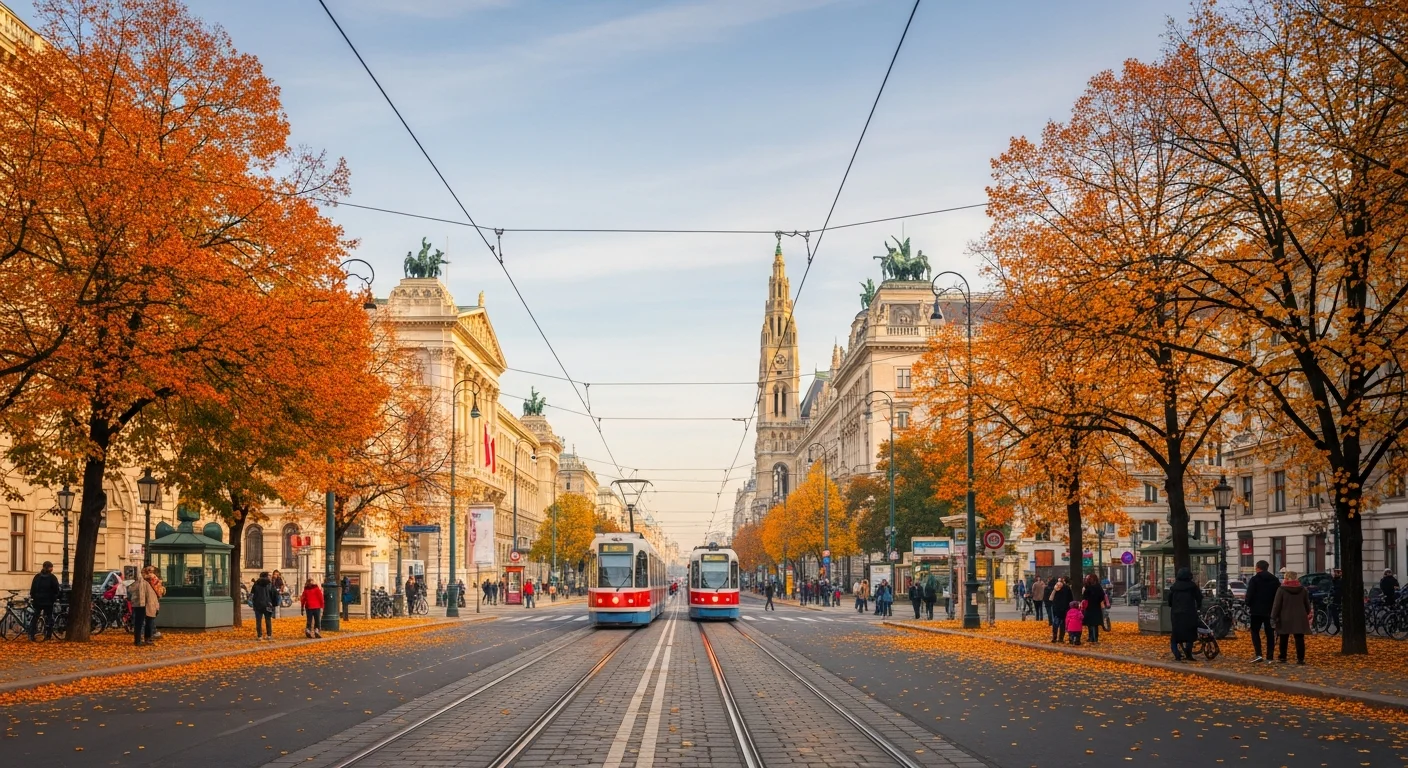
The weather in September is typically comfortable, between 12 and 22 degrees Celsius (54 to 72 Fahrenheit). October is cooler but still manageable with a light jacket. The autumn colors along the Danube in Budapest and in Vienna’s parks are quietly beautiful.
For Jewish groups, the fall calendar requires careful planning. Rosh Hashana (usually September) and Yom Kippur (ten days later) may affect your travel dates. If your group observes these holidays, you cannot be in transit on those days. However, spending Rosh Hashana or Yom Kippur in Budapest or Prague, attending services with the local Jewish community, can be a remarkable experience. Heritage Tours can help arrange this.
Sukkot, which follows Yom Kippur, is another consideration. Some heritage groups time their circuit to coincide with Sukkot, allowing the group to celebrate together on the road.
November is colder, and daylight shortens. By late November, outdoor time at sites like the Old Jewish Cemetery is limited. If your group is comfortable with cooler weather and shorter days, November offers the thinnest crowds of the travel season.
Winter (December through February): Fewer Crowds, Open Questions
Winter in Central Europe is cold. Prague, Budapest, and Vienna all experience temperatures near or below freezing from December through February. Snow is common. Daylight is limited to roughly eight hours.
For some groups, this is a reason to avoid winter entirely. Extended outdoor visits to the Old Jewish Cemetery, Terezin, or Judenplatz in freezing weather can be physically uncomfortable.
For Christian groups, there is a significant exception. Vienna’s Christmas markets are famous across Europe, and Prague and Budapest have their own beloved markets as well. A December circuit that includes Christmas services at St. Stephen’s Cathedral or St. Vitus Cathedral, combined with the atmosphere of the Advent markets, can be deeply meaningful for a Christian heritage group.
January and February are the quietest months. Heritage sites remain open (though some have reduced winter hours), and you will have them largely to yourself. If your group is small, hardy, and wants an intimate experience, midwinter has a quality that no other season offers.
Jewish and Christian Calendar Considerations for Central Europe
For Jewish groups, the key calendar considerations are:
Shabbat falls every Saturday. On a multi-city circuit, this means inter-city travel must be scheduled for a weekday. Groups that observe Shabbat typically plan their train journeys for Sunday through Thursday.
Rosh Hashana and Yom Kippur (September or early October) require being settled, not in transit. If your trip overlaps, plan to be in one city for the full duration.
Passover (March or April) affects dining more than site access. Kosher-for-Passover meals in Prague require significant advance planning.
For Christian groups, the key considerations are:
Easter (March or April) is both an opportunity and a logistical challenge. Easter services at major cathedrals require advance planning for group attendance.
Christmas and Advent (December) add atmosphere but also crowds, particularly in Vienna.
Local national holidays, All Saints’ Day (November 1) in all three countries, Czech Independence Day (October 28), Hungarian National Day (March 15 and October 23), Austrian National Day (October 26), can affect site hours. A tour operator familiar with the circuit will plan around these automatically.
For most heritage groups, our recommendation is clear: late September through mid-October offers the best balance of weather, crowd levels, and calendar flexibility. It is the window when the circuit works best for the widest range of groups.
If you would like to discuss timing for your specific group, Heritage Tours is glad to help you find the right window. Learn more about our East and Central Europe heritage journeys.
FAQ: Timing Your Heritage Circuit
What is the best month for a heritage group trip to Central Europe? For most heritage groups, late September or early October offers the best combination of comfortable weather, manageable crowds, and calendar flexibility. Spring (late May) is a close second, particularly for groups that want longer daylight hours.
Is Prague too crowded in summer for a heritage tour? Prague is very crowded in July and August, particularly around the Old Town and Charles Bridge. The Josefov Jewish quarter is somewhat less affected but still busy. Heritage groups visiting in summer should schedule key site visits in the morning, before peak tourist hours.
Are Jewish sites in Prague and Budapest open during Jewish holidays? Most Jewish heritage sites in Prague (the Jewish Museum synagogues and the Old Jewish Cemetery) are closed on Jewish holidays and Saturdays. The Old-New Synagogue, as an active house of worship, holds holiday services. In Budapest, the Dohany Street Synagogue is open most days but may have altered hours during Jewish holidays. Check specific dates with your tour operator.
What is Central Europe like for heritage travel in winter? Winter brings cold temperatures (often below freezing), shorter daylight, and thin crowds. Heritage sites remain open, though some have reduced hours from November through March. Christian groups may find December particularly meaningful because of Christmas services and Advent markets in all three cities.
When is the best time to see the Dohany Street Synagogue without large crowds? The Dohany Synagogue is least crowded in the shoulder seasons, particularly late September through October and again in March through early April. Weekday mornings in any season tend to be quieter than afternoons or weekends.