Book the Abrahamic Family House Well in Advance
This is the single most important practical tip for any heritage group visiting the Dubai region. The Abrahamic Family House, the campus in Abu Dhabi that holds a mosque, a church, and a synagogue side by side, is the centerpiece of any meaningful heritage visit. But it is in Abu Dhabi, not Dubai. And group visits require advance booking.
The Abrahamic Family House is not a drop-in attraction. The visiting experience is organized. Groups are guided through the three buildings, and the guides provide context on the architecture and the interfaith vision behind the project. For groups of fifteen or more, advance coordination for entry, transport from Dubai, and guided tours is essential.
I have seen group leaders who assumed they could show up on the day and arrange a visit. They could not. The disappointment was real, because this is not a site you can replace with something else. Nothing else like it exists.
Book at least four to six weeks in advance. Heritage Tours handles this coordination as part of every Dubai group itinerary, but if you are planning independently, contact the Abrahamic Family House directly and confirm your group’s visit well before your travel dates.
Kosher in Dubai: What Exists and How to Find It
Kosher food in Dubai is available, but it requires planning. This is not a city where you will find a kosher deli on the corner.
Chabad Dubai, led by Rabbi Levi Duchman, is the primary resource. Chabad coordinates kosher meals for visiting groups, including Shabbat dinners and holiday meals. They know the supply chain, the caterers, and the options. If your group needs kosher food, start the conversation with Chabad or Heritage Tours during the planning phase.
Several luxury hotels in Dubai can accommodate kosher dietary requests with advance notice. The Ritz-Carlton has been known to work with kosher caterers for group events. Other high-end hotels can arrange halal meals, which share significant common ground with kosher dietary laws and may be sufficient for some travelers.
The key point is this: kosher food in Dubai is a solved problem, but only if you solve it before you arrive. A group leader who lands in Dubai without kosher arrangements in place will find the options limited and stressful.
Dubai Is Not a Walking City: Group Transport Planning
This surprises almost every first-time visitor. Dubai is spread across a vast area, and the distances between heritage sites are not walkable. Al Fahidi to the Jumeirah Mosque is a fifteen-minute drive. Downtown to the airport is twenty minutes. Dubai to the Abrahamic Family House in Abu Dhabi is ninety minutes.
For individual travelers, taxis and Uber work well in Dubai. But for a group of twenty or more, hailing taxis is not practical. Group transport, typically a private minibus or coach, should be arranged for every day of the heritage itinerary.
Heritage Tours includes group transport in every Dubai program. The bus is not just about getting from one place to another. It is where your guide provides context between sites, where your group processes what they have just seen, and where the logistics stay invisible so the group leader can focus on the experience.
If you are planning a heritage trip to Dubai without a tour operator, budget for private group transport for every day. Do not assume your group can navigate the city independently.
Ramadan and What It Actually Means for Your Group’s Itinerary
Ramadan is the month of fasting in Islam, observed from sunrise to sunset. In Dubai, it affects daily life in specific, practical ways that a visiting heritage group should understand.
During Ramadan, eating, drinking, and smoking in public during daylight hours is restricted for everyone, including non-Muslim visitors. Many restaurants are closed during the day or operate behind screens. Hotels typically set up private dining areas for guests who are not fasting.
Heritage site hours may be shortened. The general pace of the city slows during the day and comes alive in the evening, when iftar, the breaking of the fast, fills the city with food, celebration, and warmth.
For a faith group, Ramadan can actually enhance the visit. The spiritual atmosphere of the city is heightened. Iftar gatherings are generous and welcoming. The Jumeirah Mosque experience takes on an additional layer of meaning during the holy month.
But the practical adjustments are real. Your group’s meals need to be arranged in hotel dining rooms during the day. Site visits should be scheduled with Ramadan hours in mind. Evening activities can take advantage of the lively iftar atmosphere.
Ramadan follows the lunar calendar and shifts by about eleven days each year. Check the projected dates before committing to travel dates. Heritage Tours advises every group on Ramadan timing as part of the planning process.
Public Behavior and Faith Practice: The Real Rules
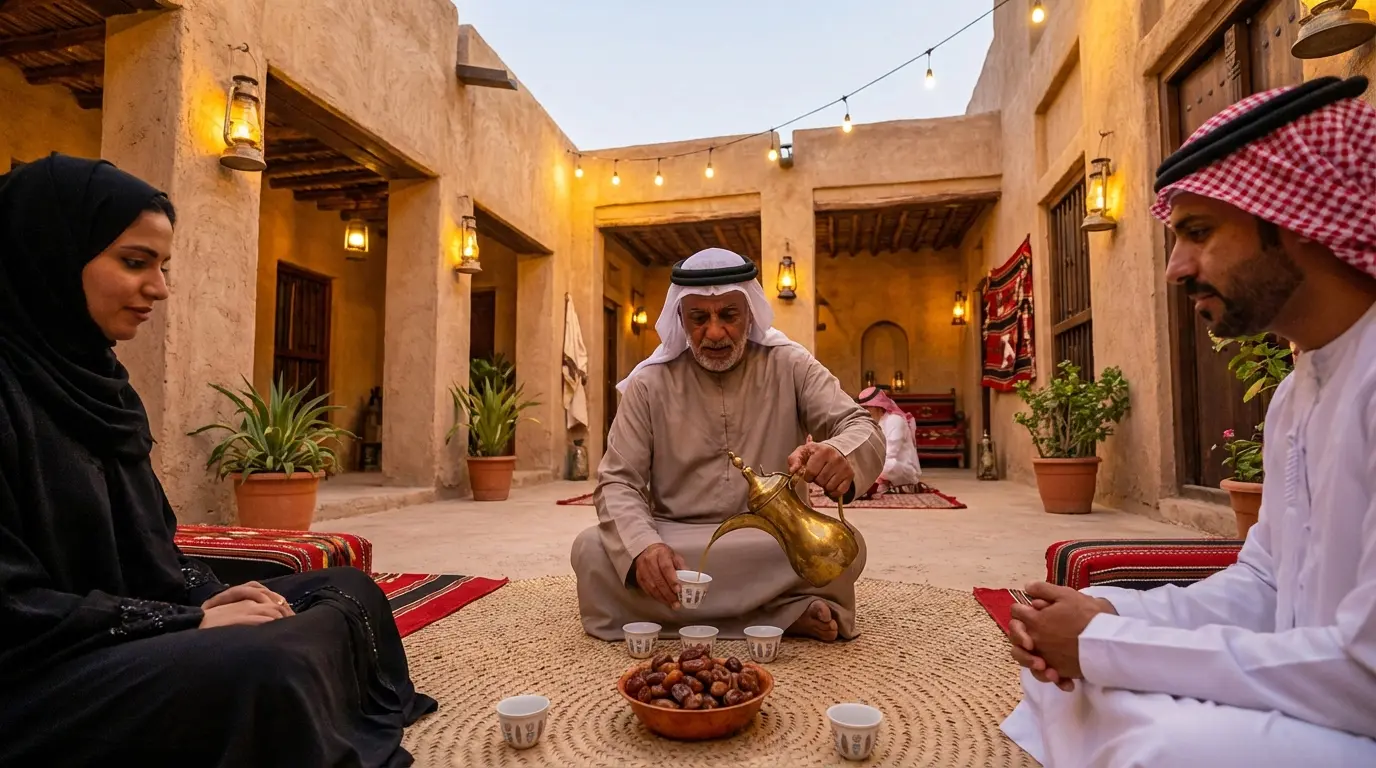
The UAE permits and supports the practice of all faiths. Jewish, Christian, Hindu, and other religious communities worship openly in the country. There is no restriction on bringing religious texts, wearing religious attire, or practicing your faith in private or designated spaces.
What the culture does expect is discretion in public spaces. Loud proselytizing is not appropriate. Public prayer on a street corner would attract attention and is not advisable. But wearing a kippah, carrying a Bible, or observing Shabbat in your hotel or at Chabad is entirely normal and welcomed.
The practical reality is that most heritage groups never encounter any tension around faith practice. The UAE’s culture of hospitality extends to people of all religions. Guides, hotel staff, and site personnel are consistently respectful of visitors’ faith identities.
If your group has specific questions about what is and is not appropriate, Heritage Tours can provide guidance tailored to your community’s practice.
What the Abraham Accords Changed (and What It Did Not)
The Abraham Accords of 2020 changed several concrete things for Jewish and Israeli travelers visiting the UAE. Israeli passport holders can now enter the country. Direct flights operate between Tel Aviv and Dubai. Jewish community life, including Chabad, the Abrahamic Family House synagogue, and public kosher food availability, has expanded significantly.
What the Accords did not change is the nature of the region. The UAE remains a Muslim-majority country with Islamic cultural norms. The relationship between Israel and its neighbors is complex and evolving. Dubai is welcoming to Jewish travelers, but it is not Israel. The experience is one of visiting a place that has chosen coexistence as a policy, not a place where Jewish history runs deep.
This distinction matters for group leaders setting expectations. Dubai offers a genuine, meaningful heritage experience for Jewish and Christian groups. It is not ancient. It is not deep in the way that Jerusalem or Prague are. But it is real, it is important, and it is worth experiencing.
The honest frame is this: the Abraham Accords opened a door. What your group finds on the other side is worth seeing.
Frequently Asked Questions
Do you need to book the Abrahamic Family House in advance for a group?
Yes. Group visits require advance booking, typically four to six weeks before your travel date. The Abrahamic Family House is in Abu Dhabi, approximately ninety minutes from Dubai, and the visiting experience is organized and guided. Drop-in visits for groups are not possible.
Where can Jewish groups find kosher food in Dubai?
Chabad Dubai is the primary resource for kosher food coordination. They arrange kosher meals, Shabbat dinners, and holiday catering for visiting groups. Some luxury hotels, including the Ritz-Carlton, can accommodate kosher requests with advance notice.
What are the rules about public religious practice in Dubai for non-Muslims?
Non-Muslim religious practice is permitted and supported in the UAE. Groups can worship in designated spaces, wear religious attire, and carry religious texts. Public proselytizing is not appropriate, but personal faith practice is respected and welcomed throughout the country.
How does Ramadan affect a group heritage visit to Dubai?
During Ramadan, public eating, drinking, and smoking during daylight hours is restricted. Many restaurants close or screen during the day. Heritage site hours may be shortened. Hotels provide dining for non-fasting guests. Evening iftar gatherings create a lively, welcoming atmosphere.
Is it possible to hold a Shabbat service in a hotel room in Dubai?
Yes. Shabbat services can be held privately in hotel rooms or in designated spaces. Many hotels accommodate faith-based requests for visiting groups. Chabad Dubai also provides communal Shabbat services and can help arrange appropriate settings for group worship.
These are the things we wish every group leader knew before their first Dubai trip. If you are planning a heritage visit and want to make sure the practical details are handled, we are here to help. The meaning of the trip is yours. The planning is ours.