Understanding Dubai as a Faith Destination
Dubai is a Muslim-majority city in a Muslim-majority country, and that context shapes everything about a faith group visit. But what surprises most group leaders is how welcoming the UAE is to people of other faiths. The government has made religious tolerance a stated national priority. Churches operate openly. A synagogue functions on a government-built campus. Non-Muslim visitors are invited into mosques.
If you are a pastor or a rabbi considering Dubai for your group, the first thing to understand is that this is not a place where your group’s faith will be unwelcome. The opposite is true. The UAE has chosen a path of interfaith coexistence, and your group’s presence is part of that story.
The second thing to understand is that Dubai is not an ancient heritage city. Its meaningful sites are fewer than what you would find in Rome or Jerusalem. But what Dubai does offer, particularly since the Abraham Accords of 2020, is genuine and worth the journey.
Cultural Protocols Every Group Leader Should Know
Dubai is cosmopolitan, but it operates within an Islamic cultural framework. A few things are worth communicating to your group before departure.
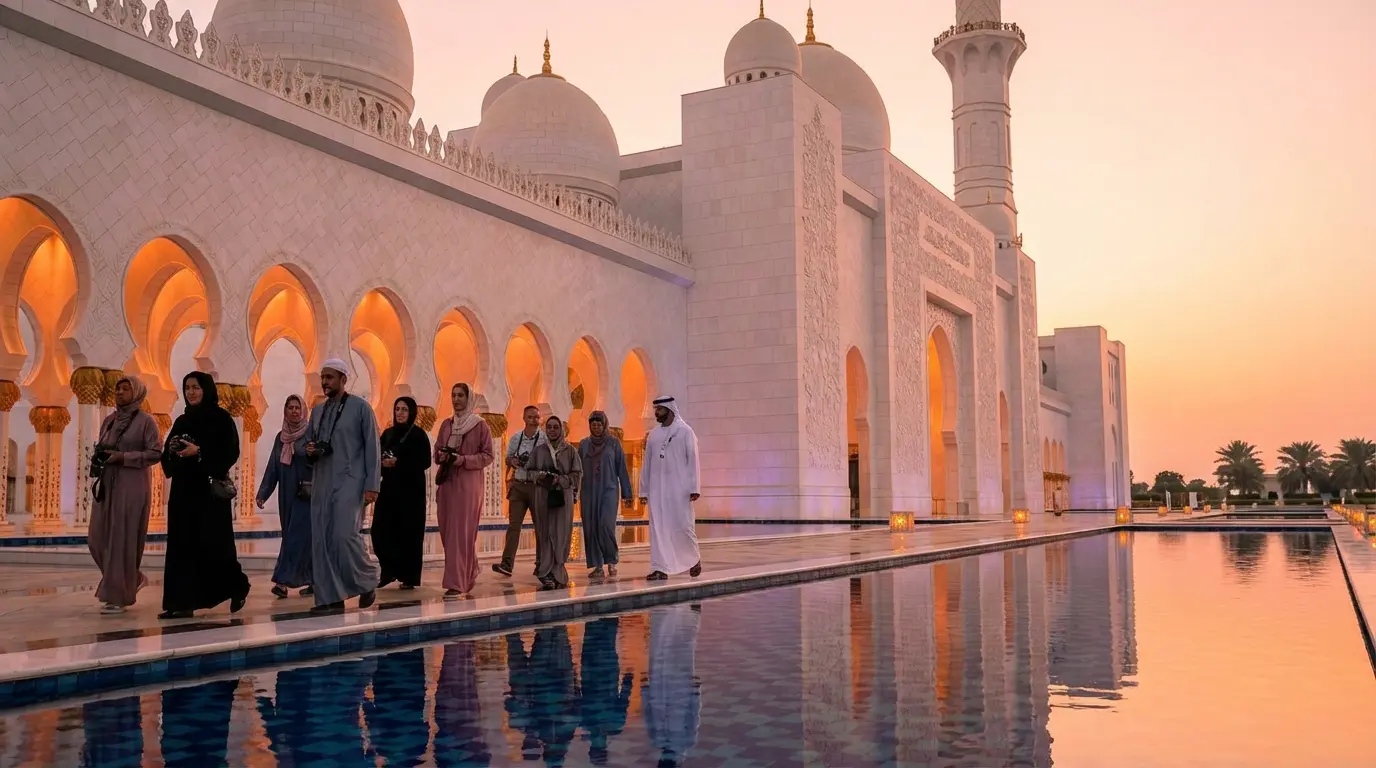
Dress should be modest at heritage and religious sites. For women, this means shoulders and knees covered. At mosques, women will need a headscarf, and many sites provide abayas for visitors. Men should avoid shorts at religious sites.
Public displays of affection are not common in Emirati culture. This is not about prohibition so much as about local custom. Your group should be aware that the public atmosphere is more reserved than in American cities.
Alcohol is available in licensed hotels and restaurants, but public intoxication is taken seriously. During Ramadan, daytime restrictions on eating and drinking in public spaces apply to everyone, including visitors. We will address Ramadan timing separately.
Photography is generally welcome at heritage sites, but always ask before photographing people, especially women in traditional dress. This is a matter of respect, not regulation.
Kosher Food in Dubai: What’s Available and How to Plan
Kosher food in Dubai exists but requires advance planning. It is not like New York or Jerusalem where you can find kosher restaurants on most blocks.
Chabad Dubai is the primary resource. Rabbi Levi Duchman and his team coordinate kosher meals for visiting groups, including Shabbat dinners and holiday meals. Several luxury hotels, including the Ritz-Carlton, can accommodate kosher dietary requests with advance notice.
For a group leader bringing a Jewish congregation, the kosher food question should be settled during the planning phase, not upon arrival. Heritage Tours coordinates kosher arrangements as part of every Jewish group itinerary in Dubai. We know which hotels can accommodate these needs and how to work with Chabad for communal meals.
If your group has dietary needs but does not require strictly kosher certification, Dubai has an enormous range of halal restaurants. Halal dietary laws share significant common ground with kashrut, and many travelers find the overlap helpful.
The Abrahamic Family House Day Trip: Planning for Groups
The Abrahamic Family House in Abu Dhabi is the centerpiece of a heritage visit to Dubai, but it requires planning. It is located on Saadiyat Island in Abu Dhabi, approximately ninety minutes from Dubai by road. Group visits require advance booking.
The experience is organized. Your group will visit all three houses of worship, the mosque, the church, and the synagogue. Guides on site explain the vision behind the project and the design choices architect David Adjaye made. Allow at least half a day for the visit, more if you want to include the nearby Sheikh Zayed Grand Mosque, which is one of the largest and most architecturally significant mosques in the world.
For a group leader, the key logistical point is this: do not assume you can arrive without a booking. Contact Heritage Tours or the Abrahamic Family House directly well before your travel dates. For groups of fifteen or more, advance coordination for transport, entry, and guided tours is essential.
Group Size, the Free Leader Policy, and Dubai Travel Economics
Heritage Tours operates a standing policy: with fifteen or more participants, the group leader travels free. This applies to Dubai trips, including the combined Israel-Dubai itinerary.
Dubai is not an inexpensive destination. Hotels, transportation, and dining are priced at an international level. However, the heritage circuit is more compact than European destinations. You are not covering ten cities over two weeks. A meaningful heritage visit to Dubai fits into four to five days, which keeps the overall trip cost manageable.
For smaller congregations, a private heritage tour may actually be more cost-effective than a group tour in Dubai, precisely because the itinerary is shorter and the sites are concentrated. We are happy to walk through the economics with you honestly.
Dubai + Israel: The Post-Accords Combined Itinerary
Since the Abraham Accords, direct flights between Tel Aviv and Dubai have made the combined trip not only possible but practical. A group can spend a week in Israel and then continue to Dubai for four or five days.
This combination is meaningful because the two destinations speak to each other. Israel holds the ancient heritage. Dubai holds the modern statement about where the relationship between these two worlds might be going. For a Jewish group especially, walking through the Old City of Jerusalem one week and then standing in a synagogue on Saadiyat Island the next week is an experience that says something about the arc of history.
Heritage Tours has built this combined program carefully. The flights, the hotels, the heritage sites, and the community connections in both countries are coordinated as a single journey with a single purpose.
What to Tell Your Group Before They Land
Before departure, share a few things with your group. Dubai is safe, modern, and welcoming to faith travelers. The weather matters, so travel between November and March when possible. Modest dress is important at heritage and religious sites. Kosher food is arranged in advance. The city is spread out and not walkable in the way European cities are, so group transport is essential.
Most importantly, tell them what this trip is about. It is not about the tallest building or the biggest mall. It is about standing in a place where something new is being built, where the relationship between faiths is being reimagined, and where their presence as a faith community is genuinely welcomed.
Frequently Asked Questions
Is Dubai culturally appropriate for a Jewish group visit?
Yes. Since the Abraham Accords, the UAE has actively welcomed Jewish visitors and communities. Chabad Dubai provides communal Jewish life services, and the Abrahamic Family House includes a functioning synagogue. Jewish groups can practice their faith openly and comfortably.
Can a rabbi lead a Shabbat service for a group in Dubai?
Yes. Chabad Dubai facilitates Shabbat services and meals for visiting groups. Some hotels also accommodate private Shabbat services in dedicated rooms. Advance coordination ensures everything is in place before your group arrives.
What is the dress code for heritage sites in Dubai?
Modest dress is expected at all religious and heritage sites. Shoulders and knees should be covered. Women should bring a scarf for mosque visits, though many sites provide coverings. Casual but respectful clothing is appropriate for most cultural sites.
Is it possible to combine a Dubai trip with a trip to Israel?
Yes, and this combination has become one of the most meaningful heritage itineraries available since the Abraham Accords. Direct flights between Tel Aviv and Dubai take about three hours, making the two-destination trip practical and well-connected.
What is the Ramadan calendar and how does it affect a group visit to Dubai?
Ramadan follows the Islamic lunar calendar and shifts by approximately eleven days each year. During Ramadan, restaurants are closed or screened during daylight hours, and public eating and drinking during the day is restricted for everyone, including visitors. Heritage site hours may also change. Heritage Tours advises groups on Ramadan timing during the planning phase.
Planning a heritage group trip takes time and care. If Dubai is on your mind for your congregation or community, reach out to us. We will give you a clear picture of what the experience looks like, what it costs, and whether it is the right fit for your group.