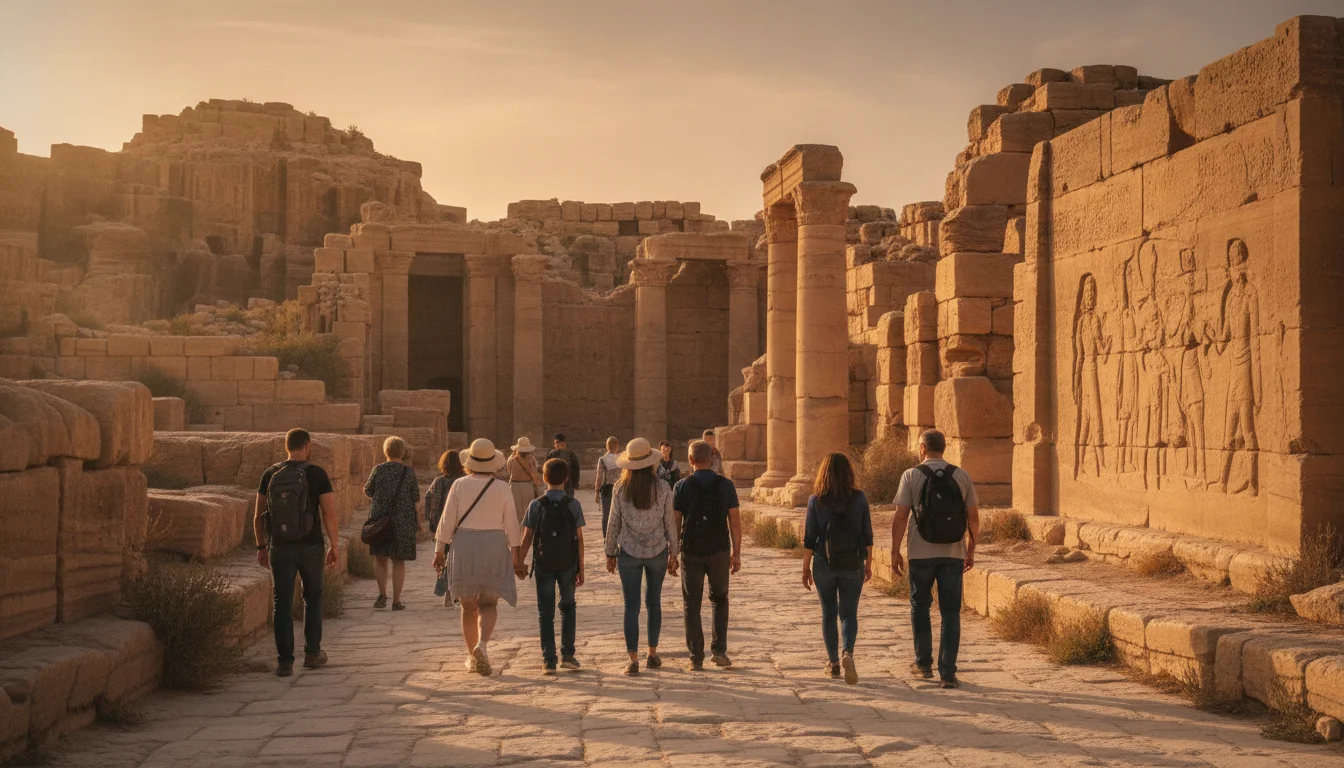
A pastor asked me something last year that I think about often. He said, “How do I know the places we’re visiting actually matter, and aren’t just stops on a bus route someone dreamed up?” It’s a fair question. Anyone can print a glossy brochure and call a strip mall a heritage site. So I gave him the answer I give everyone who asks: look at what UNESCO has already recognized. UNESCO World Heritage status is not marketing. It is a rigorous international designation, and when a site carries it, you know independent experts have confirmed its historical and cultural weight long before we ever put it on an itinerary.
I want to walk you through the real UNESCO World Heritage Sites our itineraries touch, country by country, so you can see exactly what your group will be standing in front of and why it earned its place on the list.
Poland
Historic Centre of Krakow. One of the best-preserved medieval town centers in Europe, and the historic gateway to Poland’s Jewish heritage sites in the surrounding region.
Wieliczka Salt Mine. A working salt mine since the 13th century, with underground chapels carved entirely from rock salt. It’s an unusual stop, and groups are consistently moved by it.
Auschwitz-Birkenau. Designated by UNESCO specifically as a memorial site, not a monument to be admired but a place to be reckoned with. For groups doing Holocaust education or a Jewish heritage itinerary in Poland, this is often the most important day of the trip.
Italy
Historic Centre of Rome. The layered heart of the ancient world and the early church, walking distance between pagan Rome and the earliest Christian sites in the city.
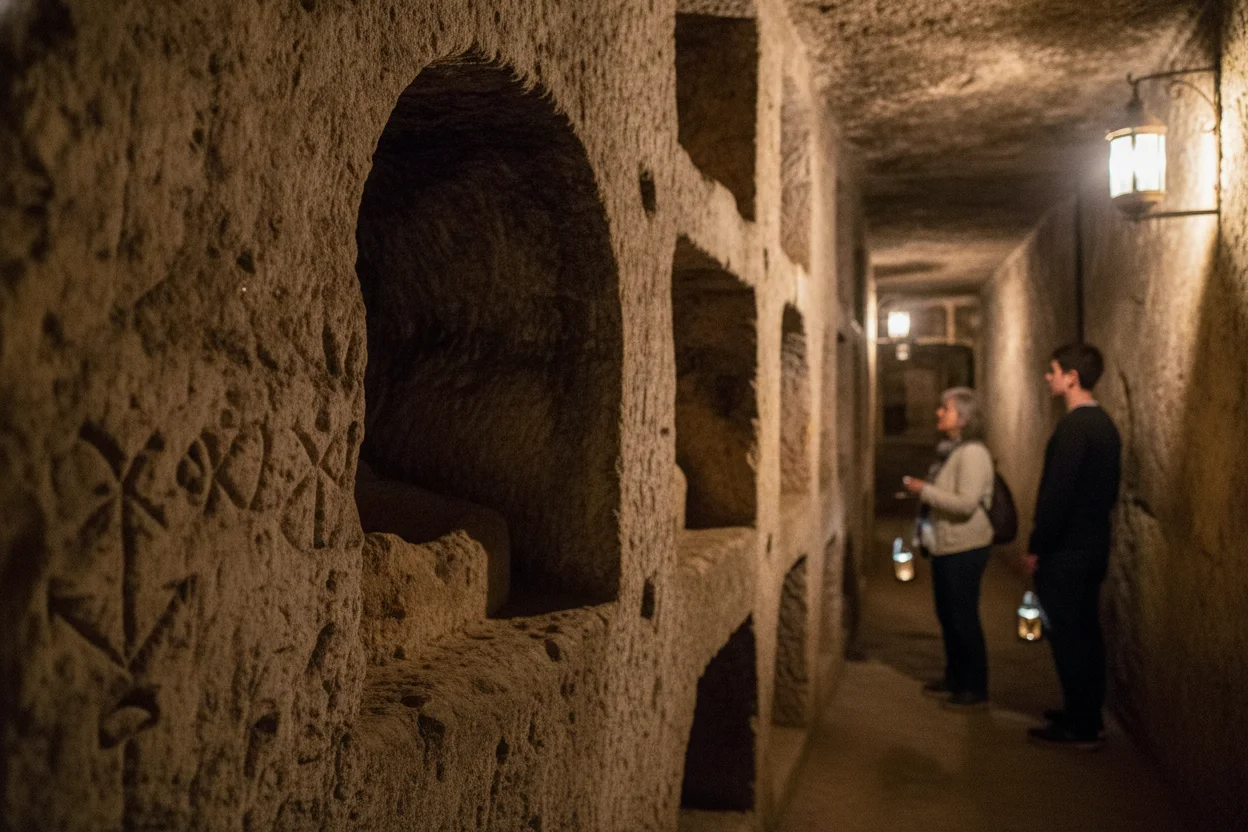
Catacombs and Historic Centre. Rome’s broader historic core also holds early Christian catacombs, though these are inscribed as part of the city’s wider historic fabric rather than a standalone listing. Either way, they let a group walk the ground of the earliest church.
Greece
Meteora. Byzantine monasteries built into rock pillars that rise straight out of the plain. It is one of the most visually striking Christian heritage sites anywhere in the world, and photographs never quite prepare people for standing under it.
Spain
Historic Centre of Cordoba. Home to the Mezquita, a building that has been a mosque, a cathedral, and a monument to centuries of layered Iberian history, including Spain’s Jewish heritage under the Mezquita’s shadow.
Alhambra, Generalife and Albaicin, Granada. The palace complex that marks the final flowering of Moorish Spain, standing in a city that was also home to a significant Jewish community before the 1492 expulsion.
Portugal
Jeronimos Monastery and Tower of Belem, Lisbon. A monument to the Age of Discovery, and a stop that grounds any Portugal itinerary in the country’s golden era.
Turkey
Goreme National Park and the Rock Sites of Cappadocia. Underground cities and rock-cut churches used by early Christians hiding from persecution. Walking through them is one of the more visceral ways a group can understand the cost of the early faith.
Egypt
Historic Cairo. Layers of Islamic, Coptic Christian, and Jewish history packed into one old city.
Ancient Thebes with its Necropolis (Luxor and the Valley of the Kings). The heart of ancient Egyptian civilization, essential grounding for any biblical-era itinerary that touches Egypt’s exodus narrative.
Malta
Ħaġar Qim and Mnajdra Megalithic Temples. Older than the Egyptian pyramids, and a genuinely humbling stop for any group that assumes ancient history starts with Rome or Greece. Malta’s temples predate both by a wide margin.
Why This List Matters to a Group Leader
I put this list together because I think a group leader should be able to check our claims, not just take our word for them. Every site above carries UNESCO’s designation, which means the historical and cultural significance has been independently verified. When you tell your congregation you’re walking through Meteora or the Ħaġar Qim temples, you’re not repeating a sales pitch. You’re stating a documented fact.
This is also why our itineraries are built the way they are. We are a heritage and faith travel operator, not a general vacation company, and our destinations are chosen because they carry this kind of weight, not because they photograph well. You can see how these sites fit into full itineraries on our tours page, or look at a specific country’s blog hub, like our Turkey heritage articles or Israel heritage articles, to see how a UNESCO site anchors a broader trip.
One planning note worth knowing early: the group leader travels free when you bring fifteen or more participants, across any of the itineraries above. It’s a standing policy, not a seasonal offer, so it’s worth factoring into your budget from day one.
FAQ: UNESCO World Heritage Sites on Our Tours
Are all the sites on your tours UNESCO-listed?
No, and we wouldn’t claim that. Many of our stops carry deep religious or historical significance without a UNESCO designation, and that’s fine. This list covers the specific sites that do carry UNESCO status, so you have an independently verified reference point when you’re building your pitch to your congregation or group.
Why does UNESCO status matter for a faith heritage trip?
It’s a form of outside verification. UNESCO doesn’t inscribe a site lightly, and the process involves historians and preservation experts confirming the site’s significance. For a group leader trying to explain to their congregation why a stop matters, being able to say “this is UNESCO World Heritage” carries real weight beyond our own description of it.
Which UNESCO site do groups react to most strongly?
It varies, but Meteora in Greece and the underground cities of Cappadocia in Turkey consistently produce the strongest reactions, because both are visually dramatic and directly tied to lived faith history rather than abstract ruins. Auschwitz-Birkenau in Poland produces the most emotionally significant day of any itinerary, for different and heavier reasons.
Can we build an itinerary around UNESCO sites specifically?
Yes. Some groups want their trip organized this way, treating the UNESCO list as a checklist. We can build an itinerary with that framing, though we’d also flag other non-UNESCO stops worth including for their religious significance. Our private tours option is well suited to this kind of custom request.
Do these sites require extra planning or cost more to visit?
Generally no. Most of these sites are already core stops on our standard country itineraries, since they’re central to the region’s heritage story. A few, like Auschwitz-Birkenau, require advance booking and a specific kind of preparation for the group, which we handle as part of planning a Poland itinerary.
If you want to see exactly how these sites fit into a full itinerary for your congregation or group, I’d be glad to walk you through it. You can start with our about page to see how we approach heritage travel, or go straight to group heritage tours to see the model in full.
Contact us and we’ll build a real itinerary around the sites that matter most to your group.