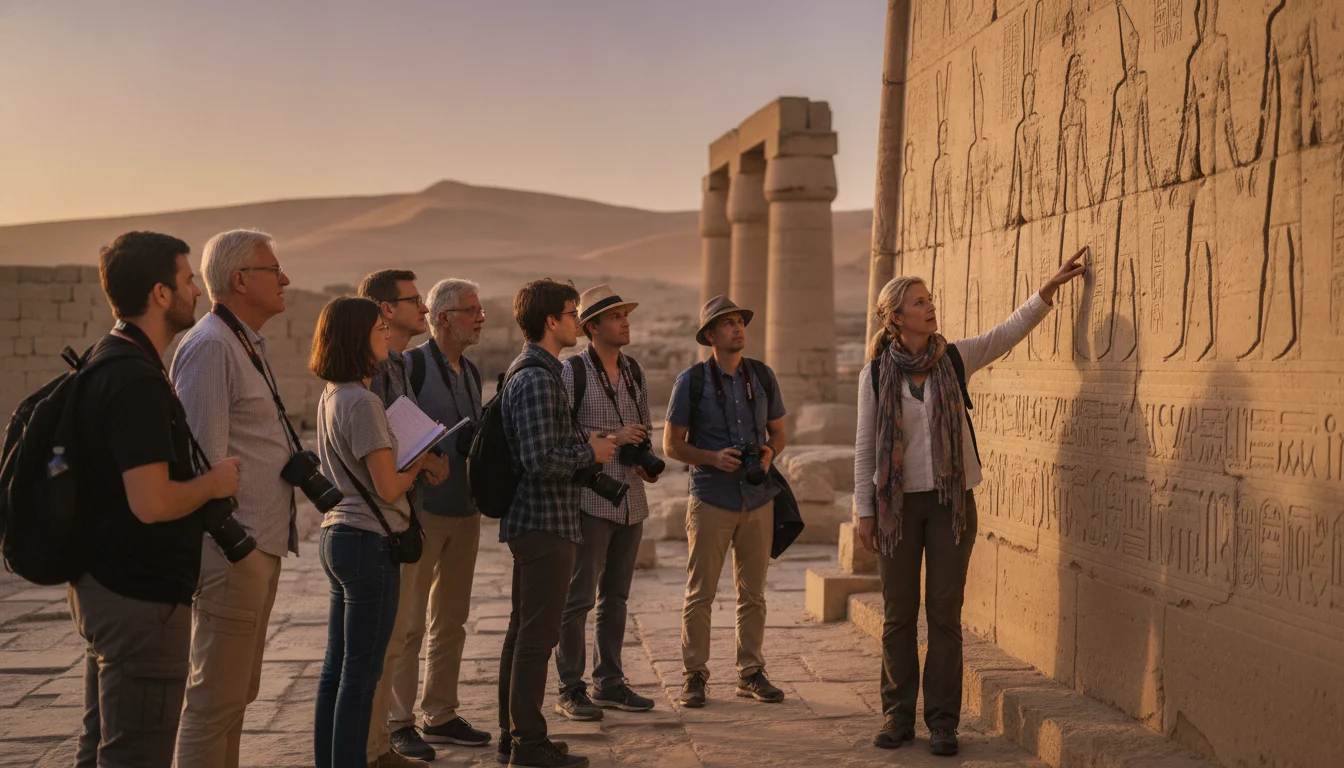
A seminary dean asked me a question I had not been asked quite that way before: “Can this trip actually count for something, or is it just a really good field trip?” It is a fair distinction, and it changes how I plan the itinerary. A congregation trip and a study tour share a lot of DNA, but a study tour has additional obligations: it has to serve a curriculum, satisfy a faculty sponsor, and often justify itself to a registrar or an academic committee back home.
So let me walk through how we build these differently, and what a school, seminary, or educational group should ask for that a general congregation group might not need.
How a Study Tour Differs From a Congregation Trip
The destinations often overlap heavily with our congregation trips, the same historical and biblical sites matter to both audiences, but the framing and the documentation around the trip change. A study tour needs a clearer academic through-line: what is this group learning, in what order, and how does the itinerary map onto material students are covering in the classroom before and after. It also usually needs a level of institutional paperwork that a congregation trip does not: syllabi tie-ins, learning objectives stated plainly, and sometimes formal documentation a registrar can use to approve academic credit.
None of that changes the heart of what we do. It changes how carefully we document it.
Academic Credit: What We Can and Cannot Promise
We are not the accrediting body, your institution is, so we cannot promise credit on your students’ behalf. What we can do, and what we build into every study tour itinerary, is a clear structure a faculty sponsor can take to their curriculum committee: stated learning objectives per site, a day-by-day academic rationale for the sequence, and documentation of contact hours and site-based instruction. Institutions vary widely in what they require to approve credit, so the right first step is always a conversation between your faculty sponsor and your registrar, with our itinerary in hand as the supporting document.
Seminaries in particular often want a stronger textual and theological framing woven into each stop, connecting a site directly to the specific texts students are studying that term. We build that in when asked, working from your faculty’s syllabus rather than a generic script.
Chaperone Ratios and Group Supervision
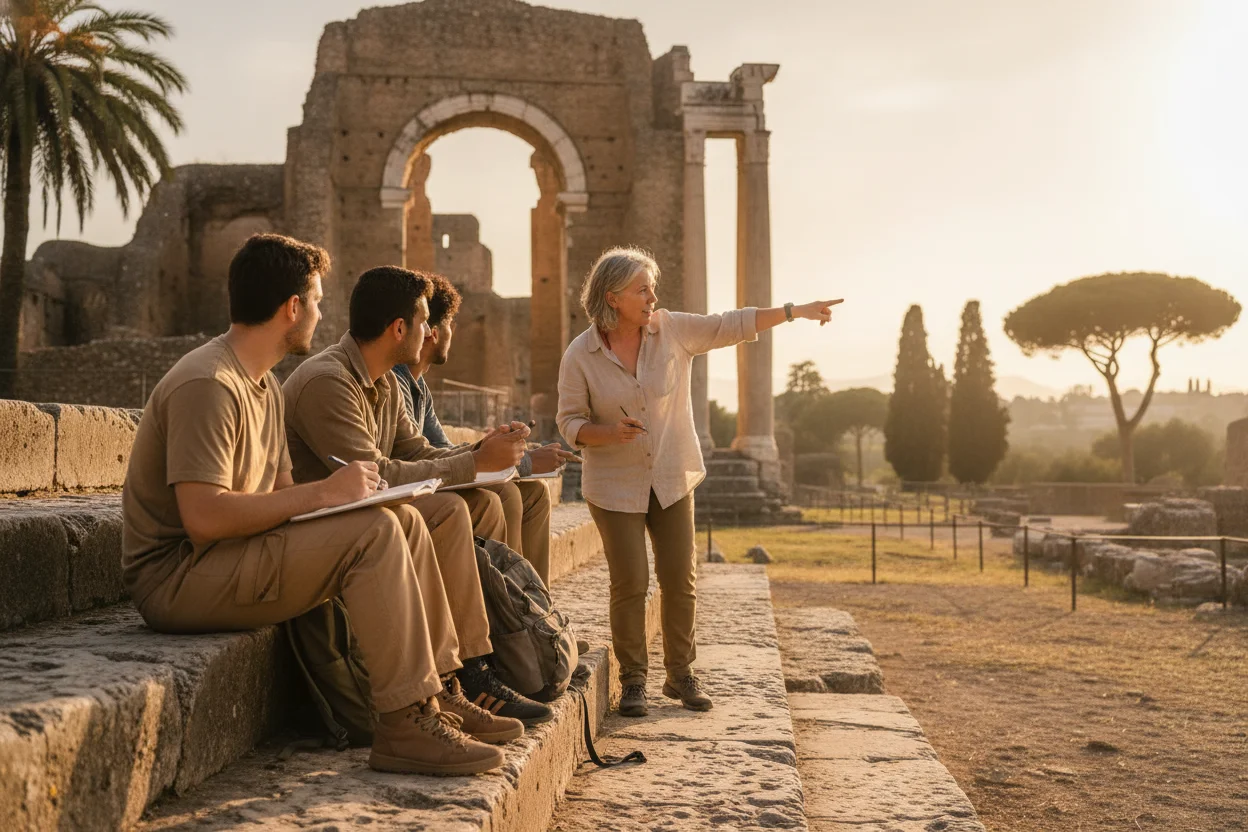
This is where educational groups have real, specific requirements that a general congregation trip does not always face. Most schools and seminaries operate under an institutional policy for chaperone-to-student ratios, commonly somewhere between one adult for every eight to twelve students, though this varies by institution, student age, and destination. We build the trip around whatever ratio your institution requires, not a generic default, and we plan group movement, room assignments, and daily logistics with that ratio in mind from the first draft of the itinerary.
For younger student groups, this also affects pacing. A student trip typically needs more structured free time, clearer daily check-in points, and a slightly more conservative walking pace at physically demanding sites than an adult congregation group might need. We plan for that rather than assume every group moves the same way.
Curriculum Tie-In: Making the Trip Teach, Not Just Show
The single biggest difference between a strong study tour and an average one is whether the sites connect to what students are actually studying. A site visited cold, with no prior classroom context, becomes a photo stop. The same site, visited after weeks of coursework on the period or the text in question, becomes the moment a class discussion clicks into place.
We ask faculty sponsors for their syllabus or reading list before finalizing an itinerary, specifically so the trip sequence can mirror the coursework sequence where possible. A biblical studies class that has spent a semester on Paul’s letters gets a materially different experience walking through Turkey and Greece than a group with no prior framing, even at the identical sites. The itinerary is the same map. The preparation changes what students see when they get there.
Group Size and the Educator’s Own Cost
Educational groups run the same range as congregation groups, commonly ten to forty participants including chaperones, and the same standing policy applies: the group leader, in this case the faculty sponsor or lead educator, travels free when the group brings fifteen or more participants. For a school or seminary trying to get a program approved on a tight budget, that policy often makes the difference between a trip that gets funded and one that does not, since it removes the faculty sponsor’s own travel cost from the number presented to the institution.
Building the Case for Your Administration
If you are the faculty member trying to get a study tour approved, the pitch to your administration usually needs three things: a clear academic rationale tied to your curriculum, a firm and defensible cost per student, and a supervision plan that satisfies your institution’s chaperone policy. We build all three into the materials we hand back to you, specifically so you are not reconstructing them yourself from a generic tour quote. Our heritage tour packages guide covers the cost breakdown side of that case in more detail, and our group heritage tours page covers how the group logistics work more broadly.
FAQ: Heritage Study Tours for Schools & Seminaries
Can a heritage study tour count for academic credit?
We cannot grant credit ourselves since that is your institution’s decision, but we build itineraries with stated learning objectives, a documented academic sequence, and contact-hour records that a faculty sponsor can present to a curriculum committee or registrar. Start with a conversation between your faculty sponsor and registrar about what your institution specifically requires.
What chaperone ratio do you plan around?
Whatever ratio your institution’s policy requires, commonly between one adult for every eight to twelve students, though this varies by age group and destination. We build room assignments, group movement, and daily logistics around your specific ratio rather than a generic default.
How do you tie the itinerary to our curriculum?
We ask for your syllabus or reading list before finalizing the itinerary and sequence sites to mirror your coursework where possible. A class that has studied a period or text in depth gets a noticeably richer experience at the same sites than a group with no prior classroom framing.
Does the faculty sponsor travel free?
Yes, under the same policy that applies to all our group trips: the group leader travels free when the group brings fifteen or more participants, chaperones included in that count. This is often what makes a study tour affordable enough for an institution to approve.
What age groups do you typically plan study tours for?
We work with high school groups, college and university programs, and seminary students most often. Pacing, walking distance, and free time all get adjusted for the age and physical demands appropriate to your specific group.
If you are a faculty sponsor trying to build a case for your administration, send me your curriculum goals and I will help you build an itinerary that actually makes that case.
Contact us to start putting the proposal together.