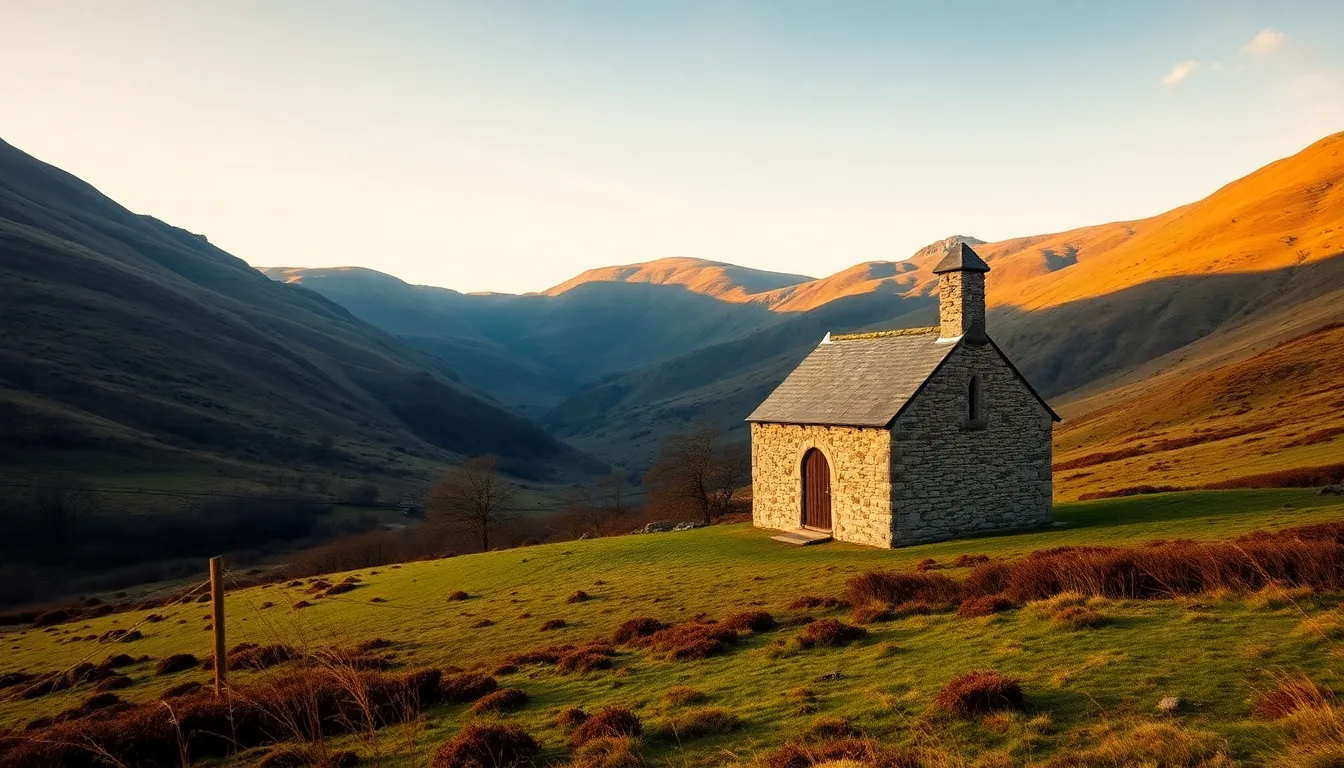
There are heritage trips that show you where something old happened, and there are heritage trips that put you on the ground where God moved within living memory. The Welsh Revival is the second kind. When I bring a group into these valleys and tell them that just over a century ago, in these exact chapels, a hundred thousand people came to faith in a single year, something shifts in the room. This is not ancient history. There were people alive recently who remembered it.
This itinerary is built entirely around the 1904-05 revival, the awakening that began with a young coal miner named Evan Roberts and swept through Wales and out to the world. It runs six days, following the story from Roberts’s home village through the mining valleys of the south and out to the chapels of the west. It is built for pastors and congregations who want more than a sightseeing tour. They want to stand where the fire fell. Treat this as a strong frame. We shape every detail around your community.
Day 1: Arrival in Cardiff
Most groups fly into the region and base first in Cardiff, the Welsh capital and the natural gateway to the revival valleys. I keep the first afternoon gentle, a chance to settle and shake off the journey. Over dinner I lay the groundwork, because to walk these valleys well, a group needs to understand what happened here.
I tell them about the Wales of 1904: a land of coal and chapel, of hard work and deep singing, spiritually hungry and ready. The revival did not come out of nowhere. It came to a people who had been praying for it. Setting that scene on the first night changes how the group sees everything that follows.
Day 2: Loughor and the Beginning
The first full day goes to where it all began. We travel to Loughor, the village near Swansea where Evan Roberts grew up and where, in his home chapel of Moriah, the revival first broke out in the autumn of 1904. Roberts had been praying for an outpouring for years. When he came home from his studies and began to lead meetings, asking people to confess their sins, surrender fully, and obey the Spirit, the chapel filled and overflowed.
Standing in Loughor, groups grasp the ordinariness of the place against the magnitude of what happened there. This was a working-class village, not a great city. Roberts was a coal miner and a blacksmith’s apprentice, not a famous preacher. That is exactly the point, and it is what makes pastors sit up. God chose the small and the unlikely. I leave time here for the group to pray, because it is hard to stand where the revival began and not want to.
I also tell the group about the four points Roberts pressed on every meeting, because they are simple enough to carry home and challenging enough to do real work. Confess every known sin to God. Put away every doubtful habit. Obey the Spirit promptly. Confess Christ publicly. There is nothing complicated in them, no special technique, and that is what unsettles a modern group used to programs and strategies. The revival ran on confession, surrender, and obedience, and standing in the chapel where Roberts first preached those points, a congregation cannot help but ask whether it would be willing to live them.
Day 3: The Mining Valleys
Day three follows the fire into the valleys. From Loughor the revival spread north into the great mining communities of the Rhondda and the surrounding valleys, and it transformed them. We trace the story through these communities, where the chapels could not hold the crowds, where meetings ran late into the night with no preacher needed, just prayer and the singing that Wales is famous for.
The social effect was remarkable, and I always tell groups about it because it grounds the spiritual story in real life. Public houses emptied. Old debts were paid. Magistrates in some districts found themselves with no cases to try. The pit ponies underground, it was said, no longer understood the miners’ commands because the swearing had stopped. We walk these valleys and the chapels that still stand in them, and the contrast between the industrial hardness of the place and the tenderness of what happened here is something groups feel in their bones. Our wider United Kingdom heritage itinerary places this revival in the longer arc of British faith.
Day 4: Cardiff to the West
Day four is a travel day as we move from the southern valleys out toward west Wales, and I treat it as part of the journey rather than a gap. The revival did not stay in the south. It spread across the whole nation, and traveling west lets the group feel the geographic reach of it.
We break the drive with stops and arrive in the west in time to settle for two nights. On the road I use the time to tell the harder part of the story, the toll the revival took on Evan Roberts himself. Within a couple of years he had withdrawn from public ministry, physically and emotionally exhausted, and he spent much of the rest of his life in quiet retirement. It is an honest note, and groups need it. Revival is glorious and it is costly, and a mature faith holds both.
Day 5: The Chapels of the West
Day five explores how the revival took root in the west of Wales, in the chapels of the rural counties where the awakening reached communities far from the coalfields. The character here is different, quieter and more pastoral, but the depth of it was the same. We visit the chapels and communities that carried the revival into the western heart of Welsh-speaking Wales.
This is also the day I open up the wider legacy, because the Welsh Revival did not stay in Wales. News of it traveled, and it helped spark awakenings around the world, from the Azusa Street revival in Los Angeles to movements in India, Korea, and Africa. Visitors came to Wales to see it and carried the fire home. For a pastor, standing in these western chapels and understanding that a global movement traced back to these hills is genuinely stirring. I leave a long space for worship and prayer here. It is the right place for the group to ask what God might do again.
Day 6: Closing and Departure
The final day brings the journey to a close. Depending on travel times, I keep the morning for a closing gathering, often back toward Cardiff, where the group can reflect together on everything the week has held. We have followed the revival from a single village chapel to a global movement, and that arc deserves to be named and prayed over before the group departs.
A Note on Spirit and Pacing
This six-day frame is focused and unhurried, which suits a revival itinerary. This is not a trip to race through. The whole point is to dwell in these places long enough for them to speak. For groups who want to go deeper, I sometimes extend it to add the historical chapels and archives, or to fold in a Sunday with a local Welsh chapel, where the singing alone is worth the journey.
What I protect on every version is the room for prayer. A revival tour without space to seek God is a contradiction in terms. The moments that stay with people, the silence in Moriah chapel, the singing in a valley chapel, the prayer in the west, need room to breathe.
If this journey speaks to your community, I would love to help you shape it into the trip that fits your people. Heritage Tours builds every itinerary around your group, and with 15 or more participants, the group leader travels free. Explore our United Kingdom heritage destination and our group heritage tours to see how it works. For groups who want to pair the revival with Scotland’s heritage, our youth group itinerary weaves both together.
FAQ: A Welsh Revival Heritage Itinerary
Who is this itinerary best suited for?
Pastors, congregations, and groups with a particular interest in revival, prayer, and the history of Christian awakening. The whole route is built around the 1904-05 revival, so it goes deep on one story rather than sampling many. Groups who come hungry to understand how God moved here, and to ask what he might do again, get the most from it.
Can we worship at a Welsh chapel during the trip?
Yes, and I encourage it. We can arrange for the group to join a Sunday service at a local chapel, where the Welsh tradition of congregational singing is an experience in itself. For many groups, worshipping alongside a Welsh congregation in one of these historic chapels is a highlight of the whole journey.
How long should we spend on a revival-focused trip?
Six days is a comfortable frame that follows the story from Loughor through the valleys to the west without rushing. The pace is deliberately unhurried, because the value of these places lies in dwelling in them. We can extend the route to add archives, historical chapels, or a fuller Sunday with a Welsh congregation.
Is the story told honestly, including its difficult side?
Yes. I tell groups the full story, including the personal cost the revival took on Evan Roberts, who withdrew from public ministry within a couple of years, exhausted. Revival is glorious and it is costly, and a mature understanding holds both. Groups appreciate the honesty, and it deepens rather than diminishes the encounter.
Do group leaders travel free on this itinerary?
Yes. When your group includes 15 or more participants, the group leader travels free on all Heritage Tours group itineraries, including this one. It is our way of honoring the work that pastors put into bringing their communities together for a journey like this.
If this route fits your congregation, I would love to talk it through with you. Contact us whenever you are ready to start planning.