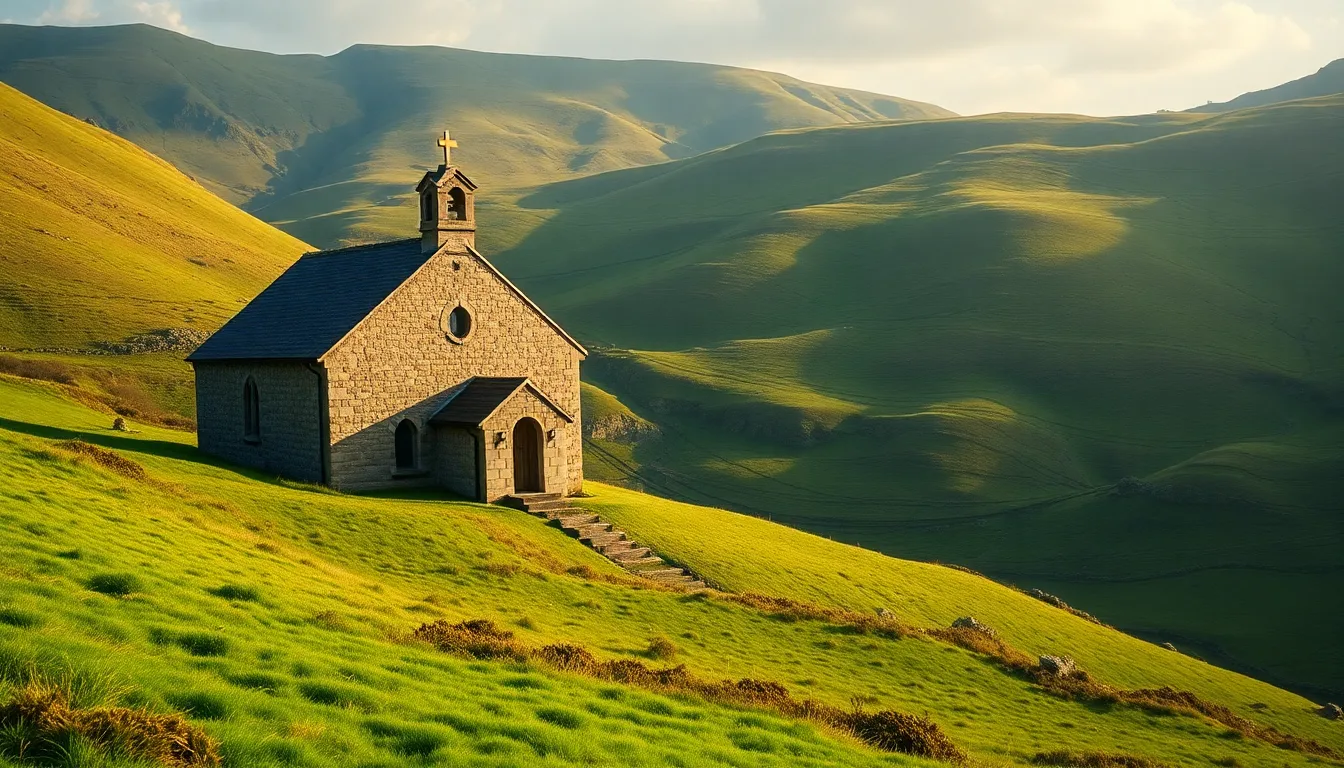
I will never forget the face of a rabbi in my group the first time we drove through a Welsh valley and he started reading the chapel names off their stone fronts. Bethel. Bethesda. Carmel. Hebron. Salem. Nebo. He turned to me and said, “Why does this Welsh village have the same name as a place in the Galilee?” And then, a mile later, “And so does this one.”
That is the moment Welsh heritage opens up for a Jewish group. Wales is dotted with biblical Hebrew place-names, not as decoration, but as the deep imprint of a people who loved the Hebrew Scriptures so much they remapped their own country onto the Holy Land. For a rabbi or an educator, this is one of the most unexpected and rewarding stories in all of Britain. Let me explain what you are actually looking at.
A Nation That Fell in Love With the Hebrew Bible
To understand the chapels, you have to understand Welsh Nonconformity. From the eighteenth century onward, Wales was swept by powerful religious revivals that pulled much of the nation away from the established church and into independent Nonconformist congregations, Baptists, Methodists, and others, who worshipped in their own chapels rather than parish churches.
These were people of the Book, and the Book they loved most was the Hebrew Scriptures. Welsh preachers steeped themselves in the Old Testament. Welsh hymns drew on its imagery. Ordinary Welsh families read it at home in their own language, and they saw their own story in it, a small, distinct, hill-dwelling people with their own tongue, holding to faith against larger powers. The parallel to ancient Israel was not lost on them. They embraced it.
The result was a culture that absorbed the Hebrew Bible to a degree that startles visitors. And nothing makes that more visible than the names on the land.
Reading the Chapels: Bethel, Hebron, and the Map of Holy Wales
When Nonconformist congregations built their chapels, they often named them, and they reached for the Bible. So the Welsh landscape filled with chapels and then whole villages named Bethel (house of God), Bethesda, Carmel, Hebron, Salem, Nebo, Pisgah, Bethlehem, and more. These are not vague gestures. They are precise biblical place-names, planted across Wales by people who knew exactly what they meant.
There is a village in Carmarthenshire actually called Bethlehem, where people still send Christmas mail to be postmarked from the town’s name. There is a Hebron in Pembrokeshire. There is more than one Bethel and more than one Carmel. Driving a Welsh valley with a group, reading these names aloud, is one of the simplest and most powerful experiences I offer, because the land itself is testifying to a love of the Hebrew text.
For a heritage group, the chapels behind these names are worth entering where they remain open. The plain, dignified interiors, built for preaching and singing rather than spectacle, carry their own quiet beauty, and they tell you a great deal about the people who filled them.
The Welsh Language and Its Hebrew Connection
There is more to this than place-names. Welsh Nonconformists prized the original languages of Scripture, and Hebrew held a special place. Welsh scholars and ministers studied it. Some even argued, in the enthusiasm of the age, for fanciful links between the Welsh and Hebrew languages themselves. The scholarship there was wishful, and I am honest with groups about that. But the impulse behind it tells you everything: these were people who wanted to feel close to the Hebrew origins of their faith.
That closeness expressed itself in real and lasting ways. Welsh preaching cadences echo the rhythms of biblical Hebrew poetry. Welsh hymns are saturated with Old Testament imagery, Zion, the wilderness, the promised land, the exile and return. A Jewish group walking into this culture finds, again and again, the language and the longing of their own tradition reflected back from an unexpected source.
Why This Matters for a Jewish Heritage Group
I want to be clear about what this is and is not. The Welsh Nonconformists were Christians, not Jews, and these chapels are Christian houses of worship. This is not a story of Jewish settlement. It is something rarer and, I think, more moving: a story of a Christian nation that loved the Hebrew Scriptures so deeply that it wrote them into its hills.
For a Jewish group, that produces a particular kind of encounter. You are not looking at your own community’s ruins. You are seeing the reach and the resonance of your own sacred text in the life of another people. I have watched rabbis stand genuinely moved before a chapel named Hebron in the Welsh rain, struck by how far the Hebrew Bible traveled and how seriously it was taken here. It is a conversation about influence, about shared scripture, about the strange and beautiful ways a tradition echoes across cultures.
It also pairs powerfully with the actual Jewish heritage of Wales, the communities of Cardiff and the Valleys, the cemeteries set into the same hillsides. The two stories sit side by side, the Hebrew text loved by the Welsh and the Jewish families who lived among them.
Building a Welsh Chapel Journey
These places are spread across the Welsh countryside, and seeing them well means knowing where to go and what you are looking at. I build a route that connects the chapels and the Hebrew-named villages with the real Jewish heritage sites of Wales, so the two threads illuminate each other.
If you want the wider context first, our Jewish heritage of the UK overview frames the whole landscape, and the pieces on the Jewish cemeteries of Scotland, Wales, and Northern Ireland and the Kindertransport in Scotland and Wales deepen the specifically Welsh chapters.
Heritage Tours builds every itinerary around the specific interests of your community, and with 15 or more participants, the group leader travels free. You can see the full picture on our United Kingdom destination page or learn how the group experience works on our group heritage tours page.
FAQ: Welsh Chapels and Their Hebrew Roots
Why do so many Welsh places have biblical Hebrew names?
From the eighteenth century, Welsh Nonconformist congregations named their chapels after biblical places like Bethel, Hebron, Carmel, and Salem, and over time whole villages took those names. These congregations loved the Hebrew Scriptures and saw their own small, distinct nation reflected in the story of ancient Israel, so they wrote that connection directly onto the Welsh landscape.
Is there really a village in Wales called Bethlehem?
Yes. Bethlehem in Carmarthenshire is a real village, and around Christmas people send mail there to be postmarked with the name. It is one of many biblically named Welsh places, alongside a Hebron in Pembrokeshire and multiple villages called Bethel and Carmel. These names reflect the deep biblical literacy of Welsh Nonconformist culture.
Is this a story of Jewish settlement in Wales?
No, and it is important to be clear. The Welsh Nonconformists were Christians, and the chapels are Christian houses of worship. This is the story of a Christian nation that loved the Hebrew Scriptures so deeply it wrote them into its hills. For a Jewish group, it offers a moving encounter with the reach of their own sacred text in another people’s life, and it pairs with the real Jewish heritage of Cardiff and the Valleys.
What was Welsh Nonconformity?
Welsh Nonconformity refers to the independent Protestant congregations, Baptists, Methodists, and others, that drew much of Wales away from the established church from the eighteenth century onward. They worshipped in their own plain chapels, prized the Bible, and built a culture saturated with Old Testament imagery and language. Their chapels and the Hebrew names they chose are the lasting marks of that movement.
Can a Welsh chapel route be combined with Jewish heritage sites?
Yes, and that combination is one of the most rewarding ways to experience Wales. The Hebrew-named chapels and villages sit in the same valleys as the real Jewish communities of Cardiff and the industrial towns, with their synagogues and hillside cemeteries. We build routes that connect both threads so they illuminate each other across a single journey.
This is one of my favorite stories to share, because it surprises even seasoned travelers. If your community would be moved to see how far the Hebrew Scriptures traveled, I would love to plan it with you. Contact us whenever you are ready.