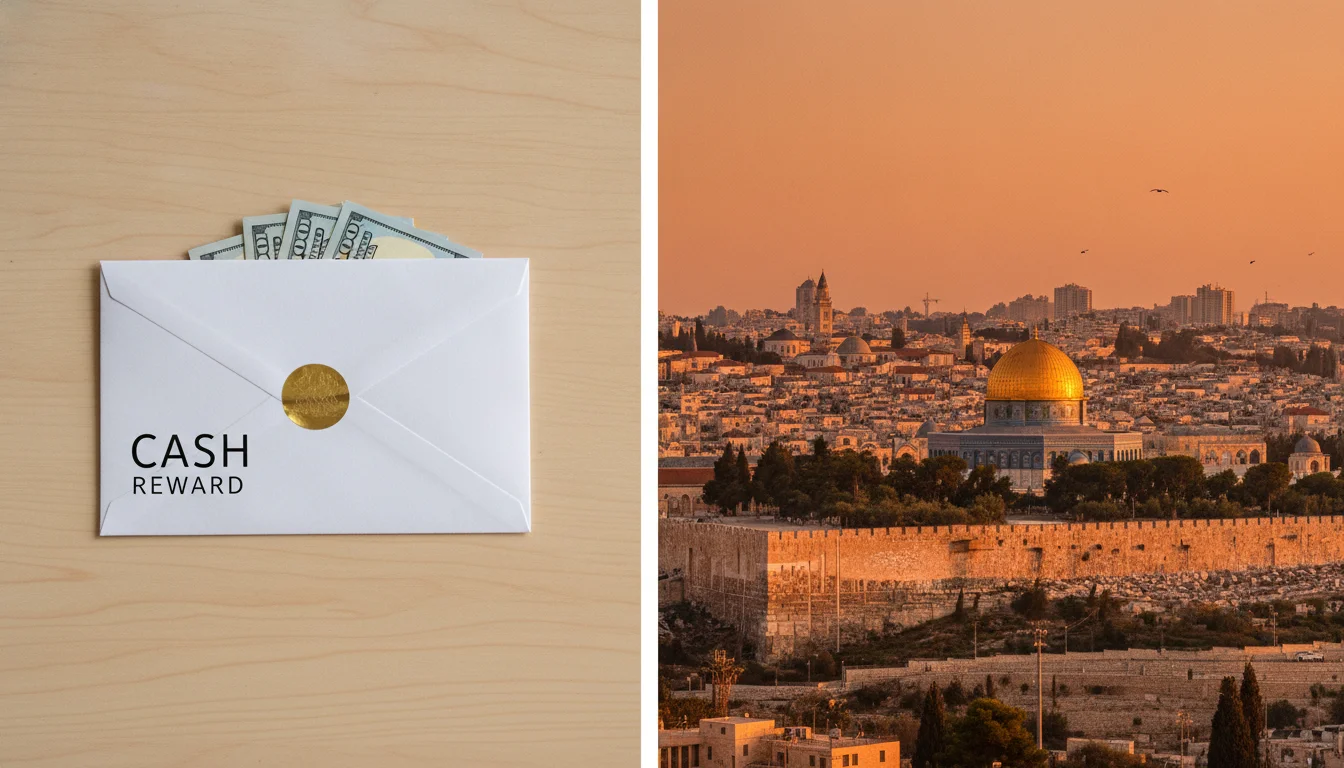
Every sales leader eventually faces this question. You have budget to reward your top performers. Do you give them cash, or do you send them somewhere?
The conventional wisdom says cash is king, because everyone values money differently and a cash bonus gives people the freedom to spend it how they want. That logic sounds reasonable. But the data, and the experience of companies that have run both kinds of programs, tells a different story.
Here is the honest version of this comparison.
The Question Every Sales Director Eventually Asks
The framing of “travel vs. cash” makes it sound like a clean tradeoff. It is not, really. The two things are not equivalent in what they actually do to motivation.
Cash is fungible. It goes into the account, it covers some bills or a purchase the recipient wanted anyway, and within a few months most people would have difficulty telling you exactly what the bonus paid for. That is not a criticism of cash as a reward. It is just how the psychology works.
A trip to Israel, or anywhere genuinely unusual and meaningful, does something different. It creates a specific memory that the recipient can point to and say: I earned that. Two years later, they are still telling the story. Their family heard about it. Their colleagues who did not qualify know about it. The trip has a social dimension that cash simply does not.
What the Research Says About Memory and Motivation
The incentive travel industry has studied this question for decades, because the industry’s entire business case depends on whether travel outperforms cash. The consistent finding is that it does, but only under specific conditions.
Travel works better than cash as a motivator when the destination is aspirational enough to genuinely excite the potential qualifiers. A trip to somewhere they have already been, or somewhere they could easily book themselves, does not carry the same weight. The destination needs to feel like something they would not have done on their own.
It also works better when the program is communicated well from the start. The motivational lift comes from the anticipation and the social recognition, not just from the trip itself. A poorly communicated program that qualifiers barely know exists does not outperform cash. A well-run program with a compelling destination and consistent visibility tends to outperform cash significantly, in terms of the performance uplift during the qualification period.
The specific numbers vary by study and by industry, but the general finding is consistent: incentive travel programs generate a 15 to 25 percent improvement in performance metrics compared to standard commission structures alone, and the effect is more durable than a cash bonus delivered at the end of the year.
The Incentive Research Foundation has studied this question across multiple industries, and their data consistently shows that experiential rewards produce two to three times the motivational impact of equivalent cash bonuses when measuring actual behavior change during the qualification period. The SITE Foundation data points in the same direction: when top performers are asked directly, four out of five say they prefer an exceptional travel experience over an equivalent cash amount. That preference is not just a stated attitude. It shows up in how people compete during the qualification window, and in how long they talk about the reward afterward. A cash bonus lands once. A well-run trip to a destination that meant something keeps paying in social capital and story for years.
Why Cash Disappears Faster Than You Think
This is the part of the conversation that surprises some sales leaders. Cash bonuses are taxable as ordinary income. A $5,000 bonus may net the recipient $3,000 to $3,500 after federal and state taxes, depending on their bracket. That is not nothing, but it is meaningfully less than the face value of the reward.
A trip valued at $5,000 is worth $5,000 in experience, regardless of tax treatment. The perceived value of the reward is higher than the equivalent cash amount after taxes.
There is also the question of how cash gets spent. Research on unexpected income consistently shows that people tend to allocate windfalls to ordinary expenses rather than meaningful purchases. The bonus buys groceries, pays down a credit card, or covers a car repair. That is sensible money management, but it does not create a memorable reward experience.
When Cash Is the Right Answer
I want to be fair here, because cash genuinely is the right answer in some situations.
If your sales team is early in their careers and under real financial pressure, cash has a direct and meaningful impact that a trip cannot replicate. The motivational calculus changes when the base need is not met.
If your team is geographically dispersed and coordinating a group trip is logistically complex, the program overhead may not be worth it for smaller qualifier pools.
And if your team has explicitly said they prefer cash, that is information worth taking seriously. The motivational value of a reward depends significantly on whether the recipient actually wants it.
The case for travel gets stronger as your top performers become more financially secure and more experientially motivated. Senior salespeople and top performers at successful companies tend to be exactly the people for whom an exceptional destination lands differently than another deposit to the checking account.
The Hybrid Option: Cash Toward a Group Trip
Some companies run a structure that combines both. The program funds a group trip for qualifiers, and there is a cash component for the closest near-misses who just missed the threshold. This acknowledges that near-qualifiers did extraordinary work without diluting the exclusivity of the travel reward itself.
Another version: a travel credit that qualifiers can apply toward their own travel, combined with a group experience option. This gives people flexibility while still orienting the reward around travel. In practice, most qualifiers opt for the group experience when it is a genuinely compelling destination.
The Tax Angle
This is worth understanding even if it does not determine the decision. Cash bonuses are taxable as ordinary income. Employer-paid group travel has a more complex tax treatment, and in many cases the company can structure incentive travel programs in ways that are more tax-efficient than equivalent cash payments. Your finance team or tax advisor can clarify how this applies in your specific situation, but it is worth raising in the program design conversation.
FAQ
Do employees actually prefer travel over cash?
It depends on the employee and the destination. Senior high performers in financially stable situations tend to prefer an exceptional travel experience over an equivalent cash amount, for the reasons outlined above. Employees earlier in their careers or under financial pressure may genuinely prefer cash. Knowing your team matters here.
What is the ROI on incentive travel vs. a cash bonus?
Studies consistently show incentive travel programs generate stronger performance uplift during the qualification period than equivalent cash bonuses, with figures typically in the 15 to 25 percent range above baseline. The effect is more durable and the social recognition dimension is stronger.
Can we offer both?
Yes, and some companies do. A group trip for top qualifiers plus a smaller cash bonus for near-qualifiers is a common structure. Offering a travel credit rather than a cash bonus is another variation that maintains the travel orientation while giving some flexibility.
What if our team says they prefer cash?
Take that seriously, but probe a little. What destination did you offer last time? Was it somewhere genuinely aspirational? Teams that have experienced a weak destination sometimes express a preference for cash that reverses when the destination becomes compelling. If the honest answer is that your team would genuinely prefer cash, then cash may be the right call.
How does the tax treatment differ between cash and travel rewards?
Cash bonuses are taxable as ordinary income, so a $5,000 bonus nets significantly less after tax. Group travel has different accounting treatment and can often be structured in more tax-efficient ways. Consult your finance team or tax advisor for the specifics of your situation.
Does incentive travel work better for some industries than others?
It tends to work particularly well in sales environments with a defined qualification period, where the visibility and social dimension of the reward can be leveraged throughout the performance period. Industries with strong community cultures (including faith-based organizations) also tend to see strong results, because the shared experience dimension resonates more deeply.
What do top performers actually prefer: travel or cash?
The research from the Incentive Research Foundation is consistent on this: when top performers are asked directly, the majority prefer an exceptional travel experience over cash when the values are equivalent. In my experience working with companies that have run both kinds of programs, that preference is strongest when the destination is genuinely aspirational and the program is well-communicated from the start. Top performers who have experienced a weak destination sometimes say they would rather have the cash. Top performers who have experienced a program built around somewhere that mattered, somewhere they would not have booked on their own, somewhere that created a real memory, almost never say that.
Not sure whether you need an incentive program or a corporate group trip?
The two serve different goals. An incentive program rewards measurable performance in a defined qualification period. A corporate group tour invests in a fixed team through shared cultural or heritage experience. If you are still working out which framework fits your company’s objective, our corporate group tours in Israel guide explains how heritage-focused programs are structured and who they are built for.