I plan incentive programs. I have been doing it for a while. The things I am actually seeing change in the programs I help design are different from the trend lists that circulate in the industry, which tend to be written at a comfortable distance from the work.
Here is what I am actually observing, and why most of these shifts point toward the kind of program Israel is particularly well-suited to deliver.
Smaller Cohorts, Higher Perceived Value
The shift I have seen most consistently over the past several years: companies are qualifying fewer people and investing more in the experience per qualifier.
The standard structure for a decade was to qualify the top 15 to 25 percent of the sales force and run a program of 40 to 80 people. This produced a program with genuine scale and communal energy, but the experience per person was often constrained by the logistics of moving a large group through a premium destination.
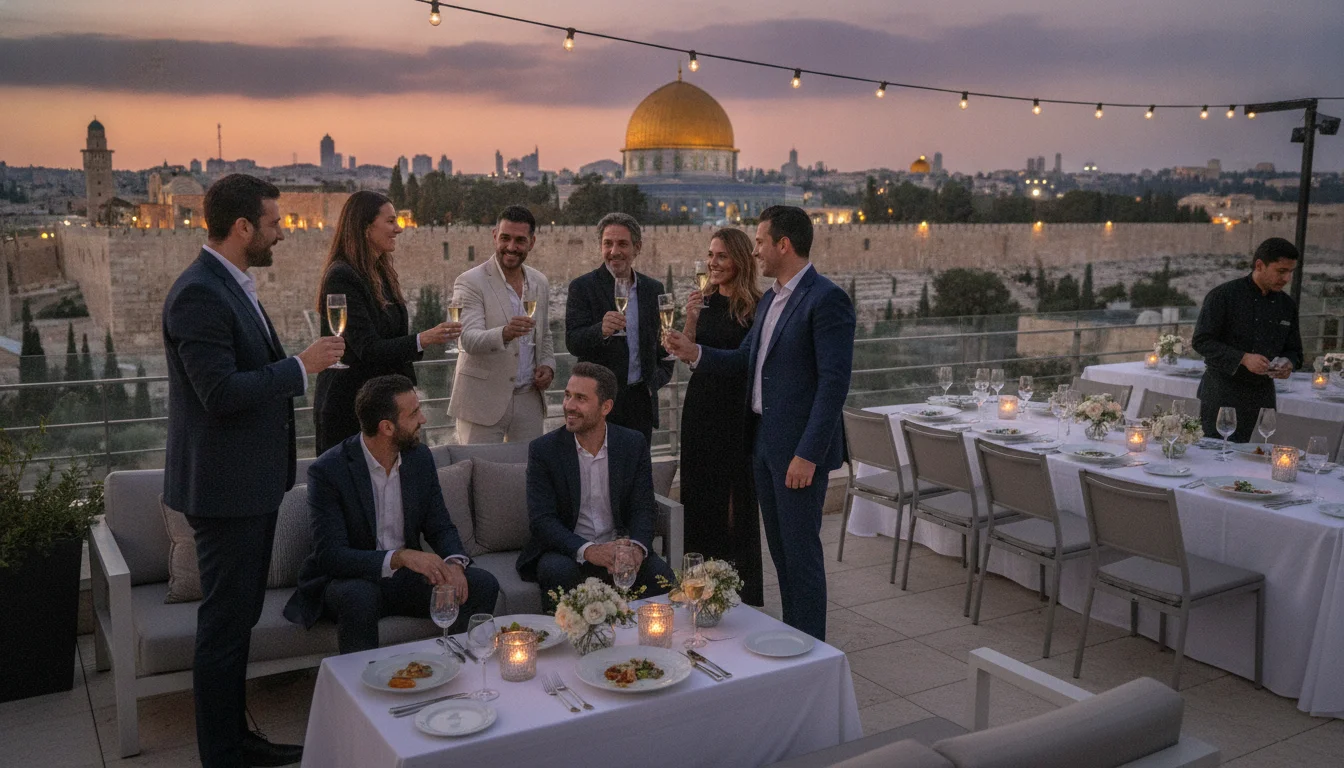
What I am seeing now: companies qualifying the top 10 to 12 percent and building a program for 15 to 25 people at a meaningfully higher per-person investment. The result is a program that feels genuinely elite: private dining configurations, a guide whose attention is on 20 people rather than 60, experiences that are simply not available to a group of 80.
The motivational value of this shift is significant. A program that qualifies 20 percent of the team sends a signal that performance at a certain level gets rewarded. A program that qualifies 10 percent sends a different signal: that this reward is for exceptional performance, and exceptional performance is what the company is trying to produce.
Israel benefits from this shift specifically because the experiences that make Israel extraordinary as a destination, private access to significant sites, an intimate dinner in Jerusalem, a guide who can have a real conversation with every person in the group, are best at groups of 15 to 25.
Meaningful Over Luxury: What Qualifiers Actually Want
The most consistent feedback I hear from qualifiers who have been to multiple incentive programs: they want an experience that they could not have had on their own, and that they will actually talk about for years.
A week at a five-star resort in Mexico is expensive and comfortable. It is rarely memorable in the way that a meaningful destination experience is memorable. A qualifier who has been on three resort programs is not going to tell stories about the fourth. They are going to tell stories about the program that took them somewhere that changed their understanding of something.
This preference for meaningful over merely luxurious is driving a structural shift in how companies choose destinations. The destinations that are winning are the ones with historical and cultural depth, not just beautiful beaches and good service. Israel fits that profile almost definitively: the depth of experience available here, the history, the geography, the culinary culture, the intersection of ancient and contemporary, produces the kind of stories that qualifiers tell for years.
This does not mean comfort does not matter. A hotel that is uncomfortable undermines the experience. The shift is not away from quality; it is away from the idea that quality is sufficient on its own. A $500-per-night room in a meaningful place beats a $500-per-night room in a forgettable one.
Historical and Culturally Significant Destinations Are Rising
Directly connected to the shift toward meaningful experience: the demand for destinations with genuine historical and cultural weight has been growing for several years.
Italy and Greece have long benefited from this preference, and they remain strong. The newer entrants to the shortlist include destinations that were underutilized for reasons of familiarity or perceived complexity: Portugal, Morocco, Jordan, and Israel. Each of these offers a depth of heritage that resort-based destinations simply do not have.
Israel’s specific position in this trend is interesting. The familiarity gap that kept Israel off most incentive shortlists for years is closing, driven partly by the direct flight infrastructure from North American cities and partly by the growing recognition among incentive planners that the destination delivers what the current market wants: a place that is genuinely different, historically significant, and produces the memorable experiences that justify an incentive program’s investment.
Sustainability and Responsible Travel in Incentive Programs
This trend is real and its effects are still working through the industry.
The pressure is coming from two directions. Companies are facing internal and external expectations around environmental and social responsibility that extend to corporate travel. And qualifiers, particularly in younger cohorts, have travel preferences that increasingly include sustainability considerations.
The practical effects on program design: companies are asking more questions about the environmental footprint of their programs, particularly around long-haul flights. Some are offsetting flight emissions as part of the program budget. Some are incorporating elements that connect the destination’s human and environmental stakes to the program experience.
For Israel, the sustainability trend has a specific application. The country has a significant history of environmental innovation, from water reclamation technology to agricultural efficiency in arid conditions. For companies that want to incorporate a sustainability angle into their incentive program, Israel offers genuine content rather than greenwash.
AI Tools in Incentive Planning: What Is Actually Useful
AI tools are entering the incentive planning workflow, and the honest assessment is that some applications are more useful than they look and some are less.
Where AI is actually useful: research and comparison at the early stages of program design, drafting communication materials, generating initial itinerary frameworks for discussion, and summarizing feedback from past programs into patterns.
Where AI falls short: anything that requires genuine local knowledge, real-time availability, and the kind of relationship-based access that produces a private dinner at a Jerusalem restaurant that is not in any directory, or a conversation with an Israeli entrepreneur who only agreed to meet because a mutual connection asked. The logistics and relationship layer of a premium incentive program still require a human who knows the destination.
The planning workflow that works: use AI tools for research, drafting, and synthesis, and use experienced local partners for logistics, access, and everything that requires knowing the destination from the inside. Trying to replace the latter with the former produces the kind of program that looks good in a deck and disappoints on the ground.
Why These Trends Favor Israel as a Destination
The through-line across all of these shifts is a move toward programs that are smaller, more intentional, more meaningful, and harder to replicate at home or at a standard resort.
Israel is better positioned against that profile than it was ten years ago. The direct flight infrastructure has improved significantly, with daily direct flights from multiple US cities. The hotel market in Jerusalem and Tel Aviv has matured to a level where four and five-star properties can support premium programs. The incentive planning community’s familiarity with the destination has grown through a generation of programs that have demonstrated what the destination produces.
The qualifiers who respond most strongly to Israel as a destination are the same qualifiers who are driving the trends above: experienced travelers who have been on resort programs and want something with more depth, high performers who respond to the idea that they earned something genuinely extraordinary rather than just expensive, and sales professionals whose cultural or faith backgrounds give the destination a personal dimension.
The competitive position for a company choosing Israel as an incentive destination is strong: most of their competitors are still running programs to Italy or Greece, which means the travel story their qualifiers tell is distinctive. Distinctiveness is motivational value, and it is free.
Our incentive travel hub covers the destination in detail. For the destination comparison in full, our incentive travel destinations article works through how Israel stacks up against the other programs on the shortlist.
FAQ
What is the most significant trend in incentive travel right now?
The shift from large resort-based programs to smaller, meaningful-destination programs is the most significant structural change I am seeing. The number of qualifiers is going down, the per-person investment is going up, and the destinations that win are the ones with historical and cultural depth rather than just luxury amenities.
Are companies actually running smaller incentive groups?
Yes. The average qualifying cohort in the programs I see has shrunk over the past several years. The companies driving this shift are the ones that have been running programs long enough to have data on what produces lasting motivational impact, and that data points toward smaller and more curated rather than larger and more inclusive.
Is sustainability a genuine factor in destination selection or mostly PR?
Both, depending on the company. Some companies have genuine internal sustainability commitments that extend to their incentive programs, and for those companies it is a real factor. For others, it is a box-checking exercise. The destinations that benefit most are those that can provide genuine sustainability content rather than just pledging to plant trees.
Will AI replace incentive travel planners?
Not in the foreseeable future for the parts of the job that matter most. The research, drafting, and analysis layer is being absorbed into AI-assisted tools. The relationship-based local knowledge, the guide selection, the access to experiences that require knowing the destination from the inside: those require a human who has been there and built the relationships. The planner’s value is shifting toward the latter and away from the former.
How is the post-pandemic recovery affecting incentive travel budgets?
Most companies that paused incentive programs during the pandemic years found that the programs were much harder to restart than to maintain. Teams who had gone two or three years without a program had built habits that did not assume one was coming. The companies that resumed quickly and with genuine investment are seeing strong motivational returns. Companies that resumed with reduced budgets or less aspirational destinations are finding the response muted.
What will incentive travel look like in five years?
Smaller programs, more carefully designed, at destinations with genuine depth. The transactional model of incentive travel, top performers get a nice trip, is giving way to a relational model where the trip is the occasion for experiences and conversations that strengthen the company’s relationship with its highest-performing people. Israel is a strong fit for that direction.