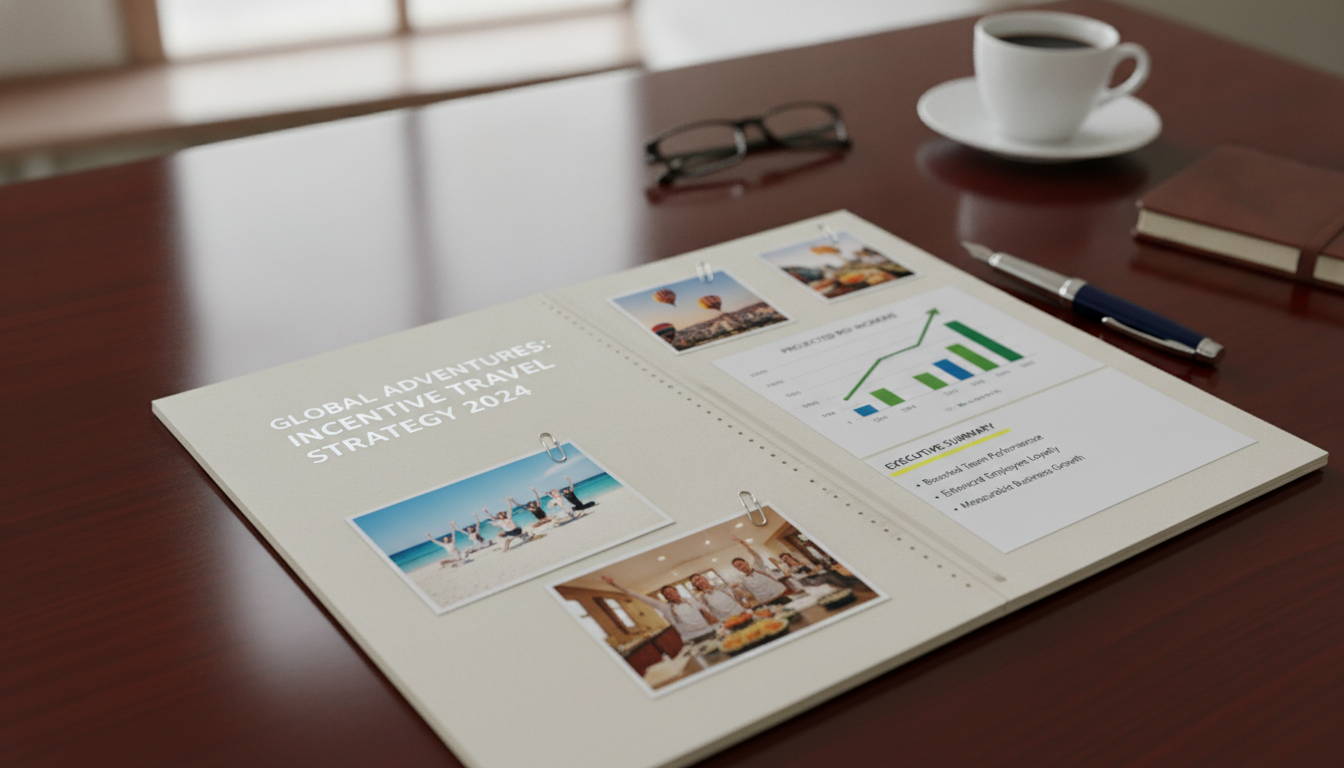
I have seen a lot of incentive travel proposals over the years. Some get approved on the first pass. Others go through three rounds of revision and still die in a budget meeting. The difference is almost never the destination. It is how the proposal was written.
A proposal that gets approved makes a business case. A proposal that fails treats the program like a perk and asks finance to take it on faith. The CFO looking at that document does not care about hot air balloons over Cappadocia. They care about whether this expense is justified, whether the numbers hold up, and whether someone has thought through the risk of doing nothing.
This guide walks through the seven sections every solid incentive travel proposal needs. Not as a document-writing exercise. As a way to build the internal case for a program that will actually happen.
The 7 Sections Every Incentive Travel Proposal Needs
Most proposals that fail are missing one or two of these. The most common gaps are the ROI section and the “what happens if we do nothing” argument. Fix those and your approval rate will go up significantly. Research from the Incentive Research Foundation shows proposals that include ROI projections get approved roughly three times more often than those that do not.
The seven sections are:
- Program objectives and business case
- Destination overview and selection rationale
- Program design (itinerary, experiences, accommodation)
- Budget breakdown and ROI projection
- Qualification criteria and eligible population
- Timeline and approval requirements
- Appendix (supporting data, vendor quotes, reference programs)
Not every proposal needs the same depth in each section. A $50,000 program for 15 people does not need a fifteen-page document. A $400,000 program for 90 people does. Scale the detail to the decision scale.
Section 1: Program Objectives and Business Case
Start with what you are trying to accomplish. Not what you want to do. What business outcome you are trying to drive.
Incentive travel exists because it changes behavior. People work harder, stay longer, and sell more when they know a real experience is on the line. Your objectives section needs to make that link explicit.
A strong objectives section covers three things. First, the specific behavior you want to drive: revenue to a number, quota attainment percentage, retention through a defined date, or activation of a new product. Second, the population whose behavior you are targeting and why. Third, the baseline you are starting from so the program outcome is measurable.
One thing I recommend including that most proposals skip: a “what happens if we don’t do this” paragraph. Finance people are trained to see doing nothing as the safe option. A status quo argument names the cost of inaction directly. If your company ran no incentive program last year and quota attainment dropped, say that. If competitors are running programs and your team knows it, say that too.
The objectives section should be one to two pages. Clear, specific, not padded.
Section 2: Destination Overview and Why It Was Selected
One page maximum. Lead with the image. Not with facts about the country.
If you are proposing Cappadocia, the first thing the reader should see is a hot air balloon over the valleys at sunrise. If you are proposing Croatia, show the Dubrovnik walls. If you are proposing Petra, use the treasury photograph, because there is no image in travel that produces a stronger immediate reaction.
Then make the selection case in three to four sentences. Why this destination for this group. What is exclusive or unusual about it. Why it serves the program objectives better than the alternatives you considered.
The destination section fails when it reads like a Wikipedia entry. Temperature ranges, visa requirements, flight duration. That information belongs in the appendix or in the vendor’s logistics document. The destination page in your proposal is there to make someone feel something. Once they feel it, the logical case is easier to close.
If you considered multiple destinations and selected one, briefly note the others you evaluated and why this one won. Decision-makers trust proposals that show the work.
Section 3: Program Design (Itinerary, Experiences, Accommodation)
This section covers what the trip actually looks like. Day by day, experience by experience, hotel by hotel.
The goal here is to be specific enough that the reader can picture it, without overwhelming them with logistics. A day-by-day outline with two to three lines per day is usually right. Save the full activity descriptions for the vendor proposal appendix.
A few things to get right in this section:
Hotel selection matters and you should explain it. A luxury group program and an upper-upscale program are different in feel and in cost. Name the property or the category and explain why it fits.
One exclusive or private access element per day. This is what separates an incentive program from a regular group tour. Private welcome dinner. Exclusive access to a site before it opens to the public. A sommelier from a property that does not normally do private events. Name the specific element, not a generic description.
Build in free time. Top performers resent over-programming. They are high-functioning adults who have earned the trip. An afternoon at leisure on day three is not wasted budget. It is part of what makes the trip feel like a reward rather than a company event.
The program design section answers the question: would I want to go on this trip? If the people reading the proposal cannot answer yes, you have more work to do.
Section 4: Budget Breakdown and ROI Projection
This is the section that determines whether your proposal survives. Get it wrong and everything else becomes irrelevant.
There are two numbers that finance cares about. The all-in per-person cost, and what that compares to.
All-in per-person cost means flights, hotels, ground transportation, activities, program management, meals, incidentals, and a contingency buffer of eight to ten percent. Show each line item. Do not give a single total and expect trust. Decision-makers who see a lump sum immediately discount it upward in their heads.
The comparison is where most proposals miss. Show what a cash bonus of equivalent value would cost the company, including the tax gross-up. Cash bonuses are taxable income for the employee, which means a $3,000 cash bonus costs the company closer to $4,500 after gross-up and payroll tax. An equivalent-value group trip is often cheaper on a tax-adjusted basis and produces measurably better performance outcomes. Put that comparison in the document.
The ROI projection is not complicated. Estimate the incremental revenue or retention value driven by the program, assign a probability to it, and show the math. A program targeting $2M in incremental sales with a fifty percent confidence factor produces $1M in projected value against a $200,000 program cost. That is a five-to-one projected return. State it plainly. For more on building the ROI case, the incentive travel ROI guide covers the methodology in detail.
Section 5: Qualification Criteria and Eligible Population
Who earns the trip and how.
This section matters more than most proposal writers realize. Vague qualification criteria produce vague motivation. If your sales team cannot explain exactly what they need to do to earn the trip, the trip does not drive behavior effectively.
Strong qualification criteria are:
- Specific and measurable: revenue target, quota percentage, or ranking threshold
- Announced early: the program needs to be running long enough to change behavior, which means qualifying criteria need to be set months in advance
- Perceived as achievable: if only the top two percent of reps can realistically qualify, motivation drops for the ninety-eight percent below them
Define the eligible population clearly. Full-time reps only, or does it include channel partners? Managers eligible or not? International qualifying or domestic only? These decisions need to be in the document.
Also cover what happens with borderline cases. Someone who qualifies on one metric but not another. Someone who leaves the company before the trip. Someone who earns the trip but has a scheduling conflict. Having a clear policy before the program launches prevents disputes after.
Section 6: Timeline and Approval Requirements
Incentive travel programs take longer to plan than most buyers expect. A well-executed international program needs nine to twelve months of lead time. Hotel contracts for exclusive venues in peak season close twelve to eighteen months out.
Your proposal needs to show the decision path and the timeline. When does approval need to happen to hit the program dates? What are the downstream deadlines that depend on an approval decision today?
List what you need from the approver and by when. This makes the ask concrete and prevents the proposal from dying a quiet death in someone’s inbox.
Section 7: Appendix
Put the detail here. Vendor quotes. Full day-by-day itinerary. Hotel research. Comparison destination analysis. Past program results if you have them.
The appendix is for readers who want to go deep. The proposal itself should work for readers who do not.
For more on building a full incentive program from scratch, the how to plan an incentive travel program guide covers the planning sequence in detail.
FAQ
How long should an incentive travel proposal be?
It depends on the program size and the organization. A small program for 15 to 20 people might need eight to ten pages. A large program for 100 people might need 20 to 25. The right length is whatever it takes to make the business case thoroughly without repeating yourself. Decision-makers at the CFO level read the executive summary and the budget section first. Everything else should be there for when they want to dig in.
Do I need to include ROI projections in an incentive travel proposal?
Yes, if you want the proposal to survive a CFO review. Proposals with ROI projections are approved roughly three times more often than those without them. The projection does not need to be a complex model. A clear estimate of expected behavior change, linked to a revenue or retention number, is enough to change the framing from “expense” to “investment.”
What is the hardest section of an incentive travel proposal to write?
The business case in Section 1, specifically the part that addresses the cost of doing nothing. Most proposal writers skip this because they assume the value of the program is obvious. It is not obvious to a finance team looking at a line item during a budget review. Naming the cost of inaction directly is what separates proposals that move forward from proposals that get tabled.
How far in advance do I need to get an incentive travel proposal approved?
For an international group program, approval needs to happen nine to twelve months before the trip. Some high-demand venues and destinations require eighteen months for exclusive-access bookings. Build the timeline backward from your desired travel dates and put the approval deadline in the proposal document.
Should the destination section come before or after the business case?
After. The business case establishes why the program exists. The destination section shows what the experience looks like. Putting the destination first reads like a travel brochure. Putting the business case first reads like a business proposal. You want it to read like a business proposal.
If you are working on an incentive program and want a second opinion on the structure or the case you are building, reach out to us at Heritage Tours. We have helped companies develop the full program plan, from the internal proposal through on-the-ground execution.