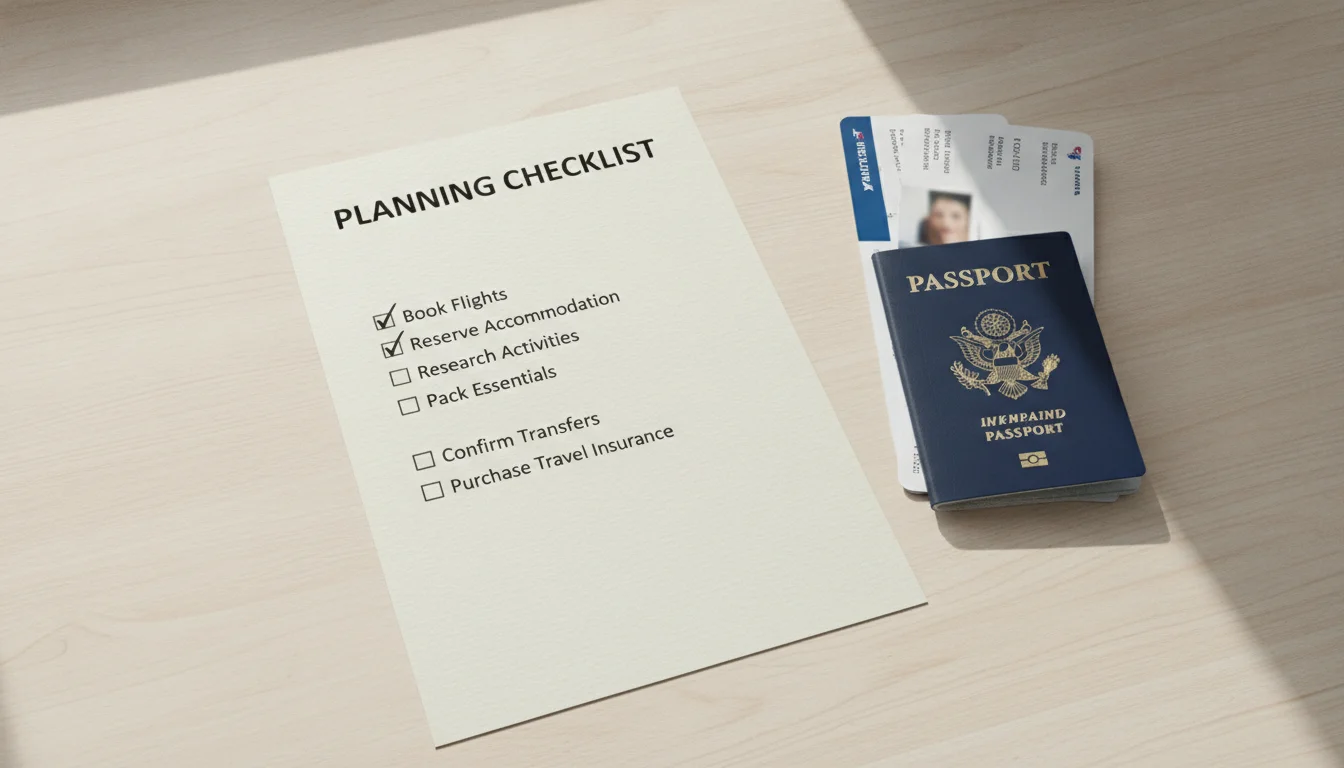
Planning an incentive trip is manageable when the stages are clear. This checklist covers the full timeline from the first planning decision to the day your group lands back home. Save it. You will use it more than once.
Each stage below covers what needs to happen and what tends to get missed. The items marked with a note are the ones I have seen cause the most problems when they are skipped or done too late.
12 Months Out: Program Design and Internal Approval
At this stage, nothing is booked. Everything is being decided.
- Define the qualification criteria. Specific, measurable, and announced at the start of the performance period. Not after.
- Estimate the qualifier pool. Use last year’s performance data to project how many people are likely to qualify.
- Set the per-person budget. Include flights, hotels, ground transportation, activities, and program management. The $4,000 to $6,000 range is the international benchmark for a four to five day trip.
- Get internal budget approval. This step unlocks everything else. Nothing moves without it.
- Identify and engage a destination specialist. For international programs, working with someone who actually knows the destination saves significant time and prevents the most common logistical mistakes.
- Shortlist two to three destination options and get rough pricing on each.
- Set approximate travel dates. Factor in holidays, peak seasons, and blackout periods for your sales team.
What gets missed at this stage: The qualification criteria. Companies announce the trip first and define the criteria later. By the time the criteria go out, the performance period is already underway and people do not know what they are working toward. Define criteria first, always.
9 Months Out: Destination Lock and Program Announcement
- Select the final destination.
- Lock travel dates. Confirm these work with school calendars, company events, and holiday windows in your key regions.
- Secure hotel block. A good hotel in Jerusalem or Tel Aviv during spring or fall fills up. Nine months is not too early to hold rooms.
- Confirm program design with your destination specialist. How many days, which experiences, what balance of structured group time and free time.
- Announce the program to your team. Clear criteria, compelling destination description, dates confirmed or approximate. The earlier this goes out, the longer the motivational runway.
- Build a program landing page or document that qualifiers can refer to. The destination visuals do real work here.
What gets missed at this stage: Communicating the program effectively. The announcement email goes out once and is never mentioned again. Build a plan for how the program stays visible throughout the performance period.
6 Months Out: Qualifier Tracking and Flight Planning
- Confirm the flight booking process. Will the company book flights centrally or will qualifiers book their own within a budget? Both approaches work; you just need to decide.
- Confirm the itinerary structure with your specialist. Not every detail, but the overall shape: which days in which locations, what the anchor experiences are, how transportation flows.
- Set up a qualifier tracking system. Who is on track to qualify? A leaderboard or regular progress communication keeps the program visible.
- Issue a reminder communication to the eligible sales team. Reminder of the destination, the criteria, where people stand. This is where the motivational engine either hums or stalls.
- Begin collecting passport information for qualifiers who are tracking toward the threshold. Earlier is better for visa applications if your destination requires them.
3 Months Out: Roster Solidifies
- Compile the provisional qualifier list. Who has earned the trip so far, who is close.
- Collect dietary requirements for all confirmed qualifiers. Be specific: allergies vs. preferences, degree of observance for religious dietary needs. This affects every meal booking.
- Collect rooming preferences. Some groups prefer single rooms, others are comfortable with shared. Decide the company’s policy and communicate it.
- Confirm visa requirements for all travelers based on their passport nationalities. Some nationalities need visas for Israel and need them well in advance.
- Book flights for confirmed qualifiers if booking centrally.
- Brief your destination specialist on dietary and rooming details so they can plan accordingly.
6 Weeks Out: Final Roster and Participant Briefing
- Finalize the qualifier list. The performance period has ended. The list is set.
- Communicate results to qualifiers individually, then publicly. The recognition moment matters as much as the trip itself.
- Distribute the detailed itinerary to all participants. Day by day, including hotel details, pickup times, and what to bring or wear.
- Send a packing and preparation guide. Israel’s climate varies. Jerusalem can be cool at night even when days are warm. The Dead Sea requires a towel and sandals. Let people prepare properly.
- Confirm all bookings with your destination specialist: hotel, guides, restaurants, activities.
- Confirm group travel insurance for all participants.
What gets missed at this stage: The preparation guide. People arrive underprepared for the climate, the walking, or the cultural context. A one-page prep note saves a lot of discomfort.
2 Weeks Out: Final Logistics
- Confirm final headcount. No more changes if possible. Last-minute drops affect room blocks and group meal reservations.
- Collect emergency contacts for all travelers.
- Verify travel insurance coverage for all participants.
- Confirm all travel documents are in order. Passports valid for at least six months beyond the return date. Visas where required.
- Distribute final itinerary with pickup times, guide contact details, and hotel addresses.
- Brief the group leader or program manager on what to expect day by day.
- Share local emergency numbers and your destination specialist’s on-the-ground contact.
Day Of: Program Manager Checklist
- Confirm airport transfer logistics with all qualifiers before departure day.
- Have the destination specialist’s local contact number saved and accessible.
- Carry a printed copy of the full itinerary, all hotel confirmation numbers, and a roster with dietary flags.
- Brief qualifiers on the first-day logistics before the group disperses at the airport.
After the Trip: Measurement and Documentation
- Gather qualifiers for a brief debrief or send a short survey. What landed well, what could improve.
- Document the per-person actual cost against the budget. This becomes your baseline for the next program.
- Log any lessons with your destination specialist. What to do differently next time.
- Measure the performance lift in the quarter following the qualification period. This is the core ROI metric.
- Archive photos and program materials. They become marketing collateral for next year’s program announcement.
FAQ
How early should I start planning an incentive trip?
Twelve months is the right starting point for an international program with 20 or more participants. Six months is the minimum for smaller groups or domestic trips.
What is the most common mistake when planning an incentive program?
Announcing the trip before the qualification criteria are set. Qualifiers need to know what they are working toward at the start of the performance period. Defining criteria after the period has begun significantly reduces the motivational impact.
What should I include in the participant preparation guide?
At minimum: weather and what to pack, walking distances at key sites, cultural context for the destination, dietary notes for the group dinners, and emergency contacts. For Israel specifically, note that Jerusalem can be cool in the evenings even in spring, and the Dead Sea requires sandals and towels.
How do I handle dietary requirements for a group dinner in Israel?
Collect dietary information at least three months out. Be specific: full food allergies, vegetarian or vegan requirements, kosher observance level. Israel’s restaurant scene handles this well when given advance notice. Your destination specialist should confirm all restaurant bookings against the group’s requirements.
When should the qualification results be announced?
As soon as the performance period closes and the list is confirmed. The public recognition of qualifiers is part of the program’s value, both for the qualifiers and for the broader team watching. Do not delay it.
Should the program include any structured work time?
A brief kickoff or recognition remarks at a group dinner is fine. But the moment it starts to feel like a working offsite, the incentive value drops. Keep it primarily experiential.