A well-designed incentive travel program that nobody is thinking about in March is not motivating anyone in March.
This sounds obvious but it is one of the most consistent mistakes I see in incentive program design. The company spends real money on a meaningful destination, designs a good qualification structure, and then announces the program in January with a one-page PDF and a kickoff email. By April, the program has faded into the background. The motivational effect that was supposed to run all year compresses into a Q4 scramble.
The program motivates through the year only if the trip stays present in the team’s awareness through the year. That requires a communication strategy, not just a launch announcement.
Why Communication Is Half the Program’s ROI
Incentive travel is unusual as a motivational tool because it works through anticipation, not just reward. The trip matters most not when the qualifier is on the plane but during the months when they are chasing the qualification threshold. That anticipation is what changes behavior. It only works if the trip feels real, visible, and genuinely within reach.
The research on incentive program performance consistently shows that programs with ongoing communication, regular standing updates, and destination content distributed throughout the year outperform programs with an equivalent destination and a single launch communication. The difference is not the destination. The difference is whether the team is thinking about it in June.
Good communication does three things: it makes the destination feel real and desirable, it makes the qualification criteria visible so people can track their standing, and it creates regular moments of recognition for people who are on track.
The Launch: How to Announce the Program
The launch announcement is the most important communication in the program. It sets the tone, establishes the destination as aspirational, and ensures the full team understands what qualifies from day one.
What the launch should include:
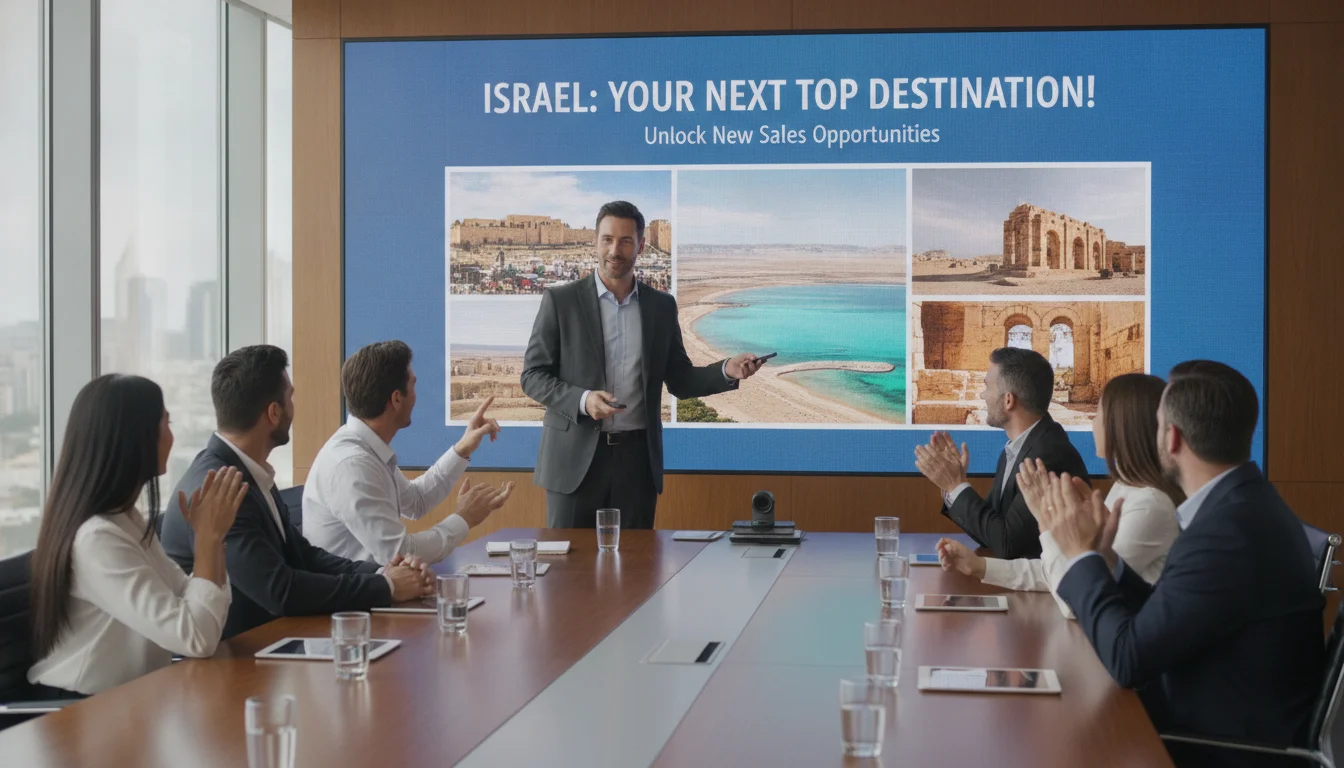
The destination, made real. Do not just name Israel as the destination. Show it. Three or four images that communicate what the experience actually looks like, a private dinner in Jerusalem, the Dead Sea, the Old City at golden hour. The destination should feel viscerally appealing in the first communication, not abstract.
One clear qualifying statement. Reach 100 percent of your annual quota and you earn a spot on the Heritage Tours Israel program in October. One sentence. The team should be able to repeat it.
What the trip looks like. A brief paragraph, four to five sentences, on the experience: what they will see, where they will stay, what a day looks like. This is what makes the destination feel like something worth earning rather than just a name.
The tracking mechanism. How will reps know where they stand throughout the year? This should be explained at launch, not announced later.
The format that tends to work best for the launch is a combination of a brief all-team meeting where the destination is shown visually, followed by a written communication they can return to.
Monthly Momentum: Keeping the Trip in the Team’s Awareness
After the launch, the most important thing you can do is maintain regular contact without over-communicating.
A monthly update that includes current standing, a piece of destination content, and brief recognition for the people currently on track takes fifteen minutes to produce and does more motivational work than most managers assume.
The destination content is the part most programs skip and should not. Every month, a new image, short video, or one-paragraph piece of context about the destination keeps the trip present. What is the food scene in Tel Aviv? What is it like to float in the Dead Sea? What does a private evening in Jerusalem look like? Each piece of content is a reminder that the trip is real and that the experience is genuinely worth qualifying for.
Pair this with individual standing updates. A rep who knows they are at 63 percent attainment in June, with specific numbers in front of them, has a real reason to think about the Q3 push. A rep who has no idea where they stand in June has no real-time motivation.
Showing the Destination
Visual content is the most powerful tool in incentive travel communication, and it is consistently underused.
For Israel specifically, the gap between what people expect the destination to be and what it actually is creates a real opportunity. Most of your team has a mental image of Israel that is probably incomplete. When they see the Mediterranean waterfront in Tel Aviv, the intimacy of a private rooftop dinner in the Old City, the surreal experience of floating in the Dead Sea, the destination goes from a name on a page to something genuinely desirable.
Content that tends to work well in ongoing communication: short (60 to 90 second) destination videos, photographs from past programs (real people, real experiences, not stock images), a brief “this week in Israel” format where you share something interesting about the destination, and testimonials from past program participants who have been to Israel.
If this is your first program to Israel and you do not have past participant testimonials, we can provide destination content from prior Heritage Tours programs.
The Mid-Year Check-In: Reaching People Still Within Reach
At mid-year, the program population typically splits into three groups: qualifiers who are clearly on track, people who are close enough to be pushed over the line, and people who are significantly behind and unlikely to qualify this year.
The most valuable communication at mid-year is targeted at the middle group: people who are at 65 to 85 percent of their qualification threshold. These are the reps whose behavior can still change outcomes. A personal note from their manager, an individual conversation, or a team communication that acknowledges who is in range and what the second half looks like can move this group in ways that blanket communications cannot.
For the bottom group, a mid-year check-in is still valuable because it surfaces conversations that need to happen about performance, not about the trip.
For the top group, mid-year recognition, a brief acknowledgment that they are on track, is worth doing. It reinforces the behavior and creates social visibility for what high performance looks like on the team.
The Q3 and Q4 Push
The final quarter is where most qualification decisions get made, and communication intensity should match.
In September, a program update with current standings, a countdown to qualification cutoff, and a final vivid piece of destination content creates urgency without manufactured pressure. The communication should feel like information, not a sales pitch.
In October and November, weekly standing updates serve a specific purpose: they give people who are close a real-time picture of where they are, which creates genuine motivation in the last weeks before the cutoff. For a rep who knows they are at 92 percent with six weeks left, the math is simple and the behavior change is natural.
Avoid over-communicating in Q4 in a way that feels panicked or desperate. One clear weekly update, plus direct manager conversations for reps who are borderline, is the right level of intensity.
Post-Program: Keeping the Memory and Building Anticipation for Next Year
The communication job is not done when the trip ends.
A post-trip communication that shares content from the trip, photographs, brief reflections from participants, and a preview of next year’s program, does two things. It extends the motivational value of this year’s program by creating visible proof of what qualifiers earned. And it seeds anticipation for next year among everyone who did not qualify.
The people who almost qualified but did not will watch this communication with genuine attention. That is the audience you most want to reach in the post-trip period, because they are the ones for whom next year’s program will have the strongest motivational pull.
Our incentive travel hub covers the destination itself in detail. For the qualification criteria structure, our article on setting incentive travel qualification criteria walks through the design framework.
FAQ
How often should we communicate about the incentive travel program throughout the year?
Monthly is the right cadence for general communication, with more frequent updates (weekly) in the final six to eight weeks before the qualification cutoff. Less than monthly and the program fades from awareness. More than weekly outside of the final push and you risk desensitization.
What content format works best for keeping the destination top of mind?
Short video clips from the destination outperform still images, which outperform text descriptions. For teams without access to video content from the destination, high-quality still images accompanied by a short paragraph of context work well. The goal is to make the destination feel real and specific, not aspirational in an abstract way.
Should we use a leaderboard for tracking qualification standing?
A leaderboard works well if your team culture supports healthy competition. In some teams, a transparent leaderboard creates positive competitive energy. In others, it creates anxiety and damages collaboration. Know your team before deciding. An individual standing update sent to each rep privately is effective for all team cultures.
What should the launch communication look like?
A brief meeting where the destination is shown visually, followed by a one-page written summary with the qualifying criteria stated clearly, the destination described vividly in a short paragraph, and the tracking mechanism explained. Keep the written communication concise. A four-paragraph email with one strong image is better than a twelve-page deck.
How do we handle a rep who is clearly not going to qualify but still needs to stay motivated?
Acknowledge the gap privately and redirect toward annual performance goals that have value beyond the incentive program. The trip may not be achievable this year, but performance improvement during the qualification period still matters. The incentive program should not become the only reason to perform.
What is the most common communication mistake in incentive programs?
Announcing the program well, then going quiet until Q4. The motivational effect depends on the trip staying present in the team’s awareness throughout the year. A program that disappears from communication after January and reappears in October is working at a fraction of its potential.